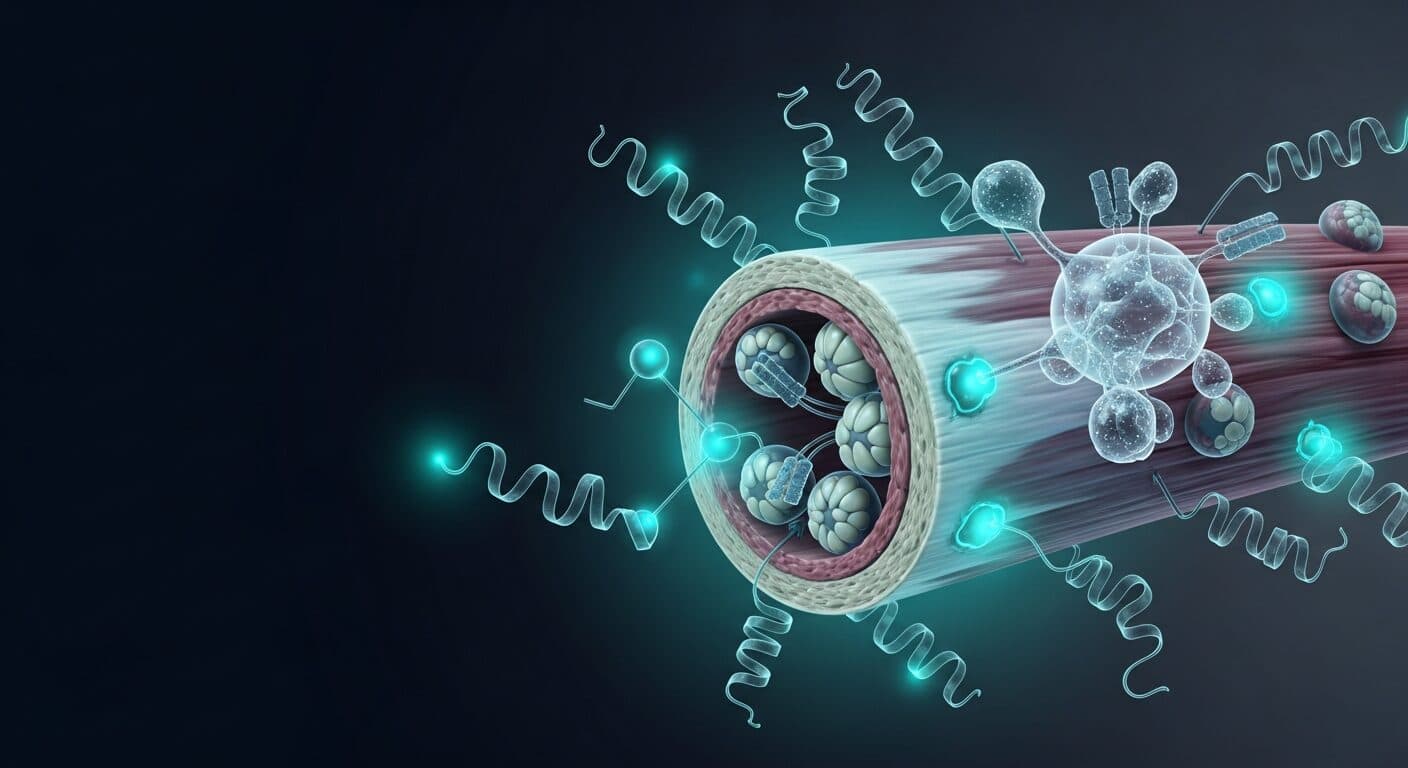
Peptides for bodybuilding research represent one of the fastest-growing areas of interest in exercise science and sports pharmacology. From growth hormone releasing peptides to recovery compounds, researchers worldwide are studying how these short-chain amino acid sequences influence muscle protein synthesis, fat oxidation, and tissue repair in controlled laboratory and animal models.
This guide covers the major categories of peptides studied in bodybuilding-related research, the mechanisms that make them scientifically interesting, and what the published literature actually shows. All compounds discussed here are sold strictly for research purposes only and are not intended for human consumption.
What are bodybuilding peptides? a research overview
Peptides are short chains of amino acids — typically between 2 and 50 residues — linked by peptide bonds. Unlike larger proteins, their small size allows rapid absorption and targeted receptor binding, which is why they have attracted significant attention in pharmacological research.
In the context of bodybuilding research, scientists study peptides that interact with pathways governing muscle growth (hypertrophy), fat metabolism (lipolysis), recovery from exercise-induced damage, and hormonal signaling — particularly the growth hormone (GH) and insulin-like growth factor (IGF) axes.
The distinction between peptides and anabolic steroids is important for researchers. Peptides generally act as signaling molecules that stimulate endogenous processes, whereas anabolic steroids are synthetic derivatives of testosterone that directly activate androgen receptors. This mechanistic difference is one reason peptide research has expanded so rapidly in exercise science.
Categories of peptides studied in bodybuilding research
1. growth hormone releasing peptides (GHRPs)
Growth hormone releasing peptides stimulate the pituitary gland to secrete growth hormone through the ghrelin receptor (GHS-R1a). This class has been extensively studied in both animal models and clinical trials for its effects on GH pulsatility, body composition, and nitrogen balance.
CJC-1295 (with and without DAC) — A growth hormone releasing hormone (GHRH) analog with a 29-amino-acid structure. The DAC (Drug Affinity Complex) variant extends half-life from minutes to approximately 6–8 days in preclinical models. Research by Teichman et al. (2006) demonstrated sustained GH elevation for up to 6 days following a single subcutaneous administration in healthy subjects, with concurrent increases in IGF-1 levels (PMID: 16352683).
GHRP-6 — One of the earliest synthetic growth hormone secretagogues studied. GHRP-6 binds the ghrelin receptor and stimulates GH release in a dose-dependent manner. Animal studies have shown significant increases in appetite and GH secretion, making it a valuable research tool for studying the somatotropic axis.
Ipamorelin — A pentapeptide GH secretagogue notable for its selectivity. Unlike GHRP-6, ipamorelin does not significantly elevate cortisol or prolactin levels at physiological doses, which has made it a preferred compound in research protocols examining isolated GH effects on lean mass and fat oxidation. Raun et al. (1998) demonstrated that ipamorelin produced dose-dependent GH release comparable to GHRP-6 but without the associated ACTH or cortisol elevation in swine models (PMID: 9849822).
Hexarelin — A hexapeptide growth hormone secretagogue with strong GH-releasing activity. Research has explored hexarelin’s cardioprotective properties in addition to its somatotropic effects, with studies in animal models showing improved cardiac function independent of GH release.
2. direct muscle action peptides
These peptides act directly on muscle tissue rather than through hormonal intermediaries, making them particularly interesting for hypertrophy research.
IGF-1 LR3 — A modified version of insulin-like growth factor 1 with an extended half-life due to an arginine-to-glutamic acid substitution at position 3 and a 13-amino-acid extension at the N-terminus. IGF-1 LR3 has reduced binding to IGF-binding proteins (IGFBPs), resulting in greater bioavailability. In cell culture and animal studies, IGF-1 LR3 has demonstrated potent effects on muscle satellite cell proliferation and differentiation — key processes in muscle hypertrophy. Published research by Barton-Davis et al. (1998) showed that viral-mediated IGF-1 overexpression produced a 15% increase in muscle mass and a 14% increase in strength in murine models (PMID: 9823374).
IGF-1 DES — A truncated form of IGF-1 missing the first three amino acids. This modification eliminates IGFBP binding almost entirely, resulting in approximately ten times greater potency than standard IGF-1 in in vitro proliferation assays. Researchers study IGF-1 DES for its localized anabolic effects at the tissue level.
3. recovery and healing peptides
Recovery from training-induced muscle damage is a critical variable in bodybuilding research. Two peptides dominate this category in the scientific literature.
BPC-157 — Body Protection Compound-157 is a 15-amino-acid peptide derived from a protective protein found in human gastric juice. BPC-157 has been studied extensively in animal models for its effects on tendon, ligament, muscle, and bone healing. Research has demonstrated accelerated healing of transected tendons, crushed muscles, and damaged ligaments in rat models, with proposed mechanisms involving upregulation of growth factor receptors (VEGF, FGF) and nitric oxide system modulation. For a deeper comparison with related compounds, see our BPC-157 and TB-500 molecular pathways guide.
TB-500 — A synthetic fragment of thymosin beta-4, TB-500 promotes cell migration and angiogenesis. In equine and rodent research, TB-500 has shown accelerated recovery from soft tissue injuries. Its mechanism involves upregulation of actin, which is essential for cell motility and wound repair. Researchers studying exercise recovery often examine TB-500 alongside BPC-157 — our BPC-157 vs TB-500 comparison covers the pharmacological distinctions in detail.
4. fat metabolism peptides
Body composition optimization is central to bodybuilding research, and several peptides have been studied specifically for their lipolytic properties.
AOD-9604 — Anti-Obesity Drug 9604 is a modified fragment (residues 177–191) of the human growth hormone molecule. It mimics the lipolytic action of GH without affecting IGF-1 levels or insulin resistance. Early clinical trial data showed statistically significant fat loss in obese subjects compared to placebo, though subsequent trials produced mixed results. AOD-9604 has received GRAS (Generally Recognized as Safe) status from the FDA for use as a food substance.
MOTS-c — A mitochondria-derived peptide encoded within the 12S rRNA gene. MOTS-c has been shown to activate AMPK signaling and improve glucose metabolism in murine models. Research by Lee et al. (2015) demonstrated that MOTS-c treatment prevented age-dependent and high-fat-diet-induced insulin resistance in mice, and enhanced exercise capacity — findings with significant implications for body composition research (PMID: 25738459).
Fragment 176-191 — The lipolytic fragment of human growth hormone corresponding to amino acids 176–191. Like AOD-9604, this fragment stimulates lipolysis and inhibits lipogenesis in adipose tissue without the diabetogenic effects associated with full-length GH. Animal studies have demonstrated dose-dependent reductions in body fat percentage without changes in food intake.
5. myostatin inhibitors
Myostatin (GDF-8) is a negative regulator of muscle growth. Compounds that inhibit myostatin signaling are among the most researched in muscle biology.
Follistatin 344 — A naturally occurring glycoprotein that binds and neutralizes myostatin, activin A, and other TGF-beta superfamily members. Research in animal models has shown dramatic muscle growth following follistatin overexpression — in some cases doubling muscle mass. Follistatin 344 is the most commonly studied isoform in bodybuilding-related research due to its potent myostatin-binding activity.
ACE-031 — A soluble form of the activin receptor type IIB (ActRIIB) fused to a human IgG1 Fc domain. ACE-031 functions as a myostatin/activin decoy receptor, preventing these proteins from binding their native receptors. Clinical trials in boys with Duchenne muscular dystrophy showed significant increases in lean body mass and bone mineral density, though the program was discontinued due to safety signals (epistaxis and telangiectasias). The compound remains of research interest for understanding myostatin pathway biology.
How growth hormone peptides work: the GH axis explained
Understanding why growth hormone releasing peptides are so prominent in bodybuilding research requires a basic understanding of the somatotropic axis — the hormonal cascade that governs GH secretion and its downstream effects.
The hypothalamus produces two opposing signals: growth hormone releasing hormone (GHRH), which stimulates GH release, and somatostatin, which inhibits it. GH is released from the anterior pituitary in a pulsatile pattern — primarily during deep sleep and after exercise — and acts on the liver to produce IGF-1, the primary mediator of GH’s anabolic effects.
Research peptides in the GHRP class work by mimicking ghrelin at the GHS-R1a receptor, amplifying natural GH pulses rather than creating a continuous elevation. This is a critical distinction from exogenous GH administration, which produces supraphysiological, non-pulsatile GH levels. GHRH analogs like CJC-1295 work on the complementary pathway, enhancing the amplitude of each GH pulse.
When researchers combine a GHRP (such as ipamorelin) with a GHRH analog (such as CJC-1295), the result is a synergistic increase in GH output that exceeds what either compound produces alone. This synergy is one reason the CJC-1295/Ipamorelin blend has become one of the most widely studied combinations in growth hormone research. Our MK-677 (Ibutamoren) research guide covers another approach to GH secretagogue research through oral administration.
Research peptide combinations for bodybuilding studies
Researchers frequently examine peptides in combination rather than isolation, reflecting the multi-pathway nature of muscle growth and body composition. Several well-documented research combinations appear consistently in the literature. For an in-depth look at combination methodology, see our guide to peptide combination research.
GH axis amplification
The combination of a GHRP with a GHRH analog targets both arms of the GH release pathway simultaneously. Ipamorelin plus CJC-1295 (without DAC) is the most commonly referenced pairing in research contexts, producing robust GH pulses while minimizing cortisol and prolactin elevation.
Recovery and tissue repair
BPC-157 and TB-500 target complementary healing pathways — BPC-157 primarily through growth factor receptor upregulation and angiogenesis, TB-500 through actin regulation and cell migration. Researchers studying exercise-induced tissue damage frequently examine these compounds together. CertaPeptides offers a pre-formulated BPC-157/TB-500 blend for streamlined research protocols.
Body recomposition
Studies examining simultaneous muscle preservation and fat loss often pair GH-releasing peptides with lipolytic fragments. The rationale is that GH elevation promotes both protein synthesis and lipolysis, while dedicated lipolytic fragments like AOD-9604 or Fragment 176-191 add targeted fat metabolism enhancement without further increasing IGF-1 or affecting insulin sensitivity.
Anabolic and anti-catabolic
Combining IGF-1 LR3 (direct anabolic signaling) with follistatin 344 (myostatin inhibition) represents a dual approach to muscle growth — one that promotes protein synthesis while simultaneously removing the endogenous brake on muscle development. This combination is primarily studied in cell culture and animal models.
SARMs vs peptides: key differences for researchers
Selective androgen receptor modulators (SARMs) and peptides are often discussed together in bodybuilding research contexts, but they operate through fundamentally different mechanisms.
| Parameter | Peptides | SARMs |
|---|---|---|
| Mechanism | Signal endogenous pathways (GH, IGF-1, healing cascades) | Directly bind androgen receptors with tissue selectivity |
| Molecular size | 2–50 amino acids | Small non-peptide molecules |
| Primary targets | GH axis, growth factors, repair pathways | Androgen receptors in muscle and bone |
| Hormonal suppression | Generally minimal (compound-dependent) | Can suppress endogenous testosterone |
| Administration | Primarily subcutaneous injection | Typically oral |
| Research maturity | Decades of published data on many compounds | Fewer long-term studies available |
For a comprehensive analysis of these differences, our SARMs vs Peptides research guide covers the pharmacological, regulatory, and practical distinctions in detail.
Quality and purity: why COA and HPLC testing matter
For bodybuilding peptide research to produce valid, reproducible results, compound purity is non-negotiable. Impurities, degradation products, or incorrect peptide content can introduce confounding variables that invalidate study outcomes.
Certificate of analysis (COA)
A legitimate COA should include the peptide sequence, molecular weight, net peptide content, purity percentage (determined by HPLC), appearance, solubility data, and the batch number. Researchers should verify that the COA corresponds to the specific batch received — not a generic document reused across shipments.
HPLC testing
High-performance liquid chromatography separates peptide mixtures by hydrophobicity, producing a chromatogram where purity is calculated from peak area ratios. Research-grade peptides should show purity above 98% by HPLC. At CertaPeptides, every batch undergoes in-house HPLC and mass spectrometry verification before release, and we publish third-party testing results from Janoshik Analytical for independent verification.
Mass spectrometry
While HPLC measures purity, mass spectrometry confirms identity — verifying that the peptide’s molecular weight matches the expected sequence. This is essential for detecting misidentified or substituted compounds, a persistent issue in the research peptide market.
Researchers should prioritize suppliers who provide both HPLC and mass spectrometry data, ideally with third-party verification from an independent laboratory. Transparency about testing methodology is a strong indicator of supplier reliability — our supplier verification guide covers this in detail.
Frequently asked questions
What are the most studied peptides in bodybuilding research?
The most extensively studied peptides in bodybuilding-related research include growth hormone releasing peptides (ipamorelin, GHRP-6, GHRP-2), IGF-1 variants (IGF-1 LR3, IGF-1 DES), and recovery peptides (BPC-157, TB-500). These compounds have the largest body of published preclinical and clinical literature examining their effects on muscle growth, fat metabolism, and tissue repair.
How do peptides differ from anabolic steroids in research?
Peptides are signaling molecules that stimulate the body’s own hormonal and repair pathways, while anabolic steroids are synthetic testosterone derivatives that directly activate androgen receptors. In research settings, peptides generally produce more targeted, pathway-specific effects with different side-effect profiles compared to androgen receptor agonists.
What purity level should research peptides have?
Research-grade peptides should demonstrate purity above 98% as measured by HPLC. Purity below this threshold introduces potential confounding variables from degradation products, synthesis byproducts, or contaminants that can affect experimental outcomes. Certificate of Analysis documentation should accompany every batch.
Can peptide research compounds be combined?
Multi-compound research protocols are common in the scientific literature. The most well-documented combinations include GHRP plus GHRH analogs for synergistic GH release, and BPC-157 plus TB-500 for complementary tissue repair mechanisms. Our peptide combination research guide covers the principles of multi-pathway protocol design.
Are bodybuilding peptides legal to purchase?
In the European Union, research peptides are legal to purchase for laboratory and scientific research purposes. They are not approved for human consumption. Regulatory status varies by jurisdiction, and researchers are responsible for complying with local regulations governing research compound procurement and use.
What is the difference between gHRPs and GHRH analogs?
GHRPs (such as ipamorelin and GHRP-6) stimulate GH release by binding the ghrelin receptor (GHS-R1a), while GHRH analogs (such as CJC-1295) work by binding the GHRH receptor on pituitary somatotrophs. These are complementary pathways — GHRPs initiate GH pulses while GHRH analogs amplify pulse amplitude. Used together in research, they produce synergistic GH elevation greater than either class alone.
Conclusion
Peptides for bodybuilding research span a diverse range of mechanisms — from growth hormone axis modulation to direct muscle satellite cell activation, from targeted lipolysis to myostatin inhibition. The published literature continues to expand, with new studies elucidating both the therapeutic potential and mechanistic complexity of these compounds.
For researchers designing protocols in this space, compound purity, proper storage, and rigorous experimental controls remain foundational. At CertaPeptides, we provide independently verified, research-grade peptides with full analytical documentation to support valid, reproducible scientific investigation.
Browse our full catalog of research peptides or explore our advanced peptide stacking guide for detailed combination protocol research.
References
- Teichman SL, Neale A, Lawrence B, Gagnon C, Castaigne JP, Bhargava AS. Prolonged stimulation of growth hormone (GH) and insulin-like growth factor I secretion by CJC-1295, a long-acting analog of GH-releasing hormone, in healthy adults. J Clin Endocrinol Metab. 2006;91(3):799-805. PMID: 16352683.
- Raun K, Hansen BS, Johansen NL, et al. Ipamorelin, the first selective growth hormone secretagogue. Eur J Endocrinol. 1998;139(5):552-561. PMID: 9849822.
- Barton-Davis ER, Shoturma DI, Musaro A, Rosenthal N, Sweeney HL. Viral mediated expression of insulin-like growth factor I blocks the aging-related loss of skeletal muscle function. Proc Natl Acad Sci U S A. 1998;95(26):15603-15607. PMID: 9861015.
- Lee C, Zeng J, Drew BG, et al. The mitochondrial-derived peptide MOTS-c promotes metabolic homeostasis and reduces obesity and insulin resistance. Cell Metab. 2015;21(3):443-454. PMID: 25738459.
All products and compounds discussed in this article are intended for laboratory and research use only. Nothing in this guide constitutes medical advice, dosage guidance, or encouragement for human self-administration. CertaPeptides sells research peptides exclusively to qualified researchers and institutions.