Research-grade compound. Laboratory use only. Not intended for human or animal use, ingestion, or injection. No medical claims are made or implied.
VIP
Free shipping on orders over €200
3–7 days most of the EU · 10–14 Nordics/Baltics
Standard EU from €4.99 (RO) · core EU GLS €17.99 · Nordics/Baltics €12.99–€15.99 · Same-day dispatch before 14:00 CET on weekdays · Free shipping over €200.00 · no customs paperwork (EU) · via EU carrier network
€200.00 away from free shipping over €200.00. Under that, standard EU shipping is €17.99 (GLS, most of the EU).
How Paysera and SEPA work
- Pay — approve a SEPA transfer in your own bank via Paysera’s hosted page, or send a manual SEPA transfer using the IBAN we email you.
- We confirm — Paysera notifies us instantly, or we match a manual transfer when it arrives (usually 1 business day).
- We dispatch — confirmed orders placed before 14:00 CET on a weekday typically ship the same day.
Card payments are not currently offered. There is no card processor on this checkout.
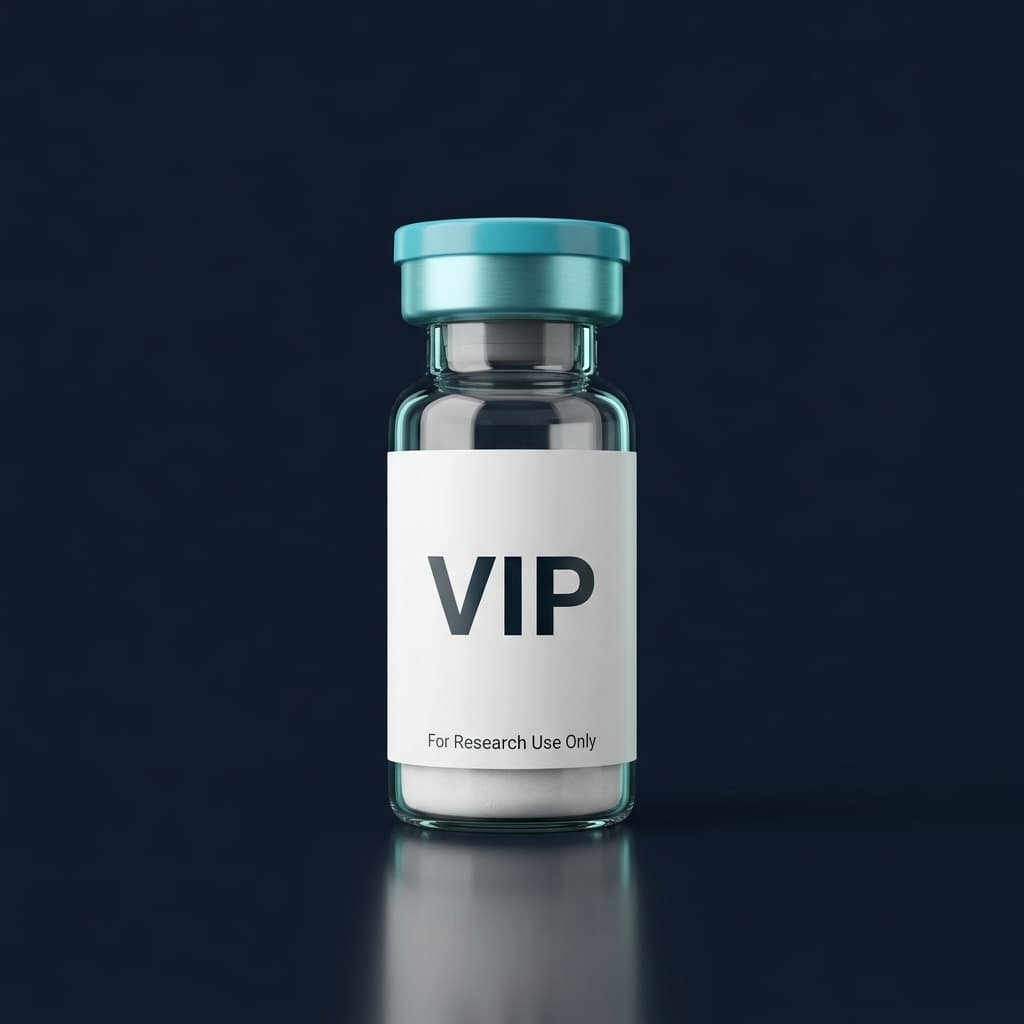
Research-grade VIP. ≥ 98% supplier batch specification; selected lots independently tested. Lyophilized powder in sealed glass vial. For laboratory research use only. Not for human consumption.
| Quantity | Price Each | Total | Savings |
|---|---|---|---|
| 1 unit | €89.99 | €89.99 | -- |
| 3+ | €85.49 | €256.47 | 5% off |
| 5+Most Popular | €80.99 | €404.96 | 10% off |
| 10+ | €76.49 | €764.91 | 15% off |
Important Notice
This product is intended for laboratory and research use only. Not for human or veterinary use. By purchasing, you confirm this product will be used exclusively for in-vitro research purposes.
Reconstitution Required
This peptide ships lyophilized (dry powder) and requires bacteriostatic water to reconstitute before use. BAC water is sold separately.
When This Product May Not Suit Your Research
- ⚠If your research requires GMP-grade material for clinical applications — research-grade peptides are not intended for clinical use.
- ⚠If your lab lacks proper cold storage (-20°C freezer) — this peptide's stability may be compromised at higher temperatures.
- ⚠If your study protocol requires FDA-approved reference standards — contact USP or a certified reference material provider.
Published laboratory reports are available for selected lots. Check each report for its result and stated method. For research purposes only.
View report #233643 on janoshik.com →
24h dispatch, shipping from €4.99 in Romania, from €12.99 across the rest of Europe
Supplier batch specification on every product; independent Janoshik report on selected lots
About VIP
Vasoactive Intestinal Peptide (VIP) is a 28-amino acid neuropeptide originally discovered in porcine intestine in 1970. The name describes the initial pharmacological observation -- it is vasoactive and found in the gut -- but underrepresents the peptide's biology. VIP is now understood as a pleiotropic neuromodulator with roles in the immune system, circadian rhythm regulation, reproductive function, and multiple neural circuits. It is found throughout the nervous system and peripheral organs.
VIP signals through two GPCRs: VPAC1 and VPAC2 (previously VIP1R and VIP2R). VPAC1 is expressed broadly including in lymphocytes, lung, intestine, and liver. VPAC2 is more restricted, with prominent expression in T-cells, the suprachiasmatic nucleus (the circadian clock), and several brain regions. In research models, VPAC receptor activation elevates cAMP and is studied for the downstream effects characteristic of VIP signaling: smooth muscle relaxation (including bronchodilation and vasodilation), neurotrophin production, anti-inflammatory cytokine shifts, and inhibition of T-cell proliferation. VIP is one of the most potent endogenous anti-inflammatory peptides studied.
Research interest in VIP has focused on: inflammatory pathways (VIP shifts immunity toward anti-inflammatory Th2/Treg phenotypes in research models), pulmonary vascular biology (bronchodilation, vasodilation), and circadian biology (VIP neurons in the suprachiasmatic nucleus are required for circadian rhythm generation and synchronization).
Specifications
| Parameter | Value |
|---|---|
| Compound | Vasoactive Intestinal Peptide (VIP), 28 amino acids |
| Purity | ≥98% (supplier batch spec) |
| Format | Lyophilized powder |
| Reconstitution | Sterile water or saline |
| Storage | -20°C; 2-8°C after reconstitution, protect from light |
Storage
Store at -20°C and protect from light. Refrigerate at 2-8°C after reconstitution and use within 14 days. VIP is a relatively fragile peptide -- minimize handling time and exposure to elevated temperature after reconstitution.
What are VIP's main anti-inflammatory mechanisms?
In research models, VIP inhibits innate and adaptive immune responses through multiple mechanisms. It reduces macrophage and dendritic cell production of pro-inflammatory cytokines (TNF-alpha, IL-6, IL-12) while increasing anti-inflammatory cytokines (IL-10). In T-cells, VIP inhibits Th1 and Th17 differentiation (pro-inflammatory phenotypes) and promotes Treg and Th2 differentiation (anti-inflammatory phenotypes). It also inhibits NK cell cytotoxicity and reduces neutrophil function. These broad anti-inflammatory effects make VIP one of the most immunomodulatory peptides studied and have driven research interest in VIP and its receptor pathways in autoimmune-disease models.
How does VIP regulate circadian rhythms?
VIP is the primary neurotransmitter of the suprachiasmatic nucleus (SCN), the brain's master circadian clock. VIP neurons in the SCN synchronize individual cellular clocks within the nucleus and are essential for maintaining coherent circadian oscillations across the network of clock cells. VPAC2 receptors on SCN neurons receive VIP signals to synchronize their molecular clock cycles. VIP also helps the SCN respond to light signals that reset the clock daily. Mice lacking VIP or VPAC2 lose circadian behavioral rhythms, demonstrating VIP's essential role in circadian timekeeping.
What biology is being studied with VIP in research?
VIP has been investigated in research on pulmonary vascular biology (where vasodilation and anti-proliferative effects on pulmonary vasculature are relevant), intestinal inflammation, and autoimmune-related immune pathways. Inhaled VIP has been examined in pulmonary models with mixed results. The short half-life of native VIP (minutes) is a challenge for systemic study, and modified longer-acting VIP analogues are being characterized. In research contexts, the immunological and circadian biology applications are particularly active areas.
VIP is supplied for laboratory research use only. Not for human consumption. Handle in compliance with institutional biosafety guidelines.
Specification Summary
About VIP
Vasoactive Intestinal Peptide (VIP) is a 28-amino acid neuropeptide originally discovered in porcine intestine in 1970. The name describes the initial pharmacological observation -- it is vasoactive and found in the gut -- but underrepresents the peptide's biology. VIP is now understood as a pleiotropic neuromodulator with roles in the immune system, circadian rhythm regulation, reproductive function, and multiple neural circuits. It is found throughout the nervous system and peripheral organs.
VIP signals through two GPCRs: VPAC1 and VPAC2 (previously VIP1R and VIP2R). VPAC1 is expressed broadly including in lymphocytes, lung, intestine, and liver. VPAC2 is more restricted, with prominent expression in T-cells, the suprachiasmatic nucleus (the circadian clock), and several brain regions. In research models, VPAC receptor activation elevates cAMP and is studied for the downstream effects characteristic of VIP signaling: smooth muscle relaxation (including bronchodilation and vasodilation), neurotrophin production, anti-inflammatory cytokine shifts, and inhibition of T-cell proliferation. VIP is one of the most potent endogenous anti-inflammatory peptides studied.
Research interest in VIP has focused on: inflammatory pathways (VIP shifts immunity toward anti-inflammatory Th2/Treg phenotypes in research models), pulmonary vascular biology (bronchodilation, vasodilation), and circadian biology (VIP neurons in the suprachiasmatic nucleus are required for circadian rhythm generation and synchronization).
Specifications
| Parameter | Value |
|---|---|
| Compound | Vasoactive Intestinal Peptide (VIP), 28 amino acids |
| Purity | ≥98% (supplier batch spec) |
| Format | Lyophilized powder |
| Reconstitution | Sterile water or saline |
| Storage | -20°C; 2-8°C after reconstitution, protect from light |
Storage
Store at -20°C and protect from light. Refrigerate at 2-8°C after reconstitution and use within 14 days. VIP is a relatively fragile peptide -- minimize handling time and exposure to elevated temperature after reconstitution.
What are VIP's main anti-inflammatory mechanisms?
In research models, VIP inhibits innate and adaptive immune responses through multiple mechanisms. It reduces macrophage and dendritic cell production of pro-inflammatory cytokines (TNF-alpha, IL-6, IL-12) while increasing anti-inflammatory cytokines (IL-10). In T-cells, VIP inhibits Th1 and Th17 differentiation (pro-inflammatory phenotypes) and promotes Treg and Th2 differentiation (anti-inflammatory phenotypes). It also inhibits NK cell cytotoxicity and reduces neutrophil function. These broad anti-inflammatory effects make VIP one of the most immunomodulatory peptides studied and have driven research interest in VIP and its receptor pathways in autoimmune-disease models.
How does VIP regulate circadian rhythms?
VIP is the primary neurotransmitter of the suprachiasmatic nucleus (SCN), the brain's master circadian clock. VIP neurons in the SCN synchronize individual cellular clocks within the nucleus and are essential for maintaining coherent circadian oscillations across the network of clock cells. VPAC2 receptors on SCN neurons receive VIP signals to synchronize their molecular clock cycles. VIP also helps the SCN respond to light signals that reset the clock daily. Mice lacking VIP or VPAC2 lose circadian behavioral rhythms, demonstrating VIP's essential role in circadian timekeeping.
What biology is being studied with VIP in research?
VIP has been investigated in research on pulmonary vascular biology (where vasodilation and anti-proliferative effects on pulmonary vasculature are relevant), intestinal inflammation, and autoimmune-related immune pathways. Inhaled VIP has been examined in pulmonary models with mixed results. The short half-life of native VIP (minutes) is a challenge for systemic study, and modified longer-acting VIP analogues are being characterized. In research contexts, the immunological and circadian biology applications are particularly active areas.
VIP is supplied for laboratory research use only. Not for human consumption. Handle in compliance with institutional biosafety guidelines.
Researcher Confidence
Why researchers choose CertaPeptides
Who actually tests this?
Selected lots are independently verified by Janoshik Analytical (Czech Republic) and published on the Janoshik public portal. Other lots ship with the supplier's batch specification. See /coa for the published wall.
View COAs →What if I get the wrong batch?
Every vial label carries a code. Look it up on our Verify page: you'll see the independent report we have published for that lot, if there is one, or the supplier's batch specification. If we have withdrawn a lot, it is marked there as withdrawn, with the reason. If yours is, or if the code on your label finds nothing, email us that code.
View COAs →Where does it ship from?
Romania (EU). We are CERTALAB SRL, CUI 54169956, VAT-registered. Sameday for Romania, GLS for most EU destinations, TCE Worldwide for the remaining cross-border EU and non-EU markets (UK, Switzerland, Iceland). Delivery 1–15 business days depending on destination — exact window shown at checkout.
Shipping details →What if there's a problem?
You have a 14-day withdrawal right under OUG 34/2014 (Romanian/EU consumer law), with ANPC/ODR escalation available. Contact us at support@certapeptides.com.
Returns policy →Product Information
This product is intended for scientific research and development purposes only. It is a chemical substance that shall not be used as a drug, medicine, active substance, or ingredient in any product intended for human or animal consumption. Researchers must handle this compound in accordance with their institutional biosafety guidelines. Use only in properly equipped laboratory settings with appropriate personal protective equipment.