Research-grade compound. Laboratory use only. Not intended for human or animal use, ingestion, or injection. No medical claims are made or implied.
Pinealon
Free shipping on orders over €200
3–7 days most of the EU · 10–14 Nordics/Baltics
Standard EU from €4.99 (RO) · core EU GLS €17.99 · Nordics/Baltics €12.99–€15.99 · Same-day dispatch before 14:00 CET on weekdays · Free shipping over €200.00 · no customs paperwork (EU) · via EU carrier network
€200.00 away from free shipping over €200.00. Under that, standard EU shipping is €17.99 (GLS, most of the EU).
How Paysera and SEPA work
- Pay — approve a SEPA transfer in your own bank via Paysera’s hosted page, or send a manual SEPA transfer using the IBAN we email you.
- We confirm — Paysera notifies us instantly, or we match a manual transfer when it arrives (usually 1 business day).
- We dispatch — confirmed orders placed before 14:00 CET on a weekday typically ship the same day.
Card payments are not currently offered. There is no card processor on this checkout.
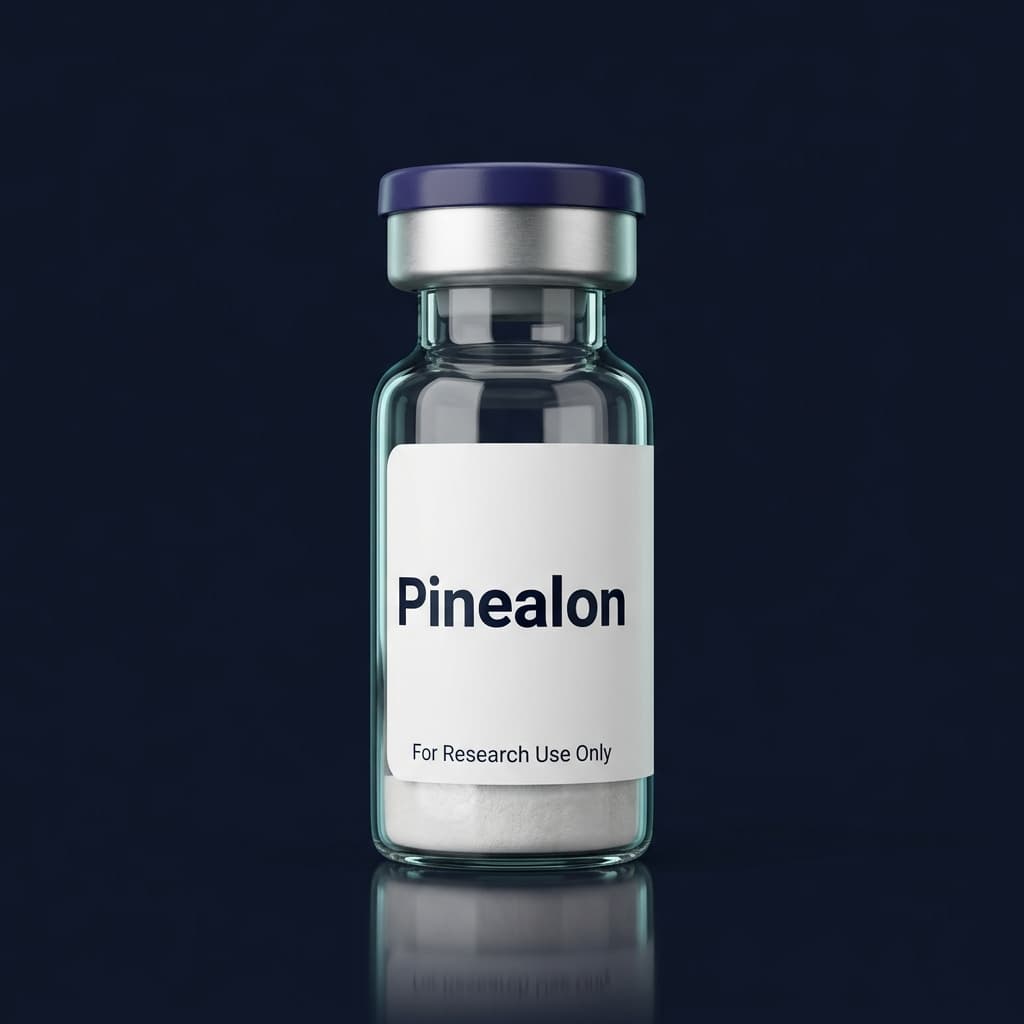
Research-grade Pinealon. ≥97% supplier batch specification; selected lots independently tested. Lyophilized powder in sealed glass vial. For laboratory research use only. Not for human consumption.
| Quantity | Price Each | Total | Savings |
|---|---|---|---|
| 1 unit | €39.99 | €39.99 | -- |
| 3+ | €37.99 | €113.97 | 5% off |
| 5+Most Popular | €35.99 | €179.95 | 10% off |
| 10+ | €33.99 | €339.92 | 15% off |
Important Notice
This product is intended for laboratory and research use only. Not for human or veterinary use. By purchasing, you confirm this product will be used exclusively for in-vitro research purposes.
Reconstitution Required
This peptide ships lyophilized (dry powder) and requires bacteriostatic water to reconstitute before use. BAC water is sold separately.
When This Product May Not Suit Your Research
- ⚠If your research requires GMP-grade material for clinical applications — research-grade peptides are not intended for clinical use.
- ⚠If your lab lacks proper cold storage (-20°C freezer) — this peptide's stability may be compromised at higher temperatures.
- ⚠If your study protocol requires FDA-approved reference standards — contact USP or a certified reference material provider.
Published laboratory reports are available for selected lots. Check each report for its result and stated method. For research purposes only.
View report #233647 on janoshik.com →
24h dispatch, shipping from €4.99 in Romania, from €12.99 across the rest of Europe
Supplier batch specification on every product; independent Janoshik report on selected lots
About Pinealon
Pinealon (Glu-Asp-Arg / EDR tripeptide) is a Khavinson bioregulator targeting the pineal gland and CNS tissue. It is related to but distinct from Epitalon (AEDG tetrapeptide) — both target pineal tissue, but through different sequences and with different emphases in the published literature. Epitalon is primarily studied for telomerase activation and broad pineal-endocrine effects. Pinealon has a more specific focus on pinealocyte melatonin synthesis pathways and circadian gene regulation.
The pineal gland is an underappreciated research target. Its primary output, melatonin, has circadian and antioxidant roles that extend far beyond sleep regulation. The pineal gland also calcifies progressively with age — pineal calcification is visible on standard CT scans and correlates with reduced melatonin production, though whether calcification causes the decline or accompanies it remains debated. Pinealon research examines pinealocyte gene expression, melatonin synthesis enzyme transcription (particularly AANAT and ASMT, the rate-limiting enzymes), and circadian gene regulation. The EDR sequence in Pinealon overlaps with the AEDG of Epitalon in the Asp-Arg portion, and the Khavinson group has proposed distinct but complementary research applications for the two compounds.
Specifications
| Sequence | Glu-Asp-Arg (EDR) |
|---|---|
| Molecular Weight | ~360 Da (tripeptide) |
| Purity | ≥97% (supplier batch spec) |
| Form | Lyophilized powder |
| Sizes | 10mg |
Storage: Lyophilized: −20°C, away from light. Once reconstituted: 2–8°C, use within 4 weeks.
Quality: Shipped to a ≥97% supplier batch specification; selected lots are independently tested by Janoshik Analytical (HPLC purity analysis and mass spectrometry identity confirmation), searchable by batch code at certapeptides.com/verify. Sold and shipped from the EU by CERTALAB S.R.L.
Frequently Asked Questions
How does Pinealon differ from Epitalon if both target the pineal gland?
Different sequences produce different proposed promoter interactions. Epitalon (AEDG) is primarily studied for telomerase activation and broad pineal-endocrine modulation. Pinealon (EDR) has a more specific focus on melatonin synthesis enzymes — particularly AANAT and ASMT — and circadian gene regulation. The Khavinson group positions them as complementary: Epitalon for broader epigenetic/telomeric research, Pinealon for circadian biology and melatonin pathway research specifically.
What is the connection between pineal aging and circadian research?
The pineal gland is the primary source of circulating melatonin, which synchronizes peripheral clocks throughout the body. As the pineal calcifies with age, melatonin production declines and circadian rhythm amplitude weakens — a phenomenon associated with sleep disruption, metabolic dysregulation, and immune changes in aging populations. Pinealon research examines whether short peptide bioregulation can influence the melatonin synthesis gene programs that underlie this age-related change.
For research purposes only. Not for human consumption.
Specification Summary
About Pinealon
Pinealon (Glu-Asp-Arg / EDR tripeptide) is a Khavinson bioregulator targeting the pineal gland and CNS tissue. It is related to but distinct from Epitalon (AEDG tetrapeptide) — both target pineal tissue, but through different sequences and with different emphases in the published literature. Epitalon is primarily studied for telomerase activation and broad pineal-endocrine effects. Pinealon has a more specific focus on pinealocyte melatonin synthesis pathways and circadian gene regulation.
The pineal gland is an underappreciated research target. Its primary output, melatonin, has circadian and antioxidant roles that extend far beyond sleep regulation. The pineal gland also calcifies progressively with age — pineal calcification is visible on standard CT scans and correlates with reduced melatonin production, though whether calcification causes the decline or accompanies it remains debated. Pinealon research examines pinealocyte gene expression, melatonin synthesis enzyme transcription (particularly AANAT and ASMT, the rate-limiting enzymes), and circadian gene regulation. The EDR sequence in Pinealon overlaps with the AEDG of Epitalon in the Asp-Arg portion, and the Khavinson group has proposed distinct but complementary research applications for the two compounds.
Specifications
| Sequence | Glu-Asp-Arg (EDR) |
|---|---|
| Molecular Weight | ~360 Da (tripeptide) |
| Purity | ≥97% (supplier batch spec) |
| Form | Lyophilized powder |
| Sizes | 10mg |
Storage: Lyophilized: −20°C, away from light. Once reconstituted: 2–8°C, use within 4 weeks.
Quality: Shipped to a ≥97% supplier batch specification; selected lots are independently tested by Janoshik Analytical (HPLC purity analysis and mass spectrometry identity confirmation), searchable by batch code at certapeptides.com/verify. Sold and shipped from the EU by CERTALAB S.R.L.
Frequently Asked Questions
How does Pinealon differ from Epitalon if both target the pineal gland?
Different sequences produce different proposed promoter interactions. Epitalon (AEDG) is primarily studied for telomerase activation and broad pineal-endocrine modulation. Pinealon (EDR) has a more specific focus on melatonin synthesis enzymes — particularly AANAT and ASMT — and circadian gene regulation. The Khavinson group positions them as complementary: Epitalon for broader epigenetic/telomeric research, Pinealon for circadian biology and melatonin pathway research specifically.
What is the connection between pineal aging and circadian research?
The pineal gland is the primary source of circulating melatonin, which synchronizes peripheral clocks throughout the body. As the pineal calcifies with age, melatonin production declines and circadian rhythm amplitude weakens — a phenomenon associated with sleep disruption, metabolic dysregulation, and immune changes in aging populations. Pinealon research examines whether short peptide bioregulation can influence the melatonin synthesis gene programs that underlie this age-related change.
For research purposes only. Not for human consumption.
Researcher Confidence
Why researchers choose CertaPeptides
Who actually tests this?
Selected lots are independently verified by Janoshik Analytical (Czech Republic) and published on the Janoshik public portal. Other lots ship with the supplier's batch specification. See /coa for the published wall.
View COAs →What if I get the wrong batch?
Every vial label carries a code. Look it up on our Verify page: you'll see the independent report we have published for that lot, if there is one, or the supplier's batch specification. If we have withdrawn a lot, it is marked there as withdrawn, with the reason. If yours is, or if the code on your label finds nothing, email us that code.
View COAs →Where does it ship from?
Romania (EU). We are CERTALAB SRL, CUI 54169956, VAT-registered. Sameday for Romania, GLS for most EU destinations, TCE Worldwide for the remaining cross-border EU and non-EU markets (UK, Switzerland, Iceland). Delivery 1–15 business days depending on destination — exact window shown at checkout.
Shipping details →What if there's a problem?
You have a 14-day withdrawal right under OUG 34/2014 (Romanian/EU consumer law), with ANPC/ODR escalation available. Contact us at support@certapeptides.com.
Returns policy →Product Information
This product is intended for scientific research and development purposes only. It is a chemical substance that shall not be used as a drug, medicine, active substance, or ingredient in any product intended for human or animal consumption. Researchers must handle this compound in accordance with their institutional biosafety guidelines. Use only in properly equipped laboratory settings with appropriate personal protective equipment.