Research-grade compound. Laboratory use only. Not intended for human or animal use, ingestion, or injection. No medical claims are made or implied.
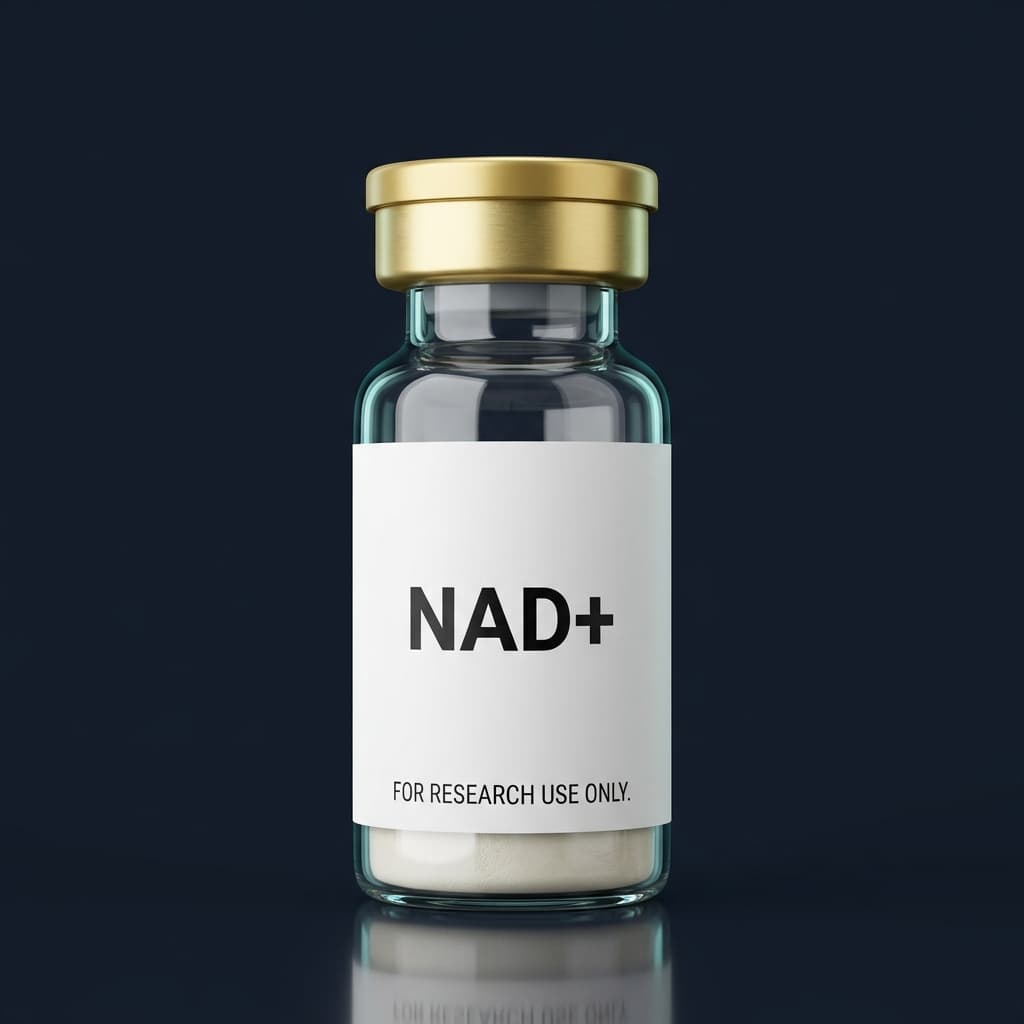
NAD+
No lab report for this lot.
Free shipping on orders over €200
- If a product doesn't match the specification on its published COA, contact us with your batch number: we investigate against the lot's report and replace any product that fails it, at no cost to you.
- Contact us within 48 hours of delivery with photos of the outer box, inner packing, and any affected vials with labels legible. Confirmed transit damage is replaced at no cost to you.
No lab report for this lot.
3–7 days most of the EU · 10–14 Nordics/Baltics
Standard EU from €4.99 (RO) · core EU GLS €17.99 · Nordics/Baltics €12.99–€15.99 · Dispatched within 1–2 business days · Free shipping over €200.00 · no customs paperwork (EU) · via EU carrier network
€200.00 away from free shipping over €200.00. Under that, standard EU shipping is €17.99 (GLS, most of the EU).
How Paysera and SEPA work
- Pay: send a manual SEPA transfer using the IBAN we email you, or, where checkout offers it for your address, approve a SEPA transfer in your own bank via Paysera's hosted page.
- We confirm — Paysera notifies us instantly, or we match a manual transfer when it arrives (usually 1 business day).
- We dispatch — confirmed orders typically ship within 1–2 business days.
Nicotinamide adenine dinucleotide (NAD+) is an essential coenzyme present in all living cells, serving as a critical electron carrier in oxidative phosphorylation, ATP production, DNA repair, and calcium-dependent signaling pathways. Supplied as lyophilized powder; class-level specification ≥98% nicotinamide adenine dinucleotide (β-form, by HPLC). For research purposes only. Not for human consumption.
| Quantity | Price Each | Total | Savings |
|---|---|---|---|
| 1 unit | €35.99 | €35.99 | -- |
| 3+ | €34.19 | €102.57 | 5% off |
| 5+Most Popular | €32.39 | €161.96 | 10% off |
| 10+ | €30.59 | €305.92 | 15% off |
Important Notice
This product is intended for research purposes only. Not for human or veterinary use. By purchasing, you confirm this product will be used exclusively for in-vitro research purposes.
Reconstitution Required
This peptide ships lyophilized (dry powder) and requires bacteriostatic water to reconstitute before use. BAC water is sold separately.
When This Product May Not Suit Your Research
- ⚠If your research requires GMP-grade material for clinical applications — research-grade peptides are not intended for clinical use.
- ⚠If your lab lacks proper cold storage (-20°C freezer) — this peptide's stability may be compromised at higher temperatures.
- ⚠If your study protocol requires FDA-approved reference standards — contact USP or a certified reference material provider.
Published laboratory reports are available for selected lots. Check each report for its result and stated method. For research purposes only.
Janoshik report published when available
Dispatched within 1–2 business days, shipping from €4.99 in Romania, from €12.99 across the rest of Europe
Class-level specification on record; independent Janoshik report on selected lots
About NAD+
Nicotinamide adenine dinucleotide (NAD+) is a central coenzyme in cellular energy metabolism, serving as the electron carrier in mitochondrial oxidative phosphorylation and as a substrate for a class of enzymes -- sirtuins, PARPs, and CD38/CD157 ectoenzymes -- that use NAD+ in non-redox signaling reactions. Its role as a sirtuin substrate is what drove the surge of interest in NAD+ biology over the past two decades: sirtuins (SIRT1-7) regulate protein deacetylation, mitochondrial biogenesis, DNA repair, and inflammatory signaling in ways that appear to overlap significantly with NAD+ and sirtuin-pathway activity. The problem is that NAD+ levels decline measurably with age across most mammalian tissues studied.
Research Context
The decline in NAD+ with aging has been attributed to increased consumption (more PARP activity in response to accumulated DNA damage, more CD38 activity during chronic inflammation) combined with reduced biosynthesis from precursors. This has made NAD+ and its precursors (NMN, NR, niacin, tryptophan) major targets in aging and metabolic research. The mechanistic questions are far from settled: which NAD+-consuming enzyme is most relevant to age-related pathology varies by tissue, and whether raising NAD+ levels achieves meaningful SIRT1 activation in vivo under normal dietary conditions is genuinely debated.
Direct NAD+ supplementation has the bioavailability challenge that the molecule is poorly membrane-permeable and is degraded in the gut. Precursor approaches (NMN, NR) have better oral bioavailability but add their own pharmacokinetic complexity. Research applications for research-grade NAD+ include cell culture experiments where you want to raise intracellular NAD+ acutely without precursor conversion kinetics, and in vivo bolus studies examining short-term NAD+-dependent signaling events.
Specifications
| Parameter | Value |
|---|---|
| Compound | Nicotinamide adenine dinucleotide (NAD+) |
| Form | Lyophilized powder (free acid or sodium salt) |
| Purity | ≥98% (class-level specification) |
| Molecular weight | 663.4 Da |
| Solubility | Water-soluble |
| Certificate of Analysis | Available on request |
Storage
Store at -20°C, protected from light and moisture. NAD+ is significantly less stable than its precursors NMN and NR -- the adenylate ester bond is hydrolyzable under acidic conditions and NAD+ oxidizes to NADH and vice versa in non-inert atmospheres. Reconstitute in cold, pH-neutral water immediately before use and do not store reconstituted solutions. Single-use aliquots from the lyophilized stock are the practical approach for sensitive experiments.
How is intracellular NAD+ measured in research experiments?
The enzymatic cycling assay (NAD/NADH quantification kit) is the standard for cell culture work -- it uses alcohol dehydrogenase to cycle NAD+ through a colorimetric or fluorometric reaction and gives absolute NAD+ and NADH values from a cell extract. Mass spectrometry-based methods provide more specific quantification with isotope-labeled internal standards and can distinguish NAD+ from its close relatives (NADH, NADP+, NADPH) simultaneously. For tissue-level NAD+ measurement in animals, tissue extraction followed by enzymatic assay is standard. Important: NAD+ is unstable ex vivo -- samples must be processed within minutes of collection and immediately acidified to stabilize the oxidized form.
Does supplemented NAD+ actually reach intracellular compartments?
This is a key translational question. NAD+ is a large, charged molecule that crosses plasma membranes poorly in most cell types -- it is generally assumed to enter via specific transporters or extracellular degradation to precursors (NMN, NR, Nam) followed by re-synthesis. In cell culture experiments where you add NAD+ to media, the intracellular rise you observe may reflect extracellular signaling (through cell-surface receptors, particularly NAD+-sensitive P2 receptors) or precursor recycling rather than direct membrane crossing. This should be controlled for by measuring intracellular NAD+ alongside extracellular levels and comparing to equimolar precursor conditions.
NAD+ is supplied for laboratory research. Not for human use. For research purposes only.
Specification Summary
About NAD+
Nicotinamide adenine dinucleotide (NAD+) is a central coenzyme in cellular energy metabolism, serving as the electron carrier in mitochondrial oxidative phosphorylation and as a substrate for a class of enzymes -- sirtuins, PARPs, and CD38/CD157 ectoenzymes -- that use NAD+ in non-redox signaling reactions. Its role as a sirtuin substrate is what drove the surge of interest in NAD+ biology over the past two decades: sirtuins (SIRT1-7) regulate protein deacetylation, mitochondrial biogenesis, DNA repair, and inflammatory signaling in ways that appear to overlap significantly with NAD+ and sirtuin-pathway activity. The problem is that NAD+ levels decline measurably with age across most mammalian tissues studied.
Research Context
The decline in NAD+ with aging has been attributed to increased consumption (more PARP activity in response to accumulated DNA damage, more CD38 activity during chronic inflammation) combined with reduced biosynthesis from precursors. This has made NAD+ and its precursors (NMN, NR, niacin, tryptophan) major targets in aging and metabolic research. The mechanistic questions are far from settled: which NAD+-consuming enzyme is most relevant to age-related pathology varies by tissue, and whether raising NAD+ levels achieves meaningful SIRT1 activation in vivo under normal dietary conditions is genuinely debated.
Direct NAD+ supplementation has the bioavailability challenge that the molecule is poorly membrane-permeable and is degraded in the gut. Precursor approaches (NMN, NR) have better oral bioavailability but add their own pharmacokinetic complexity. Research applications for research-grade NAD+ include cell culture experiments where you want to raise intracellular NAD+ acutely without precursor conversion kinetics, and in vivo bolus studies examining short-term NAD+-dependent signaling events.
Specifications
| Parameter | Value |
|---|---|
| Compound | Nicotinamide adenine dinucleotide (NAD+) |
| Form | Lyophilized powder (free acid or sodium salt) |
| Purity | ≥98% (class-level specification) |
| Molecular weight | 663.4 Da |
| Solubility | Water-soluble |
| Certificate of Analysis | Available on request |
Storage
Store at -20°C, protected from light and moisture. NAD+ is significantly less stable than its precursors NMN and NR -- the adenylate ester bond is hydrolyzable under acidic conditions and NAD+ oxidizes to NADH and vice versa in non-inert atmospheres. Reconstitute in cold, pH-neutral water immediately before use and do not store reconstituted solutions. Single-use aliquots from the lyophilized stock are the practical approach for sensitive experiments.
How is intracellular NAD+ measured in research experiments?
The enzymatic cycling assay (NAD/NADH quantification kit) is the standard for cell culture work -- it uses alcohol dehydrogenase to cycle NAD+ through a colorimetric or fluorometric reaction and gives absolute NAD+ and NADH values from a cell extract. Mass spectrometry-based methods provide more specific quantification with isotope-labeled internal standards and can distinguish NAD+ from its close relatives (NADH, NADP+, NADPH) simultaneously. For tissue-level NAD+ measurement in animals, tissue extraction followed by enzymatic assay is standard. Important: NAD+ is unstable ex vivo -- samples must be processed within minutes of collection and immediately acidified to stabilize the oxidized form.
Does supplemented NAD+ actually reach intracellular compartments?
This is a key translational question. NAD+ is a large, charged molecule that crosses plasma membranes poorly in most cell types -- it is generally assumed to enter via specific transporters or extracellular degradation to precursors (NMN, NR, Nam) followed by re-synthesis. In cell culture experiments where you add NAD+ to media, the intracellular rise you observe may reflect extracellular signaling (through cell-surface receptors, particularly NAD+-sensitive P2 receptors) or precursor recycling rather than direct membrane crossing. This should be controlled for by measuring intracellular NAD+ alongside extracellular levels and comparing to equimolar precursor conditions.
NAD+ is supplied for laboratory research. Not for human use. For research purposes only.
Researcher Confidence
Why researchers choose CertaPeptides
Who actually tests this?
Selected lots are independently verified by Janoshik Analytical (Czech Republic) and published on the Janoshik public portal. Other lots ship with the supplier's batch specification. See /coa for the published wall.
View COAs →What if I get the wrong batch?
Every vial label carries a code. Look it up on our Verify page: it shows what CertaPeptides publishes for that code and, for a withdrawn lot, that the lot was withdrawn and why. If yours is withdrawn, or if the code on your label finds nothing, email us that code.
View COAs →Where does it ship from?
Romania (EU). We are CERTALAB SRL, CUI 54169956, VAT-registered. Sameday for Romania, GLS for most EU destinations, TCE Worldwide for the remaining cross-border EU and non-EU markets (UK, Switzerland). Delivery 1–15 business days depending on destination — exact window shown at checkout.
Shipping details →What if there's a problem?
You have a 14-day withdrawal right under OUG 34/2014 (Romanian/EU consumer law), with escalation to ANPC and alternative dispute resolution (SAL) available. Contact us at support@certapeptides.com.
Returns policy →Product Information
This product is intended for scientific research and development purposes only. It is a chemical substance that shall not be used as a drug, medicine, active substance, or ingredient in any product intended for human or animal consumption. Researchers must handle this compound in accordance with their institutional biosafety guidelines. Use only in properly equipped laboratory settings with appropriate personal protective equipment.