Composto de grau de investigação. Apenas para uso laboratorial. Não se destina a uso, ingestão ou injeção em humanos ou animais. Não são feitas nem implícitas quaisquer alegações médicas.
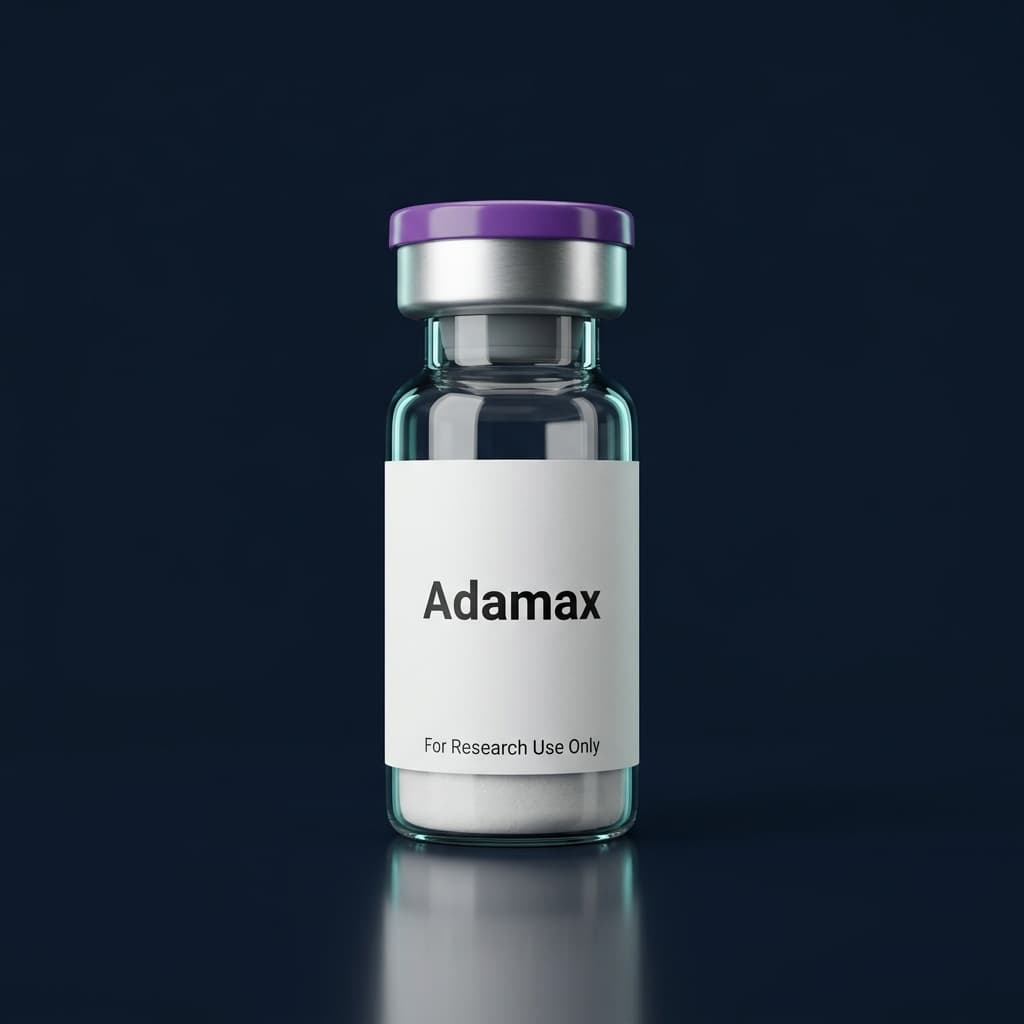
Adamax
O laboratório identificou-o como a forma de Adamax de 984 Da, sem grupo adamantano. O nosso lote de 10 mg é esta forma.
Envio gratuito em encomendas acima de €200
- Se um produto não corresponder à especificação do seu COA publicado, contacte-nos com o número do seu lote: investigamos face ao relatório do lote e substituímos qualquer produto que não o cumpra, sem qualquer custo para si.
- Contacte-nos no prazo de 48 horas após a entrega com fotografias da caixa exterior, do acondicionamento interior e de quaisquer frascos afetados, com os rótulos legíveis. Os danos de transporte confirmados são substituídos sem qualquer custo para si.
O laboratório identificou-o como a forma de Adamax de 984 Da, sem grupo adamantano. O nosso lote de 10 mg é esta forma.
3–7 dias na maioria dos países da UE · 10–14 dias nos países nórdicos e Estados Bálticos
Envio padrão na UE a partir de 4,99 € (RO) · principais países da UE (GLS) 17,99 € · países nórdicos e Estados Bálticos 12,99 €–15,99 € · Expedição no prazo de 1–2 dias úteis · Envio gratuito acima de 200,00 € · sem formalidades alfandegárias (UE) · através da rede de transportadoras da UE
Faltam 200,00 € para o envio gratuito acima de 200,00 €. Abaixo desse valor, o envio padrão na UE custa 17,99 € (GLS, a maioria dos países da UE).
Como funcionam a Paysera e as transferências SEPA
- Pagar: faça uma transferência SEPA manual para o IBAN que lhe enviamos por e-mail ou, quando disponível no checkout para a sua morada, aprove uma transferência SEPA no seu próprio banco através da página alojada da Paysera.
- Confirmamos: a Paysera notifica-nos de imediato, ou associamos a transferência manual à encomenda quando esta chega (normalmente 1 dia útil).
- Expedimos: as encomendas confirmadas seguem normalmente no prazo de 1-2 dias úteis.
Atualmente não são oferecidos pagamentos com cartão. Não existe processador de cartões neste checkout.
Research-grade Adamax, 984 Da form without the adamantane group. Class-level specification ≥97%; selected lots independently tested. Lyophilized powder in sealed glass vial. For research purposes only. Not for human consumption.
| Quantidade | Preço unitário | Total | Poupança |
|---|---|---|---|
| 1 unidade | 49,99 € | 49,99 € | -- |
| 3+ | 47,49 € | 142,47 € | 5% de desconto |
| 5+Mais popular | 44,99 € | 224,95 € | 10% de desconto |
| 10+ | 42,49 € | 424,92 € | 15% de desconto |
Aviso Importante
Este produto destina-se apenas a fins de investigação. Não se destina a uso humano ou veterinário. Ao efetuar a compra, confirma que este produto será utilizado exclusivamente para fins de investigação in vitro.
Devido a requisitos legais e regulamentares, este produto não pode ser enviado para: Itália.
Reconstituição Necessária
Este péptido é fornecido liofilizado (pó seco) e requer água bacteriostática para reconstituição antes da utilização. A água BAC é vendida separadamente.
Quando este produto pode não ser adequado à sua investigação
- ⚠Se a sua investigação exigir material de grau GMP para aplicações clínicas — os péptidos de grau de investigação não se destinam a uso clínico.
- ⚠Se o seu laboratório não dispuser de armazenamento a frio adequado (congelador a -20°C) — a estabilidade deste péptido pode ficar comprometida a temperaturas mais elevadas.
- ⚠Se o protocolo do seu estudo exigir padrões de referência aprovados pela FDA — contacte a USP ou um fornecedor de material de referência certificado.
Estão disponíveis relatórios laboratoriais publicados para lotes selecionados. Consulte cada relatório para conhecer o resultado e o método indicado. Apenas para fins de investigação.
Ver relatório n.º 241505 em janoshik.com →
Expedição no prazo de 1–2 dias úteis, envio a partir de 4,99 € na Roménia e de 12,99 € no resto da Europa
Especificação registada ao nível da classe; relatório Janoshik independente em lotes selecionados
Acerca de Adamax
Adamax is a synthetic research peptide in the Semax family. Semax is a heptapeptide built from the ACTH(4-7) fragment extended with Pro-Gly-Pro, and Adamax is offered in more than one form under the same name: one carries an adamantane group, one does not.
This product is the 984 Da form, without the adamantane group. Janoshik identified the 10mg lot CP-2609-ADM10 as this form in report #241505.
Research use is in laboratory studies of Semax-family peptides, including comparisons between modified and unmodified analogues and studies of peptide stability.
Specifications
| Parameter | Value |
|---|---|
| Compound | Adamax, 984 Da form (no adamantane group) |
| Amount per Vial | 10mg |
| Purity | ≥97% (class-level specification) |
| Format | Lyophilized powder |
| Storage | -20°C; 2-8°C after reconstitution |
Storage
Store at -20°C before reconstitution. Refrigerate at 2-8°C after reconstitution.
Adamax is supplied for laboratory research use only. Not approved for human use. Handle in compliance with institutional biosafety guidelines.
Resumo da especificação
Acerca de Adamax
Adamax is a synthetic research peptide in the Semax family. Semax is a heptapeptide built from the ACTH(4-7) fragment extended with Pro-Gly-Pro, and Adamax is offered in more than one form under the same name: one carries an adamantane group, one does not.
This product is the 984 Da form, without the adamantane group. Janoshik identified the 10mg lot CP-2609-ADM10 as this form in report #241505.
Research use is in laboratory studies of Semax-family peptides, including comparisons between modified and unmodified analogues and studies of peptide stability.
Specifications
| Parameter | Value |
|---|---|
| Compound | Adamax, 984 Da form (no adamantane group) |
| Amount per Vial | 10mg |
| Purity | ≥97% (class-level specification) |
| Format | Lyophilized powder |
| Storage | -20°C; 2-8°C after reconstitution |
Storage
Store at -20°C before reconstitution. Refrigerate at 2-8°C after reconstitution.
Adamax is supplied for laboratory research use only. Not approved for human use. Handle in compliance with institutional biosafety guidelines.
Confiança do investigador
Porque é que os investigadores escolhem a CertaPeptides
Quem testa isto efetivamente?
Lotes selecionados são verificados de forma independente pela Janoshik Analytical (República Checa) e publicados no portal público da Janoshik. Outros lotes são enviados com a especificação de lote do fornecedor. Consulte /coa para ver a lista publicada.
Ver COA →E se eu receber o lote errado?
Cada rótulo de frasco contém um código. Procure-o na nossa página de verificação: esta mostra o que a CertaPeptides publica para esse código e, para um lote retirado, que o lote foi retirado e porquê. Se o seu lote tiver sido retirado, ou se a pesquisa do código do seu rótulo não devolver resultados, envie-nos esse código por e-mail.
Ver COA →De onde é enviado?
Roménia (UE). Somos a CERTALAB SRL, CUI 54169956, registada para efeitos de IVA. Sameday para a Roménia, GLS para a maioria dos destinos da UE, TCE Worldwide para os restantes mercados transfronteiriços da UE e fora da UE (Reino Unido, Suíça). Entrega em 1–15 dias úteis, dependendo do destino — janela exata apresentada no checkout.
Detalhes de envio →E se houver um problema?
Tem um direito de livre resolução de 14 dias ao abrigo da OUG 34/2014 (legislação romena/da UE em matéria de consumidores), com possibilidade de escalonamento para ANPC e de resolução alternativa de litígios (SAL). Contacte-nos em support@certapeptides.com.
Política de devoluções →Informações do produto
Este produto destina-se apenas a fins de investigação e desenvolvimento científico. É uma substância química que não deve ser utilizada como fármaco, medicamento, substância ativa ou ingrediente em qualquer produto destinado ao consumo humano ou animal. Os investigadores devem manusear este composto em conformidade com as diretrizes de biossegurança da sua instituição. Utilize apenas em instalações laboratoriais devidamente equipadas e com equipamento de proteção individual adequado.