Research-grade compound. Laboratory use only. Not intended for human or animal use, ingestion, or injection. No medical claims are made or implied.
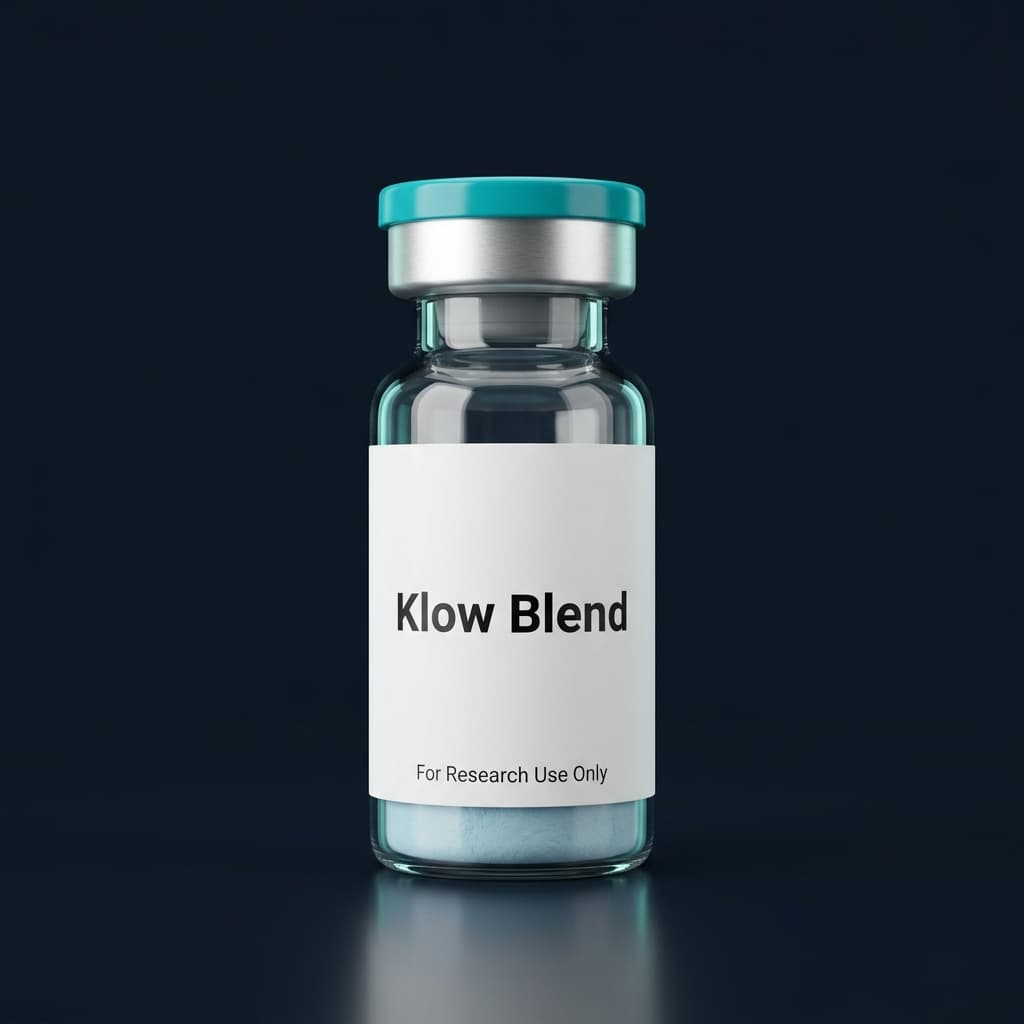
Klow Blend (BPC-157 + GHK-Cu + TB-500 + KPV) 80mg
3–7 days most of the EU · 8–14 Nordics/Baltics
Standard EU from €4.99 (RO) · core EU GLS €17.99 · Nordics/Baltics €12.99–€13.99 · Same-day dispatch before 14:00 CET on weekdays · Free shipping over €200 · no customs paperwork (EU) · via EU carrier network
€200.00 away from free shipping over €200. Under that, standard EU shipping is €17.99 (GLS, most of the EU).
How Paysera and SEPA work
- Pay — approve a SEPA transfer in your own bank via Paysera’s hosted page, or send a manual SEPA transfer using the IBAN we email you.
- We confirm — Paysera notifies us instantly, or we match a manual transfer when it arrives (usually 1 business day).
- We dispatch — confirmed orders placed before 14:00 CET on a weekday typically ship the same day.
Card payments are not currently offered. There is no card processor on this checkout.
Free shipping on orders over €200
Research-grade Klow Blend (BPC-157 + GHK-Cu + TB-500 + KPV). ≥98% supplier batch specification; selected lots independently tested. Lyophilized powder in sealed glass vial. For laboratory research use only. Not for human consumption.
| Quantity | Price Each | Total | Savings |
|---|---|---|---|
| 1 unit | €124.99 | €124.99 | -- |
| 3+ | €118.74 | €356.22 | 5% off |
| 5+Most Popular | €112.49 | €562.46 | 10% off |
| 10+ | €106.24 | €1,062.42 | 15% off |
Important Notice
This product is intended for laboratory and research use only. Not for human or veterinary use. By purchasing, you confirm this product will be used exclusively for in-vitro research purposes.
Reconstitution Required
This peptide ships lyophilized (dry powder) and requires bacteriostatic water to reconstitute before use. BAC water is sold separately.
When This Product May Not Suit Your Research
- ⚠If your research requires GMP-grade material for clinical applications — research-grade peptides are not intended for clinical use.
- ⚠If your lab lacks proper cold storage (-20°C freezer) — this peptide's stability may be compromised at higher temperatures.
- ⚠If your study protocol requires FDA-approved reference standards — contact USP or a certified reference material provider.
Published laboratory reports are available for selected lots. Check each report for its result and stated method. For research purposes only.
View report #172225 on janoshik.com →
24h dispatch, EU-wide shipping from €4.99
Supplier batch specification on every product; independent Janoshik report on selected lots
About Klow Blend (BPC-157 + GHK-Cu + TB-500 + KPV) 80mg
Klow Blend is a four-peptide research formulation that extends the Glow Blend composition (BPC-157, GHK-Cu, TB-500) with KPV, an anti-inflammatory tripeptide derived from the C-terminal sequence of alpha-MSH. Total content is 80mg across the four components. The addition of KPV is the defining difference from the three-peptide blend.
KPV (Lys-Pro-Val) is the C-terminal tripeptide of alpha-melanocyte-stimulating hormone (alpha-MSH). Alpha-MSH's anti-inflammatory activity has been known for decades, and KPV was identified as the minimal active sequence responsible for this effect. KPV acts through melanocortin receptors (particularly MC1R) and has direct anti-inflammatory activity in intestinal epithelial cells, making it particularly interesting for GI inflammatory models. It downregulates NF-kB-dependent inflammatory pathways and reduces pro-inflammatory cytokine production. Unlike the full alpha-MSH molecule, KPV is a small, stable tripeptide with reasonable oral and local bioavailability.
The rationale for KPV's inclusion in a skin-focused blend is that inflammation is a significant driver of both acute skin conditions and chronic aging processes. Adding an anti-inflammatory peptide alongside the repair and remodeling signals provided by the other three compounds addresses an additional axis of skin and tissue biology.
Specifications
| Parameter | Value |
|---|---|
| Component 1 | BPC-157 |
| Component 2 | GHK-Cu (copper tripeptide) |
| Component 3 | TB-500 |
| Component 4 | KPV (alpha-MSH C-terminal tripeptide) |
| Total per Vial | 80mg combined |
| Purity | ≥98% (supplier batch spec) |
| Format | Lyophilized powder, single-use vial |
| Storage | -20°C before reconstitution; 2-8°C after |
Storage
Store at -20°C before reconstitution. Refrigerate at 2-8°C after reconstitution and use within 28 days. Protect from light, particularly due to GHK-Cu photosensitivity.
What is KPV and why add it to the BPC-157/GHK-Cu/TB-500 blend?
KPV (Lys-Pro-Val) is the C-terminal tripeptide of alpha-MSH that retains the parent molecule's anti-inflammatory activity. It acts through melanocortin receptors and directly suppresses NF-kB-dependent inflammatory signaling in epithelial cells. Its addition to the blend adds an anti-inflammatory dimension to the tissue repair and remodeling effects of BPC-157, GHK-Cu, and TB-500. The rationale is that inflammation resolution and tissue repair often need to be addressed simultaneously -- KPV helps address the inflammatory side while the other peptides support the structural repair processes.
What is the difference between Klow Blend and Glow Blend?
Klow Blend adds KPV to the Glow Blend composition (BPC-157 + GHK-Cu + TB-500). KPV contributes anti-inflammatory activity through melanocortin receptor signaling, which is not part of the Glow Blend. The Klow Blend total peptide content is 80mg versus 70mg for Glow Blend. Researchers primarily interested in inflammatory processes alongside tissue repair would favor Klow Blend; those focused specifically on collagen synthesis, cell migration, and vascular effects without the added anti-inflammatory dimension might prefer the Glow Blend for a simpler composition.
Is KPV bioavailable via different routes?
KPV is a short tripeptide with better stability than larger peptides. It has documented biological activity in intestinal epithelial cell models when administered directly, and some research has explored nanoparticle formulations for oral delivery. In this blend it is present alongside the other components. The tripeptide's small size makes it more resistant to proteolytic degradation than larger peptides, though the full pharmacokinetic picture for this route of administration requires study-specific characterization.
Klow Blend is supplied for laboratory research use only. Not approved for human use. Handle in compliance with institutional biosafety guidelines.
Specification Summary
About Klow Blend (BPC-157 + GHK-Cu + TB-500 + KPV) 80mg
Klow Blend is a four-peptide research formulation that extends the Glow Blend composition (BPC-157, GHK-Cu, TB-500) with KPV, an anti-inflammatory tripeptide derived from the C-terminal sequence of alpha-MSH. Total content is 80mg across the four components. The addition of KPV is the defining difference from the three-peptide blend.
KPV (Lys-Pro-Val) is the C-terminal tripeptide of alpha-melanocyte-stimulating hormone (alpha-MSH). Alpha-MSH's anti-inflammatory activity has been known for decades, and KPV was identified as the minimal active sequence responsible for this effect. KPV acts through melanocortin receptors (particularly MC1R) and has direct anti-inflammatory activity in intestinal epithelial cells, making it particularly interesting for GI inflammatory models. It downregulates NF-kB-dependent inflammatory pathways and reduces pro-inflammatory cytokine production. Unlike the full alpha-MSH molecule, KPV is a small, stable tripeptide with reasonable oral and local bioavailability.
The rationale for KPV's inclusion in a skin-focused blend is that inflammation is a significant driver of both acute skin conditions and chronic aging processes. Adding an anti-inflammatory peptide alongside the repair and remodeling signals provided by the other three compounds addresses an additional axis of skin and tissue biology.
Specifications
| Parameter | Value |
|---|---|
| Component 1 | BPC-157 |
| Component 2 | GHK-Cu (copper tripeptide) |
| Component 3 | TB-500 |
| Component 4 | KPV (alpha-MSH C-terminal tripeptide) |
| Total per Vial | 80mg combined |
| Purity | ≥98% (supplier batch spec) |
| Format | Lyophilized powder, single-use vial |
| Storage | -20°C before reconstitution; 2-8°C after |
Storage
Store at -20°C before reconstitution. Refrigerate at 2-8°C after reconstitution and use within 28 days. Protect from light, particularly due to GHK-Cu photosensitivity.
What is KPV and why add it to the BPC-157/GHK-Cu/TB-500 blend?
KPV (Lys-Pro-Val) is the C-terminal tripeptide of alpha-MSH that retains the parent molecule's anti-inflammatory activity. It acts through melanocortin receptors and directly suppresses NF-kB-dependent inflammatory signaling in epithelial cells. Its addition to the blend adds an anti-inflammatory dimension to the tissue repair and remodeling effects of BPC-157, GHK-Cu, and TB-500. The rationale is that inflammation resolution and tissue repair often need to be addressed simultaneously -- KPV helps address the inflammatory side while the other peptides support the structural repair processes.
What is the difference between Klow Blend and Glow Blend?
Klow Blend adds KPV to the Glow Blend composition (BPC-157 + GHK-Cu + TB-500). KPV contributes anti-inflammatory activity through melanocortin receptor signaling, which is not part of the Glow Blend. The Klow Blend total peptide content is 80mg versus 70mg for Glow Blend. Researchers primarily interested in inflammatory processes alongside tissue repair would favor Klow Blend; those focused specifically on collagen synthesis, cell migration, and vascular effects without the added anti-inflammatory dimension might prefer the Glow Blend for a simpler composition.
Is KPV bioavailable via different routes?
KPV is a short tripeptide with better stability than larger peptides. It has documented biological activity in intestinal epithelial cell models when administered directly, and some research has explored nanoparticle formulations for oral delivery. In this blend it is present alongside the other components. The tripeptide's small size makes it more resistant to proteolytic degradation than larger peptides, though the full pharmacokinetic picture for this route of administration requires study-specific characterization.
Klow Blend is supplied for laboratory research use only. Not approved for human use. Handle in compliance with institutional biosafety guidelines.
Researcher Confidence
Why researchers choose CertaPeptides
Who actually tests this?
Selected lots are independently verified by Janoshik Analytical (Czech Republic) and published on the Janoshik public portal. Other lots ship with the supplier's batch specification. See /coa for the published wall.
View COAs →What if I get the wrong batch?
Every bottle label carries a lot number that maps to a specific Certificate of Analysis. If a batch fails spec, we don't ship it — full stop.
View COAs →Where does it ship from?
Romania (EU). We are CERTALAB SRL, CUI 54169956, VAT-registered. Sameday for Romania, GLS for most EU destinations, TCE Worldwide for the remaining cross-border EU and non-EU markets (UK, Switzerland, Iceland, Serbia). Delivery 1–15 business days depending on destination — exact window shown at checkout.
Shipping details →What if there's a problem?
You have a 14-day withdrawal right under OUG 34/2014 (Romanian/EU consumer law), with ANPC/ODR escalation available. Contact us at support@certapeptides.com.
Returns policy →Product Information
This product is intended for scientific research and development purposes only. It is a chemical substance that shall not be used as a drug, medicine, active substance, or ingredient in any product intended for human or animal consumption. Researchers must handle this compound in accordance with their institutional biosafety guidelines. Use only in properly equipped laboratory settings with appropriate personal protective equipment.