Verbindung in Forschungsqualität. Nur zur Verwendung im Labor. Nicht für die Anwendung am Menschen oder am Tier, zur Einnahme oder zur Injektion bestimmt. Es werden keine medizinischen Aussagen getroffen oder impliziert.
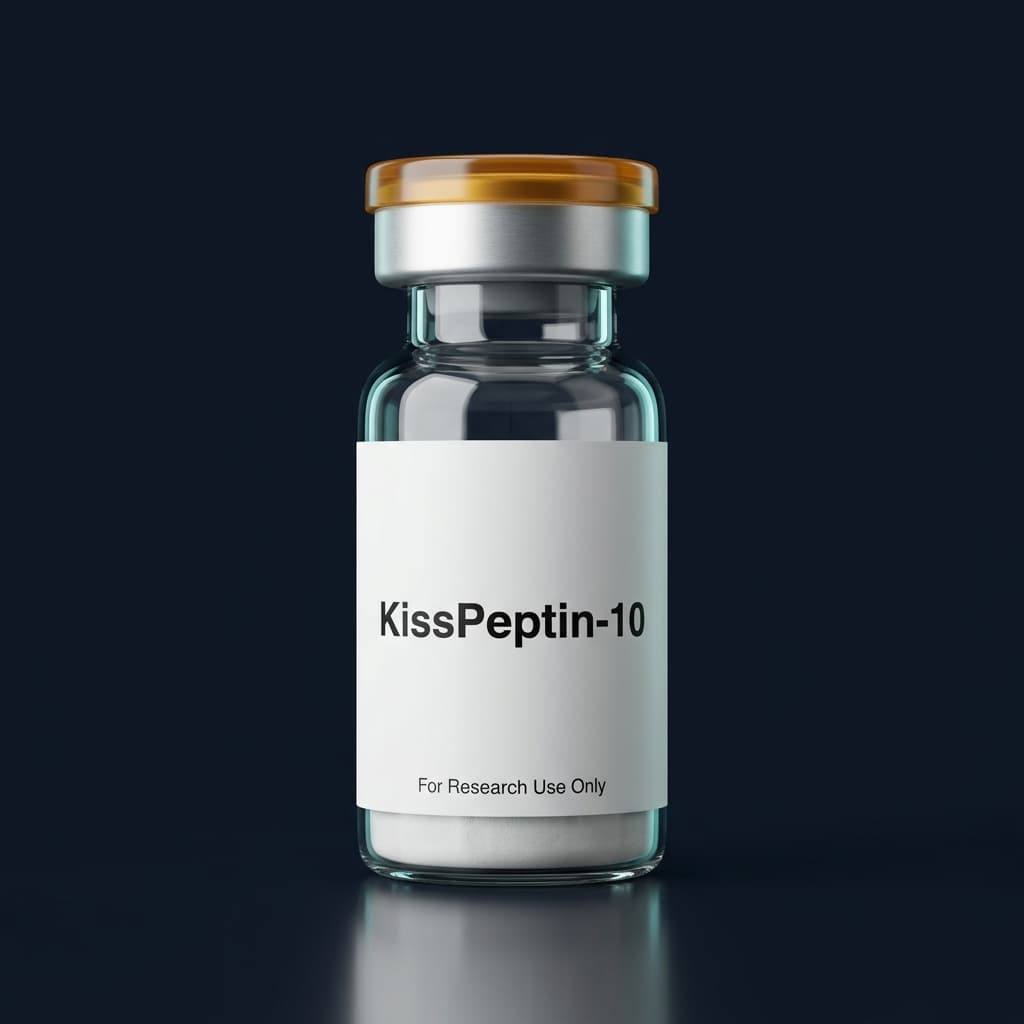
KissPeptin-10
Kostenloser Versand bei Bestellungen über €200
- Entspricht ein Produkt nicht der Spezifikation auf seinem veröffentlichten COA, kontaktieren Sie uns mit Ihrer Chargennummer: Wir prüfen den Fall anhand des Berichts der Charge und ersetzen jedes Produkt, das ihn nicht erfüllt – ohne Kosten für Sie.
- Kontaktieren Sie uns innerhalb von 48 Stunden nach Lieferung mit Fotos des Versandkartons, der Innenverpackung und aller betroffenen Vials mit lesbaren Etiketten. Bestätigte Transportschäden werden kostenlos ersetzt.
3–7 Tage in die meisten EU-Länder · 10–14 Tage nach Nordeuropa und in die baltischen Staaten
Standardversand in der EU ab 4,99 € (RO) · EU-Kernländer (GLS) 17,99 € · Nordeuropa und baltische Staaten 12,99 €–15,99 € · Versand innerhalb von 1–2 Werktagen · Kostenloser Versand ab 200,00 € · keine Zollformalitäten (EU) · über das Netz der Versanddienstleister in der EU
Noch 200,00 € bis zum kostenlosen Versand ab 200,00 €. Darunter kostet der Standardversand in der EU 17,99 € (GLS, die meisten EU-Länder).
So funktionieren Paysera und SEPA
- Bezahlen: Tätigen Sie eine manuelle SEPA-Überweisung auf die IBAN, die wir Ihnen per E-Mail senden, oder geben Sie, sofern diese Option an der Kasse für Ihre Adresse angeboten wird, über die gehostete Seite von Paysera eine SEPA-Überweisung in Ihrer eigenen Bank frei.
- Wir bestätigen: Paysera benachrichtigt uns sofort, oder wir ordnen eine manuelle Überweisung Ihrer Bestellung zu, sobald sie eingeht (in der Regel 1 Werktag).
- Wir versenden: Bestätigte Bestellungen werden in der Regel innerhalb von 1-2 Werktagen versandt.
Kartenzahlungen werden derzeit nicht angeboten. An dieser Kasse gibt es keinen Kartenzahlungsanbieter.
Research-grade KissPeptin-10. ≥98% supplier batch specification; selected lots independently tested (99.4% avg across published reports). Lyophilized powder in sealed glass vial. For laboratory research use only. Not for human consumption.
| Menge | Stückpreis | Gesamt | Ersparnis |
|---|---|---|---|
| 1 unit | 35,99 € | 35,99 € | -- |
| 3+ | 34,19 € | 102,57 € | 5% Rabatt |
| 5+Am beliebtesten | 32,39 € | 161,96 € | 10% Rabatt |
| 10+ | 30,59 € | 305,92 € | 15% Rabatt |
Wichtiger Hinweis
Dieses Produkt ist ausschließlich für die Verwendung im Labor und in der Forschung bestimmt. Nicht für die Verwendung am Menschen oder in der Veterinärmedizin. Mit dem Kauf bestätigen Sie, dass dieses Produkt ausschließlich für In-vitro-Forschungszwecke verwendet wird.
Aufgrund rechtlicher und regulatorischer Vorgaben kann dieses Produkt nicht versendet werden nach: Belgien, Dänemark, Italien, Kroatien, Litauen, Polen, Portugal, Schweden und Slowenien.
Rekonstitution erforderlich
Dieses Peptid wird lyophilisiert (trockenes Pulver) versendet und muss vor der Verwendung mit bakteriostatischem Wasser rekonstituiert werden. BAC-Wasser wird separat verkauft.
Wann dieses Produkt möglicherweise nicht zu Ihrer Forschung passt
- ⚠Wenn Ihre Forschung Material in GMP-Qualität für klinische Anwendungen erfordert – Peptide in Forschungsqualität sind nicht für den klinischen Einsatz bestimmt.
- ⚠Wenn Ihrem Labor eine geeignete Kühllagerung (-20°C-Gefrierschrank) fehlt – die Stabilität dieses Peptids kann bei höheren Temperaturen beeinträchtigt sein.
- ⚠Wenn Ihr Studienprotokoll FDA-zugelassene Referenzstandards erfordert – wenden Sie sich an USP oder einen Anbieter von zertifiziertem Referenzmaterial.
Für ausgewählte Chargen sind Laborberichte veröffentlicht. Prüfen Sie jeden Bericht auf das Ergebnis und die angegebene Methode. Nur für Forschungszwecke.
Bericht #233649 auf janoshik.com ansehen →
Versand innerhalb von 1–2 Werktagen, Lieferung ab 4,99 € in Rumänien, ab 12,99 € im übrigen Europa
Hinterlegte Spezifikation auf Klassenebene; unabhängiger Janoshik-Bericht für ausgewählte Chargen
Über KissPeptin-10
Kisspeptin-10 is the minimum active fragment of the kisspeptin family -- a 10-amino acid C-terminal peptide derived from the KISS1 gene product. It binds the kisspeptin receptor (GPR54/KISS1R) and is the most potent naturally occurring kisspeptin isoform at this receptor. Kisspeptins are the most important upstream activators of GnRH neurons, making them the master regulators of reproductive function and central integrators of metabolic state with fertility.
The discovery of kisspeptin's role in GnRH regulation in 2003-2004 was a significant advance in reproductive endocrinology. Prior to this, the signal that drove GnRH neurons was not clearly identified. Kisspeptin neurons in the arcuate nucleus and the anteroventral periventricular nucleus receive metabolic and hormonal inputs -- leptin, sex steroids, thyroid hormones, metabolic state -- and translate these into GnRH drive. This makes kisspeptin the integration point between metabolic and reproductive signalling studied in models: how energy balance is coupled to GnRH drive, and how puberty timing relates to body weight in research models.
Research applications include stimulation testing of the HPG axis (kisspeptin-10 stimulation paradigm to assess GnRH neuron function), study of GnRH-axis signalling in hypothalamic hypogonadism models, and research into the neuroendocrine control of puberty and reproduction.
Specifications
| Parameter | Value |
|---|---|
| Compound | Kisspeptin-10 (KISS1 decapeptide, C-terminal fragment) |
| Purity | ≥98% (supplier batch spec; 99.4% avg across independently tested lots) |
| Format | Lyophilized powder |
| Reconstitution | Sterile water or saline |
| Storage | -20°C; 2-8°C after reconstitution |
Storage
Store at -20°C before reconstitution. Refrigerate at 2-8°C after reconstitution and use within 14 days. Protect from repeated freeze-thaw cycles.
How does kisspeptin control GnRH release?
Kisspeptin neurons in the hypothalamus (particularly in the arcuate nucleus for pulsatile GnRH regulation, and the anteroventral periventricular nucleus for the preovulatory LH surge) project directly to GnRH neurons, which express KISS1R. In research models, when kisspeptin binds KISS1R on GnRH neurons it is studied for its role in potently stimulating GnRH release. The arcuate kisspeptin neurons, which also co-express neurokinin B and dynorphin (KNDy neurons), are studied as the GnRH pulse generator -- the coordinated activity associated with pulsatile GnRH secretion that underlies LH and FSH secretion in model systems.
Why is kisspeptin important for understanding metabolic-reproductive connections?
Kisspeptin neurons receive input from leptin receptors, and leptin (the adipocyte hormone that signals nutritional adequacy) is required for normal kisspeptin neuron activity. In leptin-deficient or leptin-resistant states modelled in research, kisspeptin signaling is impaired and GnRH drive is reduced. This is studied to understand why severe nutritional restriction and extreme exercise suppress reproductive signalling in models -- the body uses kisspeptin as a gate through which metabolic status must pass before reproductive function proceeds. Kisspeptin research is central to understanding how energy balance and reproduction are coupled.
What is the kisspeptin stimulation paradigm?
The kisspeptin stimulation paradigm administers kisspeptin-10 (or kisspeptin-54) and measures LH, FSH, and testosterone/estradiol response. Unlike the standard GnRH stimulation paradigm which probes pituitary function, the kisspeptin paradigm examines the GnRH neuron and pituitary together -- it tests whether GnRH neurons can respond to kisspeptin and whether the pituitary can respond to the resulting GnRH release. This allows distinction between GnRH neuron dysfunction (no response to kisspeptin) and pituitary dysfunction (response to GnRH direct stimulation but not to kisspeptin). Research groups in the UK have published kisspeptin stimulation protocols.
Kisspeptin-10 is supplied for laboratory research use only. Not for human use. Handle in compliance with institutional biosafety guidelines.
Spezifikationsübersicht
Über KissPeptin-10
Kisspeptin-10 is the minimum active fragment of the kisspeptin family -- a 10-amino acid C-terminal peptide derived from the KISS1 gene product. It binds the kisspeptin receptor (GPR54/KISS1R) and is the most potent naturally occurring kisspeptin isoform at this receptor. Kisspeptins are the most important upstream activators of GnRH neurons, making them the master regulators of reproductive function and central integrators of metabolic state with fertility.
The discovery of kisspeptin's role in GnRH regulation in 2003-2004 was a significant advance in reproductive endocrinology. Prior to this, the signal that drove GnRH neurons was not clearly identified. Kisspeptin neurons in the arcuate nucleus and the anteroventral periventricular nucleus receive metabolic and hormonal inputs -- leptin, sex steroids, thyroid hormones, metabolic state -- and translate these into GnRH drive. This makes kisspeptin the integration point between metabolic and reproductive signalling studied in models: how energy balance is coupled to GnRH drive, and how puberty timing relates to body weight in research models.
Research applications include stimulation testing of the HPG axis (kisspeptin-10 stimulation paradigm to assess GnRH neuron function), study of GnRH-axis signalling in hypothalamic hypogonadism models, and research into the neuroendocrine control of puberty and reproduction.
Specifications
| Parameter | Value |
|---|---|
| Compound | Kisspeptin-10 (KISS1 decapeptide, C-terminal fragment) |
| Purity | ≥98% (supplier batch spec; 99.4% avg across independently tested lots) |
| Format | Lyophilized powder |
| Reconstitution | Sterile water or saline |
| Storage | -20°C; 2-8°C after reconstitution |
Storage
Store at -20°C before reconstitution. Refrigerate at 2-8°C after reconstitution and use within 14 days. Protect from repeated freeze-thaw cycles.
How does kisspeptin control GnRH release?
Kisspeptin neurons in the hypothalamus (particularly in the arcuate nucleus for pulsatile GnRH regulation, and the anteroventral periventricular nucleus for the preovulatory LH surge) project directly to GnRH neurons, which express KISS1R. In research models, when kisspeptin binds KISS1R on GnRH neurons it is studied for its role in potently stimulating GnRH release. The arcuate kisspeptin neurons, which also co-express neurokinin B and dynorphin (KNDy neurons), are studied as the GnRH pulse generator -- the coordinated activity associated with pulsatile GnRH secretion that underlies LH and FSH secretion in model systems.
Why is kisspeptin important for understanding metabolic-reproductive connections?
Kisspeptin neurons receive input from leptin receptors, and leptin (the adipocyte hormone that signals nutritional adequacy) is required for normal kisspeptin neuron activity. In leptin-deficient or leptin-resistant states modelled in research, kisspeptin signaling is impaired and GnRH drive is reduced. This is studied to understand why severe nutritional restriction and extreme exercise suppress reproductive signalling in models -- the body uses kisspeptin as a gate through which metabolic status must pass before reproductive function proceeds. Kisspeptin research is central to understanding how energy balance and reproduction are coupled.
What is the kisspeptin stimulation paradigm?
The kisspeptin stimulation paradigm administers kisspeptin-10 (or kisspeptin-54) and measures LH, FSH, and testosterone/estradiol response. Unlike the standard GnRH stimulation paradigm which probes pituitary function, the kisspeptin paradigm examines the GnRH neuron and pituitary together -- it tests whether GnRH neurons can respond to kisspeptin and whether the pituitary can respond to the resulting GnRH release. This allows distinction between GnRH neuron dysfunction (no response to kisspeptin) and pituitary dysfunction (response to GnRH direct stimulation but not to kisspeptin). Research groups in the UK have published kisspeptin stimulation protocols.
Kisspeptin-10 is supplied for laboratory research use only. Not for human use. Handle in compliance with institutional biosafety guidelines.
Vertrauen der Forschenden
Warum Forschende sich für CertaPeptides entscheiden
Wer testet das eigentlich?
Ausgewählte Chargen werden unabhängig von Janoshik Analytical (Tschechische Republik) geprüft und im öffentlichen Janoshik-Portal veröffentlicht. Andere Chargen werden mit der Chargenspezifikation des Lieferanten versendet. Siehe /coa für die veröffentlichte Übersicht.
COAs ansehen →Was ist, wenn ich die falsche Charge erhalte?
Jedes Fläschchen trägt auf dem Etikett einen Code. Schlagen Sie ihn auf unserer Verifizierungsseite nach: Dort sehen Sie, was CertaPeptides zu diesem Code veröffentlicht, und bei einer zurückgezogenen Charge, dass sie zurückgezogen wurde, und warum. Ist Ihre Charge zurückgezogen oder findet die Suche zu dem Code auf Ihrem Etikett nichts, schreiben Sie uns diesen Code per E-Mail.
COAs ansehen →Von wo wird versendet?
Rumänien (EU). Wir sind CERTALAB SRL, CUI 54169956, umsatzsteuerlich registriert. Sameday für Rumänien, GLS für die meisten EU-Ziele, TCE Worldwide für die übrigen grenzüberschreitenden EU- und Nicht-EU-Märkte (Vereinigtes Königreich, Schweiz). Lieferung in 1–15 Werktagen je nach Zielort — genauer Zeitraum wird an der Kasse angezeigt.
Versanddetails →Was ist, wenn es ein Problem gibt?
Sie haben ein 14-tägiges Widerrufsrecht gemäß OUG 34/2014 (rumänisches/EU-Verbraucherrecht), mit der Möglichkeit zur Eskalation an die ANPC und zur alternativen Streitbeilegung (SAL). Kontaktieren Sie uns unter support@certapeptides.com.
Rückgaberichtlinie →Produktinformationen
Dieses Produkt ist ausschließlich für wissenschaftliche Forschungs- und Entwicklungszwecke bestimmt. Es handelt sich um eine chemische Substanz, die nicht als Arzneimittel, Medikament, Wirkstoff oder Bestandteil in einem zum menschlichen oder tierischen Verzehr bestimmten Produkt verwendet werden darf. Forschende müssen diese Verbindung in Übereinstimmung mit den Biosicherheitsrichtlinien ihrer Einrichtung handhaben. Verwenden Sie sie nur in ordnungsgemäß ausgestatteten Laborumgebungen mit geeigneter persönlicher Schutzausrüstung.