Skip to content

๐Ÿ”ฌ New stock arriving early April! Check product pages for delivery estimates ย |ย  EU-wide shipping from โ‚ฌ4.99 ย |ย  View Stock Status

CertaPeptides
Peptide Guides15 min readMarch 22, 2026Updated Mar 22, 2026

Melanotan II (MT-2): Melanocortin Research and Receptor Mechanisms

Introduction Melanotan II (MT-2) is a synthetic cyclic heptapeptide derived from alpha-melanocyte-stimulating hormone (α-MSH), a naturally occurring neuropeptide encoded by [...]

Melanotan II (MT-2): Melanocortin Research and Receptor Mechanisms


Introduction

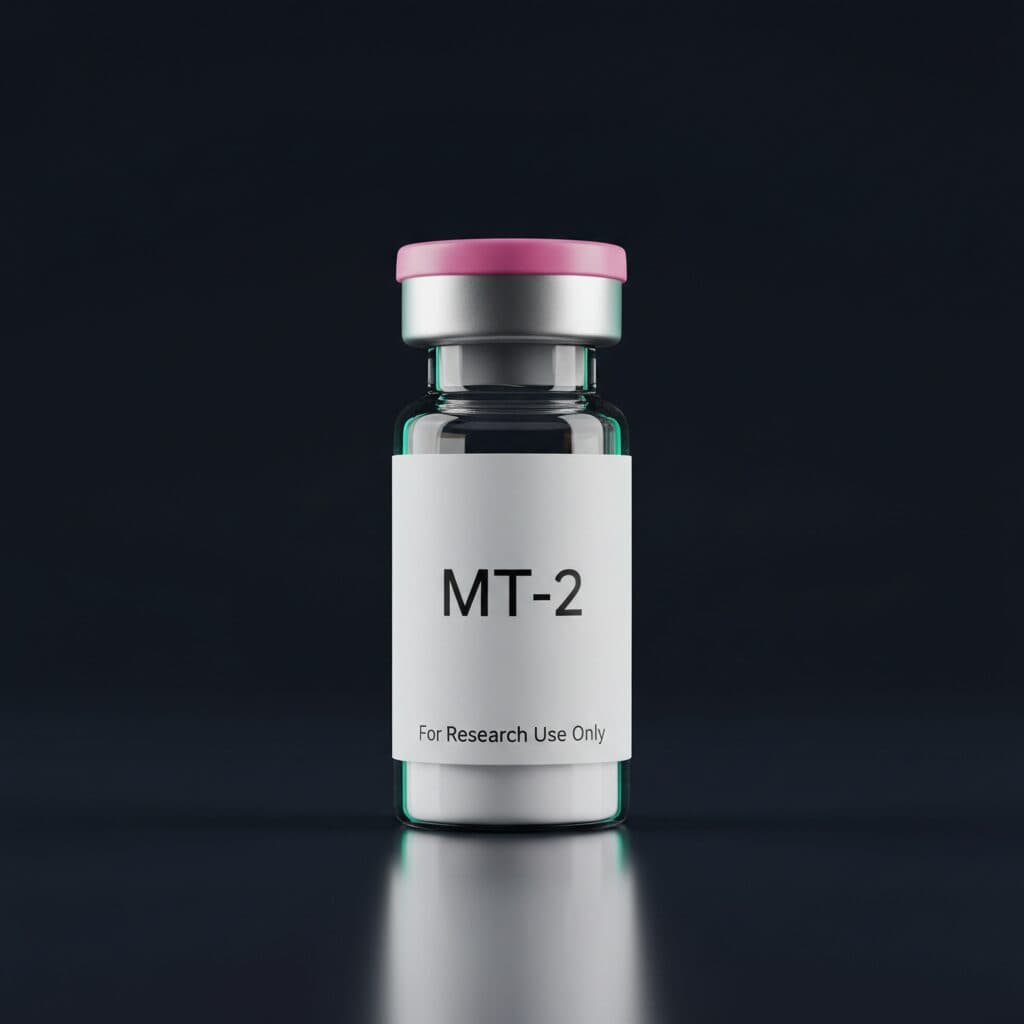
Melanotan II (MT-2) is a synthetic cyclic heptapeptide derived from alpha-melanocyte-stimulating hormone (α-MSH), a naturally occurring neuropeptide encoded by the proopiomelanocortin (POMC) gene. Since its first synthesis at the University of Arizona in the late 1980s, MT-2 has attracted sustained scientific interest because of its promiscuous binding profile across multiple melanocortin receptor subtypes โ€” a property that distinguishes it from both the endogenous hormone and its close analogue, Melanotan I.

This article provides an educational overview of the compound’s biochemistry, receptor pharmacology, documented research findings, and its relationship to related melanocortin peptides. All information is presented strictly for scientific and educational purposes. Nothing here constitutes medical advice, clinical guidance, or a recommendation for human use.


What Is Melanotan II?

Alpha-melanocyte-stimulating hormone (α-MSH) is a 13-amino-acid peptide produced primarily in the pituitary gland and hypothalamus from the larger POMC precursor protein. It acts as an endogenous ligand for all five known melanocortin receptors (MC1R–MC5R) and plays central roles in pigmentation, energy homeostasis, inflammation modulation, and sexual function.

Melanotan II is a cyclic analogue of α-MSH with the sequence Ac-Nle-c[Asp-His-D-Phe-Arg-Trp-Lys]-NH&sub2;. Key structural modifications relative to the native hormone include:

  • Replacement of methionine-4 with norleucine (Nle) โ€” improving metabolic stability
  • Substitution of Phe-7 with D-phenylalanine (D-Phe) โ€” increasing receptor binding affinity
  • Cyclisation via a lactam bridge between Asp-5 and Lys-10 โ€” conferring resistance to enzymatic degradation and enhancing potency

These modifications collectively produce a peptide with substantially greater receptor affinity and longer plasma half-life than α-MSH itself, making MT-2 a valuable pharmacological tool for studying the melanocortin system in preclinical settings.


Development History: University of Arizona Program

The synthesis of Melanotan II emerged from a systematic melanocortin research programme led by Victor J. Hruby and Mac Hadley at the University of Arizona. The programme’s original aim, beginning in the 1980s, was to develop stable α-MSH analogues capable of stimulating melanogenesis as a potential photoprotective strategy โ€” the hypothesis being that increasing baseline melanin density might reduce ultraviolet radiation damage to skin.

Melanotan I (afamelanotide, CUV1647) was the first analogue produced from this effort โ€” a linear 13-amino-acid peptide that preserves close structural similarity to α-MSH while offering improved stability. MT-2 followed as a more structurally compact, cyclised variant. During early preclinical investigations at Arizona, researchers noted that MT-2 produced effects beyond pigmentation alone, including effects on energy balance and sexual behaviour in animal models โ€” observations that would drive decades of subsequent mechanistic research.

The University of Arizona subsequently filed patents covering MT-2 and its derivatives. PT-141 (bremelanotide), a metabolite and simplified derivative of MT-2, later emerged from this lineage and underwent formal clinical development (see comparison section below).


Mechanism of Action: Melanocortin Receptor Subtypes

The melanocortin receptor family comprises five G-protein-coupled receptors (GPCRs), all signalling primarily through adenylyl cyclase activation (Gs pathway) to increase intracellular cyclic AMP (cAMP). MT-2 binds with high affinity to four of these five subtypes.

MC1R (Melanocortin 1 Receptor)

Expressed predominantly on epidermal melanocytes, MC1R activation by α-MSH or its analogues promotes the switch from pheomelanin (red/yellow pigment) to eumelanin (brown/black pigment) synthesis via upregulation of the cAMP/PKA/MITF/tyrosinase cascade. MT-2 binds MC1R with high affinity and was originally characterised through this receptor. Research data indicate MT-2’s EC50 at MC1R is in the low nanomolar range.

MC3R (Melanocortin 3 Receptor)

Expressed centrally โ€” particularly in the hypothalamus and limbic system โ€” MC3R is implicated in energy homeostasis, feeding behaviour, and autonomic regulation. Preclinical studies using MC3R-knockout mouse models suggest the receptor modulates meal size and metabolic efficiency. MT-2’s agonism at MC3R contributes to the energy-related effects observed in rodent research.

MC4R (Melanocortin 4 Receptor)

MC4R is the most extensively studied melanocortin receptor in metabolic research. Expressed throughout the hypothalamus (particularly the paraventricular nucleus), brainstem, and spinal cord, MC4R activation suppresses food intake, increases energy expenditure, and regulates autonomic nervous system tone. Mutations in the MC4R gene are the most common monogenic cause of human obesity, underscoring its physiological relevance. Research indicates MT-2 is a potent MC4R agonist and that this receptor subtype mediates a significant portion of MT-2’s documented effects in animal models, including erectile function in rodents and appetite suppression.

MC5R (Melanocortin 5 Receptor)

Widely distributed in exocrine glands (sebaceous, preputial, lacrimal), MC5R has been investigated for roles in exocrine secretion and immune modulation. MT-2 binds MC5R, though this receptor subtype has received comparatively less research attention relative to MC3R and MC4R.

MC2R: Notable Absence

MC2R (the ACTH receptor, expressed on adrenal cortex) does not bind α-MSH or MT-2. This selectivity gap is pharmacologically significant because MC2R activation drives cortisol release; the lack of MC2R activity means MT-2 does not stimulate the hypothalamic-pituitary-adrenal axis in the same manner as ACTH.


Key Research Findings

The following summarises representative published studies examining MT-2 in preclinical and early-phase contexts. All studies cited used animal or in vitro models unless otherwise stated.

1. Receptor Pharmacology and Binding Characterisation

Bednarek et al. (1999) published a comprehensive characterisation of MT-2 binding affinity across cloned human melanocortin receptors expressed in HEK293 cells. The study reported Ki values of approximately 0.15 nM (MC1R), 0.56 nM (MC3R), 0.93 nM (MC4R), and 6.3 nM (MC5R), confirming MT-2’s status as a non-selective but high-affinity melanocortin agonist. This binding profile distinguishes MT-2 from more selective research tools and explains its broad preclinical activity spectrum.

Reference: Bednarek, M.A. et al. (1999). Structure-function studies on the cyclic peptide MT-II, lactam derivative of α-melanotropin. Biochemistry, 38(25), 8485โ€“8491. DOI: 10.1021/bi990060k

2. Energy Balance and Body Weight in Rodents

Fan et al. (1997) demonstrated that intracerebroventricular (ICV) injection of MT-2 in rats produced dose-dependent suppression of food intake and increased grooming behaviour, effects blocked by the non-selective melanocortin antagonist SHU9119. This landmark paper helped establish the hypothalamic melanocortin system as a key node in energy balance research and positioned MT-2 as a central tool for dissecting this circuitry.

Reference: Fan, W. et al. (1997). Role of melanocortinergic neurons in feeding and the agouti obesity syndrome. Nature, 385(6612), 165โ€“168. DOI: 10.1038/385165a0

3. Erectile Function Research in Animal Models

Wessells et al. (2000) conducted a double-blind, placebo-controlled crossover trial in men with psychogenic and organic erectile dysfunction administering subcutaneous MT-2 or placebo. The study, published in the Journal of Urology, reported significantly higher rates of erectile events with MT-2 at doses of 0.025 mg/kg compared with placebo. This research was among the early clinical investigations into melanocortin system involvement in erectile physiology and contributed to subsequent development of bremelanotide (PT-141).

Reference: Wessells, H. et al. (2000). Synthetic melanotropic peptide initiates erections in men with psychogenic erectile dysfunction: double-blind, placebo controlled crossover study. Journal of Urology, 164(6), 2061โ€“2065. DOI: 10.1016/S0022-5347(05)66936-7

4. Inflammation and Immune Modulation

Catania et al. (2004) reviewed melanocortin peptides’ anti-inflammatory mechanisms, noting that MC1R and MC3R activation downregulates NF-κB signalling and reduces production of pro-inflammatory cytokines including TNF-α, IL-1β, and IL-6. While much of this work was conducted with α-MSH itself, the authors highlighted MT-2’s utility as a pharmacological tool in dissecting receptor-specific contributions. The review covers both peripheral and central anti-inflammatory pathways.

Reference: Catania, A. et al. (2004). The melanocortin system in control of inflammation. TheScientificWorldJournal, 4, 137โ€“144. DOI: 10.1100/tsw.2004.26

5. Melanogenesis and Photoprotection Research

Barnetson et al. (2006) reviewed preclinical and early clinical data on melanotropin analogues including MT-2 for photoprotection. The paper discussed the ability of melanocortin agonists to increase melanin synthesis in skin, and evaluated whether this could provide clinically meaningful UV protection. The authors concluded that while MC1R agonism reliably increased melanin density in fair-skinned subjects, the relationship between pigmentation and UV protection required further investigation and standardised outcome measurement.

Reference: Barnetson, R.S. et al. (2006). Photoprotection by melanotropins: fact or fiction. Photochemistry and Photobiology, 82(6), 1491โ€“1496. DOI: 10.1111/j.1751-1097.2006.tb09798.x

6. Hypothalamic Neuropeptide Interactions

Mountjoy et al. (1994) described the distribution of MC4R in the rodent brain, noting high expression in regions associated with energy homeostasis and autonomic regulation. This anatomical characterisation provided the mechanistic framework for understanding how MT-2 โ€” a potent MC4R agonist โ€” exerts its observed effects on food intake and body weight in rodent models. The study remains a foundational reference in melanocortin neuroscience.

Reference: Mountjoy, K.G. et al. (1994). Localization of the melanocortin-4 receptor (MC4-R) in neuroendocrine and autonomic control circuits in the brain. Molecular Endocrinology, 8(10), 1298โ€“1308. DOI: 10.1210/mend.8.10.7854347


Comparison with Related Melanocortin Peptides

Melanotan II vs. Melanotan I (Afamelanotide)

Property Melanotan I (Afamelanotide) Melanotan II
Structure Linear 13-aa α-MSH analogue Cyclic 7-aa lactam
Primary receptor selectivity MC1R-selective MC1R, MC3R, MC4R, MC5R
Regulatory status EMA-approved (Scenesse) for EPP Not approved; research compound
Primary research application Melanogenesis, photoprotection Energy balance, receptor pharmacology
Delivery (clinical/research) Subcutaneous implant (16mg) Various (research formulations)

Melanotan I achieved regulatory approval by the European Medicines Agency under the trade name Scenesse (afamelanotide) for the rare condition erythropoietic protoporphyria (EPP) โ€” a genetic disorder causing severe photosensitivity. Its MC1R selectivity produces pigmentation effects with a significantly narrower off-target profile than MT-2. Research comparing the two compounds has helped delineate which melanocortin effects are MC1R-mediated versus those requiring MC3R/MC4R engagement.

Melanotan II vs. PT-141 (Bremelanotide)

Property PT-141 (Bremelanotide) Melanotan II
Structure Cyclic 7-aa (des-Nle MT-2 metabolite) Cyclic 7-aa with Nle substitution
Regulatory status FDA-approved (Vyleesi, 2019) Not approved; research compound
Approved indication Hypoactive sexual desire disorder (HSDD) in premenopausal women None
Melanogenic activity Minimal (lacks Nle) Significant MC1R agonism
MC4R activity Retained Retained

PT-141 (bremelanotide) was derived from MT-2 and represents its most clinically advanced descendant. It lacks the norleucine substitution present in MT-2, which reduces its melanogenic activity while retaining central melanocortin effects. Palatin Technologies developed bremelanotide through FDA approval as Vyleesi in 2019, specifically for hypoactive sexual desire disorder in premenopausal women. The development pathway of PT-141 from MT-2 illustrates how medicinal chemistry optimisation of research peptides can yield selective clinical candidates.


Safety Profile: Data from Research Literature

The safety data for MT-2 in humans comes primarily from a small number of early-phase investigational studies, supplemented by case reports. Researchers should note that the compound has not undergone the formal long-term toxicology studies required for regulatory approval.

Adverse Effects Documented in Controlled Studies

  • Nausea and emesis: The most consistently reported adverse event across human studies, attributed primarily to MC4R and MC3R agonism. Dose-dependent in frequency and severity.
  • Facial flushing: Reported in a majority of subjects in early dose-escalation studies, likely mediated by peripheral vasodilation via MC3R/MC5R pathways.
  • Spontaneous erections: Observed in male subjects in studies not specifically targeting erectile function, reflecting MC4R activity in the spinal cord and hypothalamus.
  • Yawning: A distinctive and well-documented central effect, attributed to opioid-melanocortin system interactions in the brainstem.
  • Blood pressure changes: Transient changes in blood pressure (both increases and decreases) have been reported, consistent with autonomic effects via MC4R.

Melanocytic Nevus Activation

Several case reports and small series have documented darkening of pre-existing melanocytic nevi (moles) following exposure to melanocortin agonists. This is consistent with MC1R activation driving eumelanin synthesis in existing melanocytes. The clinical significance of such changes โ€” including any relationship to atypical change โ€” remains a subject of ongoing scientific discussion and represents an important area for future research.

Long-term Data Gaps

Published controlled studies in humans are limited in number, subject count, and duration. No long-term safety data from prospective human trials exists. Most available data concerns acute and short-term effects. This represents a significant knowledge gap that limits conclusions about chronic safety profiles.


Legal and Regulatory Status in the European Union

Melanotan II is not approved as a medicinal product by the European Medicines Agency (EMA) or any EU member state regulatory authority. It is not authorised for therapeutic use in humans.

Within the EU research context:

  • MT-2 may be supplied as a research chemical for legitimate scientific investigation, subject to national chemical regulation frameworks.
  • It is not scheduled as a controlled narcotic under the EU Framework Decision 2004/757/JHA or its successor legislation, though individual member states may apply additional regulatory restrictions.
  • The compound falls under General Product Safety Directive considerations when supplied; suppliers must not make therapeutic or cosmetic claims.
  • Researchers acquiring MT-2 for in vitro or preclinical animal studies should verify compliance with their institution’s ethical review processes and applicable national legislation.

The EMA approval of afamelanotide (Scenesse) โ€” a structurally related compound โ€” illustrates the regulatory path that exists for melanocortin agonists, but this approval does not extend to MT-2.


Frequently Asked Questions

What is the difference between Melanotan I and Melanotan II?

Melanotan I (afamelanotide) is a linear 13-amino-acid peptide with high selectivity for MC1R, producing primarily pigmentation-related effects. Melanotan II is a cyclic, more compact structure that binds MC1R, MC3R, MC4R, and MC5R. MT-2’s broader receptor profile produces a wider range of effects in animal models. Only Melanotan I has received regulatory approval (EMA, for erythropoietic protoporphyria).

What receptors does Melanotan II bind?

Research indicates MT-2 binds with high affinity to MC1R, MC3R, MC4R, and MC5R. It does not significantly bind MC2R (the ACTH receptor). The compound is frequently described in the pharmacology literature as a non-selective melanocortin agonist.

What is PT-141 and how does it relate to MT-2?

PT-141 (bremelanotide) is a closely related cyclic peptide derived from the structural lineage of MT-2. It lacks the norleucine substitution, which reduces melanogenic activity while preserving central melanocortin receptor activity. PT-141 received FDA approval in 2019 as Vyleesi for hypoactive sexual desire disorder in premenopausal women. It is sometimes described in research literature as a metabolite of MT-2, though it was developed as a distinct compound by Palatin Technologies.

Where was Melanotan II first developed?

MT-2 was first synthesised at the University of Arizona by researchers including Victor J. Hruby and Mac Hadley in the late 1980s and early 1990s. The programme aimed to develop stable analogues of alpha-MSH for potential photoprotective applications. The university holds foundational patents covering MT-2 and related melanocortin analogues.

What adverse effects have been documented in human research studies?

Published early-phase human studies have documented nausea, facial flushing, spontaneous erections (in male subjects), yawning, and transient blood pressure changes as the most commonly reported adverse events. Effects are dose-dependent. Published data from controlled human studies remain limited in number and duration; long-term safety data are not available from prospective trials.

Is Melanotan II legal in Europe?

MT-2 is not approved as a medicine in the EU and cannot be sold or marketed for therapeutic or cosmetic use. It may be supplied for legitimate scientific research purposes as a research chemical, subject to national regulatory frameworks. Researchers should verify applicable regulations in their member state and ensure institutional ethical approval for any in vivo work.

How does MT-2 compare to alpha-MSH structurally?

Alpha-MSH is a linear 13-amino-acid peptide. MT-2 is a synthetic cyclic heptapeptide incorporating key structural modifications: replacement of methionine with norleucine (metabolic stability), D-phenylalanine substitution (binding affinity), and lactam cyclisation (enzymatic resistance and potency). These changes produce a compound with greater receptor affinity, longer plasma half-life, and broader receptor engagement than the endogenous hormone.

What is the molecular weight of Melanotan II?

Melanotan II has a molecular weight of approximately 1024.2 g/mol (as the free base). Its molecular formula is C50H69N15O9. These physical properties are relevant for researchers working with the compound in reconstitution, analytical chemistry, and receptor binding assays.


Key Takeaways

  • Melanotan II is a synthetic cyclic melanocortin peptide first developed at the University of Arizona as a stable alpha-MSH analogue, with structural modifications that increase receptor affinity and metabolic stability.
  • MT-2 is a non-selective melanocortin agonist binding MC1R, MC3R, MC4R, and MC5R, producing a broader preclinical activity profile than Melanotan I or PT-141.
  • Published research using animal models and limited early-phase human studies has characterised MT-2’s effects on melanogenesis, energy homeostasis, and autonomic function via distinct receptor subtype contributions.
  • PT-141 (bremelanotide/Vyleesi) emerged from the MT-2 structural lineage and received FDA approval in 2019, demonstrating the research-to-regulatory path for this peptide class.
  • MT-2 is not approved for human therapeutic use; it is studied for research purposes only. Long-term human safety data from controlled trials are not available.

References

  1. Bednarek, M.A. et al. (1999). Structure-function studies on the cyclic peptide MT-II, lactam derivative of α-melanotropin. Biochemistry, 38(25), 8485–8491. DOI: 10.1021/bi990060k
  2. Fan, W. et al. (1997). Role of melanocortinergic neurons in feeding and the agouti obesity syndrome. Nature, 385(6612), 165–168. DOI: 10.1038/385165a0
  3. Wessells, H. et al. (2000). Synthetic melanotropic peptide initiates erections in men with psychogenic erectile dysfunction: double-blind, placebo controlled crossover study. Journal of Urology, 164(6), 2061–2065. DOI: 10.1016/S0022-5347(05)66936-7
  4. Catania, A. et al. (2004). The melanocortin system in control of inflammation. TheScientificWorldJournal, 4, 137–144. DOI: 10.1100/tsw.2004.26
  5. Barnetson, R.S. et al. (2006). Photoprotection by melanotropins: fact or fiction. Photochemistry and Photobiology, 82(6), 1491–1496. DOI: 10.1111/j.1751-1097.2006.tb09798.x
  6. Mountjoy, K.G. et al. (1994). Localization of the melanocortin-4 receptor (MC4-R) in neuroendocrine and autonomic control circuits in the brain. Molecular Endocrinology, 8(10), 1298–1308. DOI: 10.1210/mend.8.10.7854347
  7. Hruby, V.J. et al. (1987). Cyclic lactam analogues of α-melanotropin. Journal of Medicinal Chemistry, 30(11), 2126–2130. DOI: 10.1021/jm00394a033
  8. Cone, R.D. (2006). Studies on the physiological functions of the melanocortin system. Endocrine Reviews, 27(7), 736–749. DOI: 10.1210/er.2006-0034

Related Reading


Disclaimer: This article is for educational and research purposes only. The information provided does not constitute medical advice, clinical guidance, or a recommendation for any therapeutic use. Melanotan II is not approved for human use by any regulatory authority. Always consult qualified professionals before beginning any research protocol. CertaPeptides supplies peptides exclusively for legitimate scientific research in compliance with applicable regulations.

Related Articles

Ready to Start Your Research?

All products include Certificate of Analysis with HPLC & MS verification.