Research-grade compound. Laboratory use only. Not intended for human or animal use, ingestion, or injection. No medical claims are made or implied.
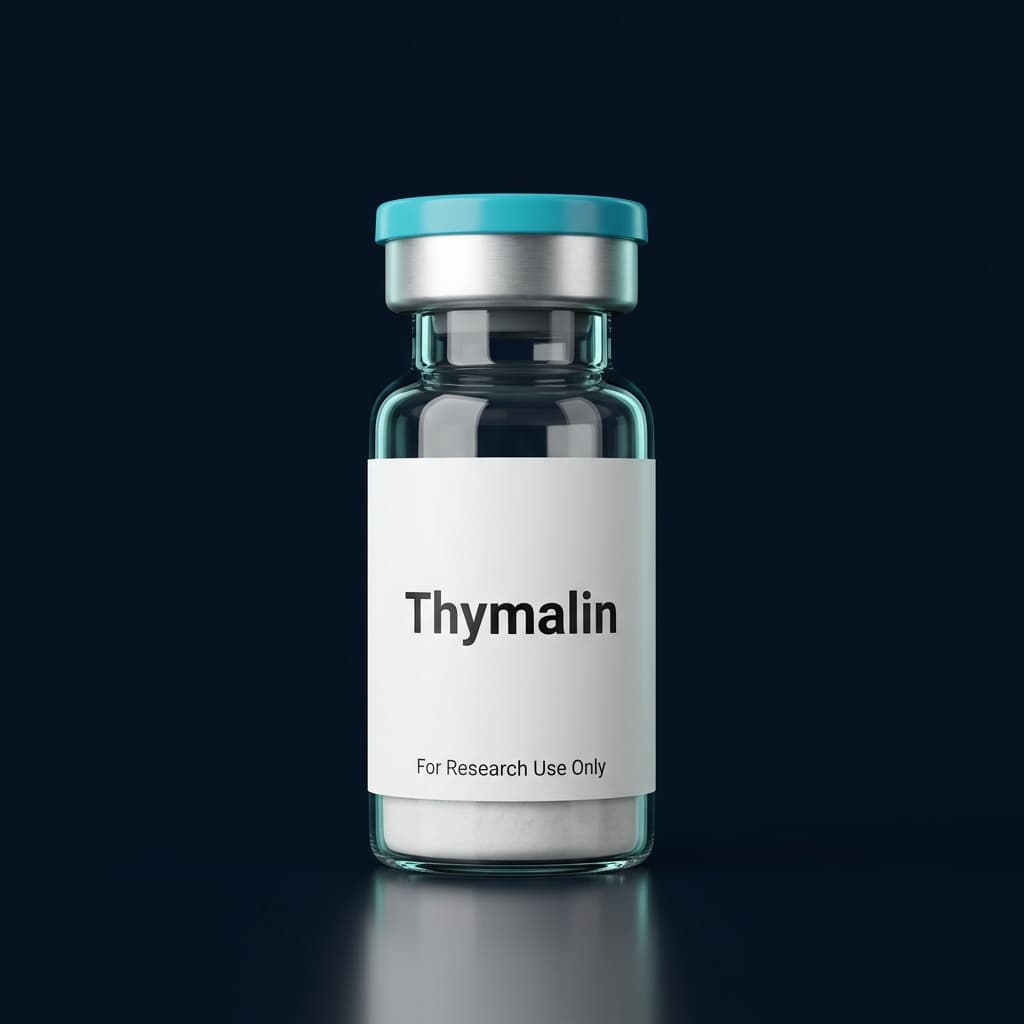
Thymalin 10mg
3–7 days most of the EU · 8–14 Nordics/Baltics
Standard EU from €4.99 (RO) · core EU GLS €17.99 · Nordics/Baltics €12.99–€13.99 · Same-day dispatch before 14:00 CET on weekdays · Free shipping over €200 · no customs paperwork (EU) · via EU carrier network
€200.00 away from free shipping over €200. Under that, standard EU shipping is €17.99 (GLS, most of the EU).
How Paysera and SEPA work
- Pay — approve a SEPA transfer in your own bank via Paysera’s hosted page, or send a manual SEPA transfer using the IBAN we email you.
- We confirm — Paysera notifies us instantly, or we match a manual transfer when it arrives (usually 1 business day).
- We dispatch — confirmed orders placed before 14:00 CET on a weekday typically ship the same day.
Card payments are not currently offered. There is no card processor on this checkout.
Free shipping on orders over €200
Research-grade Thymalin. Polypeptide complex (biological activity assay); selected lots independently tested. Lyophilized powder in sealed glass vial. For laboratory research use only. Not for human consumption.
| Quantity | Price Each | Total | Savings |
|---|---|---|---|
| 1 unit | €41.99 | €41.99 | -- |
| 3+ | €39.89 | €119.67 | 5% off |
| 5+Most Popular | €37.79 | €188.96 | 10% off |
| 10+ | €35.69 | €356.91 | 15% off |
Important Notice
This product is intended for laboratory and research use only. Not for human or veterinary use. By purchasing, you confirm this product will be used exclusively for in-vitro research purposes.
Reconstitution Required
This peptide ships lyophilized (dry powder) and requires bacteriostatic water to reconstitute before use. BAC water is sold separately.
When This Product May Not Suit Your Research
- ⚠If your research requires GMP-grade material for clinical applications — research-grade peptides are not intended for clinical use.
- ⚠If your lab lacks proper cold storage (-20°C freezer) — this peptide's stability may be compromised at higher temperatures.
- ⚠If your study protocol requires FDA-approved reference standards — contact USP or a certified reference material provider.
Published laboratory reports are available for selected lots. Check each report for its result and stated method. For research purposes only.
View report #204785 on janoshik.com →
24h dispatch, EU-wide shipping from €4.99
Supplier batch specification on every product; independent Janoshik report on selected lots
About Thymalin 10mg
Thymalin is a polypeptide complex derived from bovine thymus, composed of multiple bioregulatory peptides. It is distinct from the Khavinson-developed synthetic dipeptides (Thymugen/Thymogen) in that it is an extract rather than a single defined compound -- it contains multiple thymic peptides including thymopoietin, thymosin fractions, and other thymic factors. Thymalin has been studied in Russia and Eastern Europe in the context of immune modulation and aging-related research protocols.
The thymus produces multiple peptide regulators of T-cell development and immune function. Thymalin's biological activity in research models reflects this complexity: it is studied for its role in T-cell differentiation and activation, in restoring immune reactivity in immunodeficient models, and for its effects on immune parameters in aged research models (where thymic involution causes progressive T-cell repertoire narrowing). Russian research literature from the 1980s-2000s documents study in models of post-surgical immunosuppression, oncology-related immunodeficiency, and aging-related immune decline.
As a natural polypeptide extract, Thymalin's composition and activity can vary between batches more than synthetic peptides. For research where defined single-compound pharmacology is required, synthetic thymic peptides (Thymogen/thymulin) may be preferable. Thymalin is better suited for studies of thymic peptide complex effects or for replicating the protocol context of the Russian literature.
Specifications
| Parameter | Value |
|---|---|
| Compound | Thymalin (bovine thymus polypeptide extract) |
| Amount per Vial | 10mg |
| Purity | Polypeptide complex (biological activity assay) |
| Format | Lyophilized powder |
| Reconstitution | Sterile water or saline |
| Storage | -20°C; 2-8°C after reconstitution |
Storage
Store at -20°C before reconstitution. Refrigerate at 2-8°C after reconstitution and use within 28 days. As a natural polypeptide extract, handle with care to maintain activity.
What is the thymus and why does its involution matter for immunity?
The thymus is a primary lymphoid organ where T-cells mature. Naive T-cells from bone marrow migrate to the thymus, where they undergo selection (learning to recognize self-MHC while being eliminated if auto-reactive), and emerge as mature T-cells ready for peripheral immune function. Thymic involution begins in adolescence and accelerates with age -- the thymus gradually shrinks and fatty tissue replaces the lymphoid compartment. This means fewer new naive T-cells enter the peripheral immune system over time, narrowing the T-cell repertoire and reducing ability to respond to new antigens. Thymic peptides that support remaining thymic function or T-cell development outside the thymus are studied for immune modulation in aging models.
How does Thymalin differ from individual thymic peptides like Thymogen?
Thymogen (thymalin dipeptide) and thymulin are single defined molecules -- specific peptides isolated or synthesized with known sequences and consistent composition. Thymalin is a complex extract containing multiple thymic peptides in uncertain proportions that may vary between preparations. This difference matters for research: synthetic single peptides give consistent, interpretable pharmacology while the extract reflects more of the thymus's complex regulatory mixture. The extract approach has the advantage of capturing potentially synergistic effects from multiple thymic factors, but limits mechanistic interpretation. Research use in Russia has primarily used the extract, while mechanistic research increasingly uses defined synthetic thymic peptides.
What is the research literature base for Thymalin?
Thymalin has a research literature primarily from Russia, spanning from the 1980s through the 2000s, covering models of post-surgical immunodeficiency, cancer-related immunosuppression, and aging-related immune decline. The evidence base does not meet rigorous controlled-trial standards -- studies were smaller, controls variable, and endpoints often immunological parameters rather than defined outcomes. However, the accumulated literature over several decades represents meaningful observational data. For research, this literature provides hypotheses and experimental context, but studies replicating findings in standardized preclinical models and with modern immunological endpoints add interpretive rigor.
Thymalin is supplied for laboratory research use only. Not for human use. Handle in compliance with institutional biosafety guidelines.
Specification Summary
About Thymalin 10mg
Thymalin is a polypeptide complex derived from bovine thymus, composed of multiple bioregulatory peptides. It is distinct from the Khavinson-developed synthetic dipeptides (Thymugen/Thymogen) in that it is an extract rather than a single defined compound -- it contains multiple thymic peptides including thymopoietin, thymosin fractions, and other thymic factors. Thymalin has been studied in Russia and Eastern Europe in the context of immune modulation and aging-related research protocols.
The thymus produces multiple peptide regulators of T-cell development and immune function. Thymalin's biological activity in research models reflects this complexity: it is studied for its role in T-cell differentiation and activation, in restoring immune reactivity in immunodeficient models, and for its effects on immune parameters in aged research models (where thymic involution causes progressive T-cell repertoire narrowing). Russian research literature from the 1980s-2000s documents study in models of post-surgical immunosuppression, oncology-related immunodeficiency, and aging-related immune decline.
As a natural polypeptide extract, Thymalin's composition and activity can vary between batches more than synthetic peptides. For research where defined single-compound pharmacology is required, synthetic thymic peptides (Thymogen/thymulin) may be preferable. Thymalin is better suited for studies of thymic peptide complex effects or for replicating the protocol context of the Russian literature.
Specifications
| Parameter | Value |
|---|---|
| Compound | Thymalin (bovine thymus polypeptide extract) |
| Amount per Vial | 10mg |
| Purity | Polypeptide complex (biological activity assay) |
| Format | Lyophilized powder |
| Reconstitution | Sterile water or saline |
| Storage | -20°C; 2-8°C after reconstitution |
Storage
Store at -20°C before reconstitution. Refrigerate at 2-8°C after reconstitution and use within 28 days. As a natural polypeptide extract, handle with care to maintain activity.
What is the thymus and why does its involution matter for immunity?
The thymus is a primary lymphoid organ where T-cells mature. Naive T-cells from bone marrow migrate to the thymus, where they undergo selection (learning to recognize self-MHC while being eliminated if auto-reactive), and emerge as mature T-cells ready for peripheral immune function. Thymic involution begins in adolescence and accelerates with age -- the thymus gradually shrinks and fatty tissue replaces the lymphoid compartment. This means fewer new naive T-cells enter the peripheral immune system over time, narrowing the T-cell repertoire and reducing ability to respond to new antigens. Thymic peptides that support remaining thymic function or T-cell development outside the thymus are studied for immune modulation in aging models.
How does Thymalin differ from individual thymic peptides like Thymogen?
Thymogen (thymalin dipeptide) and thymulin are single defined molecules -- specific peptides isolated or synthesized with known sequences and consistent composition. Thymalin is a complex extract containing multiple thymic peptides in uncertain proportions that may vary between preparations. This difference matters for research: synthetic single peptides give consistent, interpretable pharmacology while the extract reflects more of the thymus's complex regulatory mixture. The extract approach has the advantage of capturing potentially synergistic effects from multiple thymic factors, but limits mechanistic interpretation. Research use in Russia has primarily used the extract, while mechanistic research increasingly uses defined synthetic thymic peptides.
What is the research literature base for Thymalin?
Thymalin has a research literature primarily from Russia, spanning from the 1980s through the 2000s, covering models of post-surgical immunodeficiency, cancer-related immunosuppression, and aging-related immune decline. The evidence base does not meet rigorous controlled-trial standards -- studies were smaller, controls variable, and endpoints often immunological parameters rather than defined outcomes. However, the accumulated literature over several decades represents meaningful observational data. For research, this literature provides hypotheses and experimental context, but studies replicating findings in standardized preclinical models and with modern immunological endpoints add interpretive rigor.
Thymalin is supplied for laboratory research use only. Not for human use. Handle in compliance with institutional biosafety guidelines.
What research shows
Selected peer-reviewed studies from the published literature. Each describes laboratory or preclinical findings and is attributed to the cited study, not to this product. For research use only — not medical guidance.
Hematopoietic differentiation
In cell-culture research, Thymalin was associated with activation of differentiation of human hematopoietic stem cells.
Thymalin: Activation of Differentiation of Human Hematopoietic Stem Cells. Bulletin of Experimental Biology and Medicine (2020). PMID: 33237528Neuroendocrine aging
In laboratory studies of aging, Thymalin was examined in the context of the pineal gland and thymus relationship during aging.
Characteristics of the pineal gland and thymus relationship in aging. Advances in Gerontology (2011). PMID: 21809618Immunomodulation
In rat models, Thymalin injected into surrounding soft tissues was studied for its effect on T-lymphocyte, B-lymphocyte and macrophage expression within a post-traumatic bone regenerate.
Expression features of T-lymphocytes, B-lymphocytes and macrophages in the post-traumatic regenerate of the mandible in rats under thymalin injection. Polski Merkuriusz Lekarski (2024). PMID: 38642352Citations are provided for research reference. CertaPeptides (CERTALAB S.R.L.) is a reseller, not a manufacturer, and makes no medical, therapeutic, or efficacy claims. Products are for laboratory research use only and are not for human or animal consumption.
Researcher Confidence
Why researchers choose CertaPeptides
Who actually tests this?
Selected lots are independently verified by Janoshik Analytical (Czech Republic) and published on the Janoshik public portal. Other lots ship with the supplier's batch specification. See /coa for the published wall.
View COAs →What if I get the wrong batch?
Every bottle label carries a lot number that maps to a specific Certificate of Analysis. If a batch fails spec, we don't ship it — full stop.
View COAs →Where does it ship from?
Romania (EU). We are CERTALAB SRL, CUI 54169956, VAT-registered. Sameday for Romania, GLS for most EU destinations, TCE Worldwide for the remaining cross-border EU and non-EU markets (UK, Switzerland, Iceland, Serbia). Delivery 1–15 business days depending on destination — exact window shown at checkout.
Shipping details →What if there's a problem?
You have a 14-day withdrawal right under OUG 34/2014 (Romanian/EU consumer law), with ANPC/ODR escalation available. Contact us at support@certapeptides.com.
Returns policy →Product Information
This product is intended for scientific research and development purposes only. It is a chemical substance that shall not be used as a drug, medicine, active substance, or ingredient in any product intended for human or animal consumption. Researchers must handle this compound in accordance with their institutional biosafety guidelines. Use only in properly equipped laboratory settings with appropriate personal protective equipment.