Research-grade compound. Laboratory use only. Not intended for human or animal use, ingestion, or injection. No medical claims are made or implied.
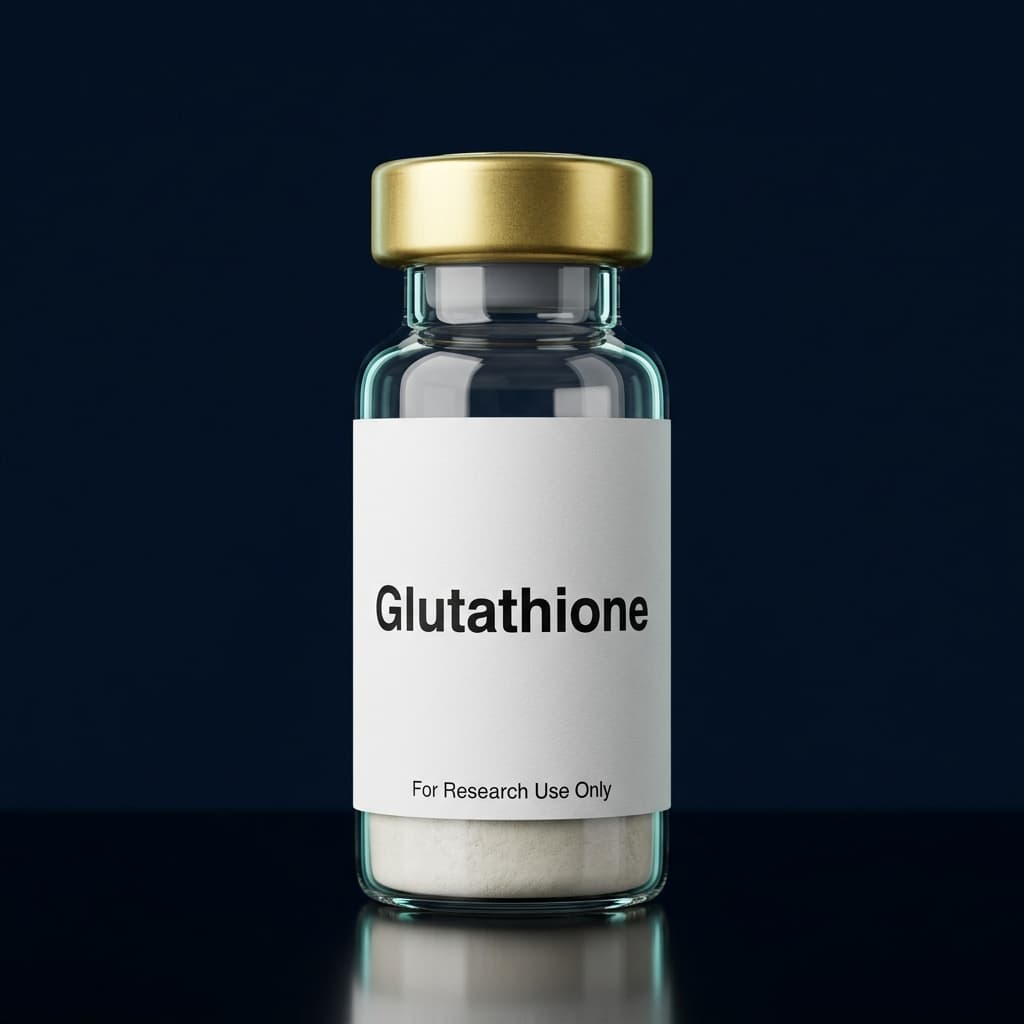
Glutathione 1500mg
3–7 days most of the EU · 8–14 Nordics/Baltics
Standard EU from €4.99 (RO) · core EU GLS €17.99 · Nordics/Baltics €12.99–€13.99 · Same-day dispatch before 14:00 CET on weekdays · Free shipping over €200 · no customs paperwork (EU) · via EU carrier network
€200.00 away from free shipping over €200. Under that, standard EU shipping is €17.99 (GLS, most of the EU).
How Paysera and SEPA work
- Pay — approve a SEPA transfer in your own bank via Paysera’s hosted page, or send a manual SEPA transfer using the IBAN we email you.
- We confirm — Paysera notifies us instantly, or we match a manual transfer when it arrives (usually 1 business day).
- We dispatch — confirmed orders placed before 14:00 CET on a weekday typically ship the same day.
Card payments are not currently offered. There is no card processor on this checkout.
Free shipping on orders over €200
Research-grade Glutathione. ≥ 98% supplier batch specification; selected lots independently tested. Lyophilized powder in sealed glass vial. For laboratory research use only. Not for human consumption.
| Quantity | Price Each | Total | Savings |
|---|---|---|---|
| 1 unit | €43.49 | €43.49 | -- |
| 3+ | €41.32 | €123.95 | 5% off |
| 5+Most Popular | €39.14 | €195.71 | 10% off |
| 10+ | €36.97 | €369.67 | 15% off |
Important Notice
This product is intended for laboratory and research use only. Not for human or veterinary use. By purchasing, you confirm this product will be used exclusively for in-vitro research purposes.
Reconstitution Required
This peptide ships lyophilized (dry powder) and requires bacteriostatic water to reconstitute before use. BAC water is sold separately.
When This Product May Not Suit Your Research
- ⚠If your research requires GMP-grade material for clinical applications — research-grade peptides are not intended for clinical use.
- ⚠If your lab lacks proper cold storage (-20°C freezer) — this peptide's stability may be compromised at higher temperatures.
- ⚠If your study protocol requires FDA-approved reference standards — contact USP or a certified reference material provider.
Published laboratory reports are available for selected lots. Check each report for its result and stated method. For research purposes only.
View report #212164 on janoshik.com →
24h dispatch, EU-wide shipping from €4.99
Supplier batch specification on every product; independent Janoshik report on selected lots
About Glutathione 1500mg
Glutathione (GSH) is the most abundant intracellular antioxidant, present in virtually all mammalian cells at millimolar concentrations. It is a tripeptide (gamma-Glu-Cys-Gly) synthesized from glutamate, cysteine, and glycine, with the thiol group of cysteine providing the reducing power. As the cell's primary buffer against oxidative stress, GSH participates in detoxification of reactive oxygen species and xenobiotics, supports the function of glutathione peroxidase enzymes, and maintains protein thiol status. Each vial contains 1,500mg of reduced glutathione (GSH).
The cellular glutathione system operates in a redox cycle: reduced GSH is oxidized to GSSG (glutathione disulfide) when neutralizing oxidants, and glutathione reductase regenerates GSH using NADPH. Monitoring the GSH/GSSG ratio is a standard measure of cellular redox status -- a low ratio indicates oxidative stress. Supplementing cells or tissues with exogenous GSH provides direct antioxidant capacity and supports this redox cycle. Research applications include oxidative stress models, liver toxicity studies (the liver is the main GSH-producing organ), immune cell function (lymphocytes have high GSH requirements), and mitochondrial biology.
A practical note for in vivo research: orally administered GSH is substantially degraded in the GI tract and poorly absorbed intact. For systemic antioxidant effects in animal models, IV or IP administration is more reliable. N-acetylcysteine (NAC) is often used as an alternative because it provides cysteine for intracellular GSH synthesis and has better oral bioavailability.
Specifications
| Parameter | Value |
|---|---|
| Compound | Glutathione (reduced form, L-glutathione, GSH) |
| Amount per Vial | 1,500mg |
| CAS Number | 70-18-8 |
| Purity | ≥ 98% (supplier batch spec) |
| Format | Lyophilized powder |
| Storage | -20°C, protect from oxygen and light |
Storage
Store at -20°C in a sealed container. Reduced glutathione oxidizes readily -- protect from air, moisture, and light. The thiol group is sensitive to oxidation; store in nitrogen-purged vials if available. After weighing, use promptly to minimize air exposure.
What is the role of glutathione in liver function specifically?
The liver produces more glutathione than any other organ and is the primary source of plasma GSH. Hepatic GSH serves several critical functions: it conjugates with electrophilic metabolites produced during drug metabolism (Phase II detoxification via glutathione S-transferases), neutralizes reactive oxygen species generated by cytochrome P450 enzymes (Phase I metabolism), and provides GSH for export to other tissues. Acetaminophen hepatotoxicity is the classic example of hepatic GSH depletion -- the toxic metabolite NAPQI depletes GSH stores, and when GSH is exhausted, NAPQI causes oxidative damage. This mechanism is why NAC (GSH precursor) is the antidote for acetaminophen overdose.
Why is oral glutathione absorption limited?
Reduced glutathione (GSH) is a tripeptide, and the intestinal epithelium has limited transport capacity for intact peptides -- most are hydrolyzed by brush border peptidases to free amino acids before absorption. Studies using isotope-labeled GSH have shown that while some intact GSH may be absorbed, most is broken down in the GI tract. The absorbed free amino acids can support intracellular GSH synthesis, but the contribution of oral GSH to tissue antioxidant capacity is less than IV or IP delivery. Liposomal formulations and specific dipeptide forms (like gamma-glutamylcysteine) have been studied for better oral bioavailability, but for research requiring defined GSH supplementation, parenteral routes are more reliable.
How is glutathione related to immune function research?
Lymphocytes and macrophages have particularly high GSH requirements and are sensitive to oxidative stress. GSH depletion impairs T-cell proliferation, reduces NK cell cytotoxicity, and shifts the Th1/Th2 balance toward Th2 (reducing cell-mediated immunity). HIV infection is associated with systemic GSH depletion, which has made GSH biology relevant to AIDS immunology. In research contexts, manipulating GSH levels with GSH, NAC, or GSH-depleting agents (like BSO -- buthionine sulfoximine) allows investigation of redox-dependent immune cell functions. Restoring GSH in oxidatively stressed immune cells is a standard experiment in immunological research on aging and chronic disease.
Glutathione is supplied for laboratory research use only. Handle in compliance with institutional biosafety guidelines.
Specification Summary
About Glutathione 1500mg
Glutathione (GSH) is the most abundant intracellular antioxidant, present in virtually all mammalian cells at millimolar concentrations. It is a tripeptide (gamma-Glu-Cys-Gly) synthesized from glutamate, cysteine, and glycine, with the thiol group of cysteine providing the reducing power. As the cell's primary buffer against oxidative stress, GSH participates in detoxification of reactive oxygen species and xenobiotics, supports the function of glutathione peroxidase enzymes, and maintains protein thiol status. Each vial contains 1,500mg of reduced glutathione (GSH).
The cellular glutathione system operates in a redox cycle: reduced GSH is oxidized to GSSG (glutathione disulfide) when neutralizing oxidants, and glutathione reductase regenerates GSH using NADPH. Monitoring the GSH/GSSG ratio is a standard measure of cellular redox status -- a low ratio indicates oxidative stress. Supplementing cells or tissues with exogenous GSH provides direct antioxidant capacity and supports this redox cycle. Research applications include oxidative stress models, liver toxicity studies (the liver is the main GSH-producing organ), immune cell function (lymphocytes have high GSH requirements), and mitochondrial biology.
A practical note for in vivo research: orally administered GSH is substantially degraded in the GI tract and poorly absorbed intact. For systemic antioxidant effects in animal models, IV or IP administration is more reliable. N-acetylcysteine (NAC) is often used as an alternative because it provides cysteine for intracellular GSH synthesis and has better oral bioavailability.
Specifications
| Parameter | Value |
|---|---|
| Compound | Glutathione (reduced form, L-glutathione, GSH) |
| Amount per Vial | 1,500mg |
| CAS Number | 70-18-8 |
| Purity | ≥ 98% (supplier batch spec) |
| Format | Lyophilized powder |
| Storage | -20°C, protect from oxygen and light |
Storage
Store at -20°C in a sealed container. Reduced glutathione oxidizes readily -- protect from air, moisture, and light. The thiol group is sensitive to oxidation; store in nitrogen-purged vials if available. After weighing, use promptly to minimize air exposure.
What is the role of glutathione in liver function specifically?
The liver produces more glutathione than any other organ and is the primary source of plasma GSH. Hepatic GSH serves several critical functions: it conjugates with electrophilic metabolites produced during drug metabolism (Phase II detoxification via glutathione S-transferases), neutralizes reactive oxygen species generated by cytochrome P450 enzymes (Phase I metabolism), and provides GSH for export to other tissues. Acetaminophen hepatotoxicity is the classic example of hepatic GSH depletion -- the toxic metabolite NAPQI depletes GSH stores, and when GSH is exhausted, NAPQI causes oxidative damage. This mechanism is why NAC (GSH precursor) is the antidote for acetaminophen overdose.
Why is oral glutathione absorption limited?
Reduced glutathione (GSH) is a tripeptide, and the intestinal epithelium has limited transport capacity for intact peptides -- most are hydrolyzed by brush border peptidases to free amino acids before absorption. Studies using isotope-labeled GSH have shown that while some intact GSH may be absorbed, most is broken down in the GI tract. The absorbed free amino acids can support intracellular GSH synthesis, but the contribution of oral GSH to tissue antioxidant capacity is less than IV or IP delivery. Liposomal formulations and specific dipeptide forms (like gamma-glutamylcysteine) have been studied for better oral bioavailability, but for research requiring defined GSH supplementation, parenteral routes are more reliable.
How is glutathione related to immune function research?
Lymphocytes and macrophages have particularly high GSH requirements and are sensitive to oxidative stress. GSH depletion impairs T-cell proliferation, reduces NK cell cytotoxicity, and shifts the Th1/Th2 balance toward Th2 (reducing cell-mediated immunity). HIV infection is associated with systemic GSH depletion, which has made GSH biology relevant to AIDS immunology. In research contexts, manipulating GSH levels with GSH, NAC, or GSH-depleting agents (like BSO -- buthionine sulfoximine) allows investigation of redox-dependent immune cell functions. Restoring GSH in oxidatively stressed immune cells is a standard experiment in immunological research on aging and chronic disease.
Glutathione is supplied for laboratory research use only. Handle in compliance with institutional biosafety guidelines.
Researcher Confidence
Why researchers choose CertaPeptides
Who actually tests this?
Selected lots are independently verified by Janoshik Analytical (Czech Republic) and published on the Janoshik public portal. Other lots ship with the supplier's batch specification. See /coa for the published wall.
View COAs →What if I get the wrong batch?
Every bottle label carries a lot number that maps to a specific Certificate of Analysis. If a batch fails spec, we don't ship it — full stop.
View COAs →Where does it ship from?
Romania (EU). We are CERTALAB SRL, CUI 54169956, VAT-registered. Sameday for Romania, GLS for most EU destinations, TCE Worldwide for the remaining cross-border EU and non-EU markets (UK, Switzerland, Iceland, Serbia). Delivery 1–15 business days depending on destination — exact window shown at checkout.
Shipping details →What if there's a problem?
You have a 14-day withdrawal right under OUG 34/2014 (Romanian/EU consumer law), with ANPC/ODR escalation available. Contact us at support@certapeptides.com.
Returns policy →Product Information
This product is intended for scientific research and development purposes only. It is a chemical substance that shall not be used as a drug, medicine, active substance, or ingredient in any product intended for human or animal consumption. Researchers must handle this compound in accordance with their institutional biosafety guidelines. Use only in properly equipped laboratory settings with appropriate personal protective equipment.