Research-grade compound. Laboratory use only. Not intended for human or animal use, ingestion, or injection. No medical claims are made or implied.
Copper and Mitochondrial Research PeptidesSKU: CP-MOT
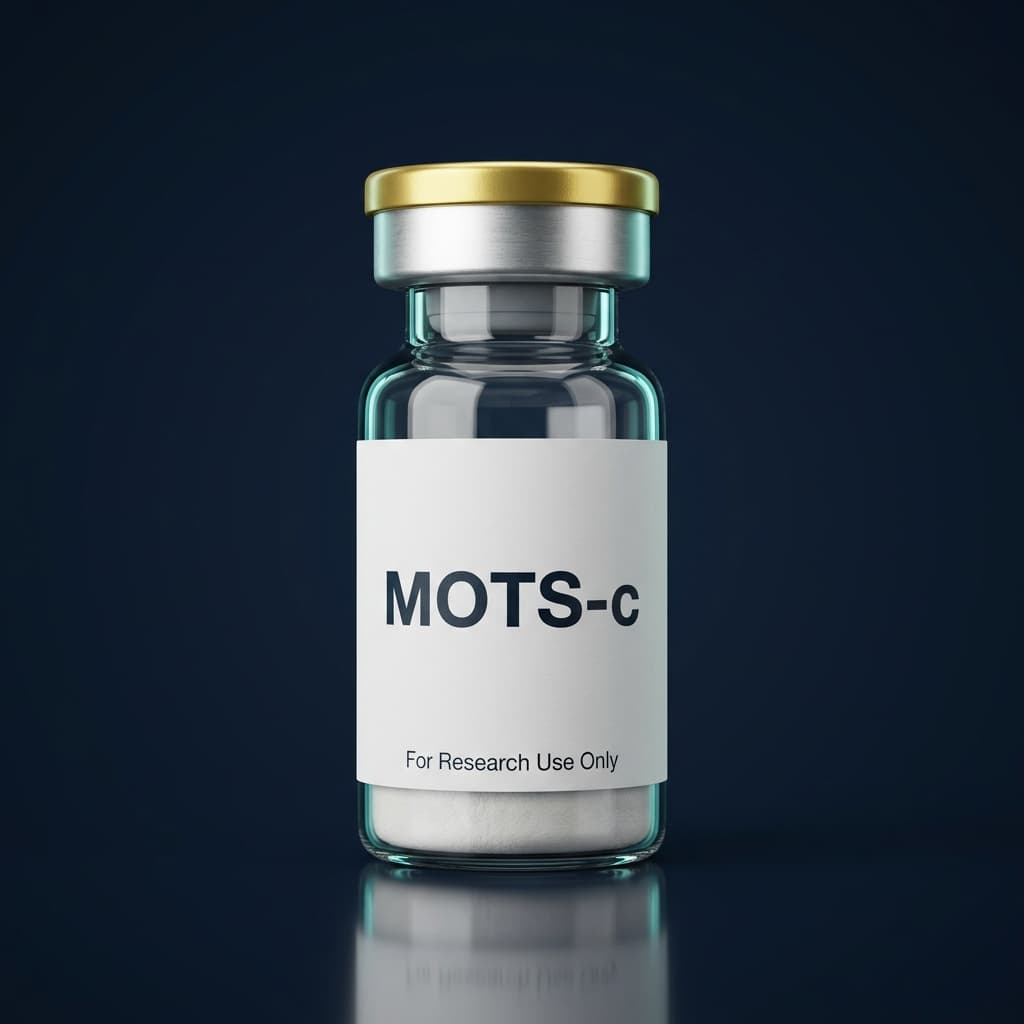
MOTS-c
≥98% PuritySupplier batch spec; selected lots Janoshik-tested
Related PeptidesDB entry (same owner)
peptidesdb.org
/p/mots-c
3–7 days most of the EU · 8–14 Nordics/Baltics
Standard EU from €4.99 (RO) · core EU GLS €17.99 · Nordics/Baltics €12.99–€13.99 · Same-day dispatch before 14:00 CET on weekdays · Free shipping over €200 · no customs paperwork (EU) · via EU carrier network
€200.00 away from free shipping over €200. Under that, standard EU shipping is €17.99 (GLS, most of the EU).
How Paysera and SEPA work
- Pay — approve a SEPA transfer in your own bank via Paysera’s hosted page, or send a manual SEPA transfer using the IBAN we email you.
- We confirm — Paysera notifies us instantly, or we match a manual transfer when it arrives (usually 1 business day).
- We dispatch — confirmed orders placed before 14:00 CET on a weekday typically ship the same day.
Card payments are not currently offered. There is no card processor on this checkout.
Size10mg
€41.99
1
Total: €41.99
Free shipping on orders over €200
Research-grade MOTS-c. ≥98% supplier batch specification; selected lots independently tested (99.4% avg across published reports). Lyophilized powder in sealed glass vial. For laboratory research use only. Not for human consumption.
Volume PricingApplied automatically at checkout
| Quantity | Price Each | Total | Savings |
|---|---|---|---|
| 1 unit | €41.99 | €41.99 | -- |
| 3+ | €39.89 | €119.67 | 5% off |
| 5+Most Popular | €37.79 | €188.96 | 10% off |
| 10+ | €35.69 | €356.91 | 15% off |
Important Notice
This product is intended for laboratory and research use only. Not for human or veterinary use. By purchasing, you confirm this product will be used exclusively for in-vitro research purposes.
Reconstitution Required
This peptide ships lyophilized (dry powder) and requires bacteriostatic water to reconstitute before use. BAC water is sold separately.
When This Product May Not Suit Your Research
- ⚠If your research requires GMP-grade material for clinical applications — research-grade peptides are not intended for clinical use.
- ⚠If your lab lacks proper cold storage (-20°C freezer) — this peptide's stability may be compromised at higher temperatures.
- ⚠If your study protocol requires FDA-approved reference standards — contact USP or a certified reference material provider.
Purity HPLC
99.4% average HPLC purity across our published lab reports
Janoshik Verified
View report #204783 on janoshik.com →
Fast Shipping
24h dispatch, EU-wide shipping from €4.99
Third-Party Tested
Supplier batch specification on every product; independent Janoshik report on selected lots
Last reviewed: 2026-09-02
About MOTS-c
About MOTS-c
What is MOTS-c?
Here is something that should not exist according to the central dogma: a peptide encoded in mitochondrial DNA that leaves the mitochondria, travels to the nucleus, and directly regulates gene expression. MOTS-c is a 16-amino-acid mitochondrial-derived peptide discovered by Changhan David Lee at USC in 2015, and it acts as a retrograde signal — information flowing from the organelle to the genome, backwards from what textbooks describe.
CAS: 1627580-64-6. The first exercise-mimetic peptide of mitochondrial origin. It activates AMPK, the same pathway that exercise engages.
Mechanism of Action
Why it is interesting
Two things. First, the retrograde signaling: MOTS-c is encoded in mitochondrial 12S rRNA, not the nuclear genome. Under metabolic stress, it translocates to the nucleus and directly regulates transcription. This means mitochondria are not just energy factories — they signal to the nucleus, adjusting metabolic gene expression.
Second, the exercise mimicry. MOTS-c activates AMPK by inhibiting de novo purine synthesis, which causes AICAR accumulation — the same endogenous AMPK activator that builds up during exercise. The compound basically trips the same metabolic alarm that physical activity triggers.
Research Overview
Specs
Molecular weight2,174.4 Da
CAS1627580-64-6
Purity≥98% supplier batch spec (99.4% avg across independently tested lots)
FormLyophilized powder
Sizes5mg, 10mg
Storage
Lyophilized at -20°C. Reconstituted: 2-8°C, use within 4 weeks.
Quality
Shipped to a ≥98% supplier batch specification; selected lots are independently tested by Janoshik Analytical (HPLC + mass spectrometry; 99.4% average purity across published reports), searchable by batch code at certapeptides.com/verify. EU QC under CERTALAB S.R.L.
Product Specifications
- Purity: ≥98% (supplier batch spec; 99.4% avg across independently tested lots)
- Form: Lyophilized powder
- SKU: CP-MOT
Selected lots independently tested by Janoshik Analytical, searchable by batch code. View reports →
For research purposes only. Not for human consumption.
Specification Summary
FormLyophilized Powder
Storage-20\u00B0C
About MOTS-c
About MOTS-c
What is MOTS-c?
Here is something that should not exist according to the central dogma: a peptide encoded in mitochondrial DNA that leaves the mitochondria, travels to the nucleus, and directly regulates gene expression. MOTS-c is a 16-amino-acid mitochondrial-derived peptide discovered by Changhan David Lee at USC in 2015, and it acts as a retrograde signal — information flowing from the organelle to the genome, backwards from what textbooks describe.
CAS: 1627580-64-6. The first exercise-mimetic peptide of mitochondrial origin. It activates AMPK, the same pathway that exercise engages.
Mechanism of Action
Why it is interesting
Two things. First, the retrograde signaling: MOTS-c is encoded in mitochondrial 12S rRNA, not the nuclear genome. Under metabolic stress, it translocates to the nucleus and directly regulates transcription. This means mitochondria are not just energy factories — they signal to the nucleus, adjusting metabolic gene expression.
Second, the exercise mimicry. MOTS-c activates AMPK by inhibiting de novo purine synthesis, which causes AICAR accumulation — the same endogenous AMPK activator that builds up during exercise. The compound basically trips the same metabolic alarm that physical activity triggers.
Research Overview
Specs
Molecular weight2,174.4 Da
CAS1627580-64-6
Purity≥98% supplier batch spec (99.4% avg across independently tested lots)
FormLyophilized powder
Sizes5mg, 10mg
Storage
Lyophilized at -20°C. Reconstituted: 2-8°C, use within 4 weeks.
Quality
Shipped to a ≥98% supplier batch specification; selected lots are independently tested by Janoshik Analytical (HPLC + mass spectrometry; 99.4% average purity across published reports), searchable by batch code at certapeptides.com/verify. EU QC under CERTALAB S.R.L.
Product Specifications
- Purity: ≥98% (supplier batch spec; 99.4% avg across independently tested lots)
- Form: Lyophilized powder
- SKU: CP-MOT
Selected lots independently tested by Janoshik Analytical, searchable by batch code. View reports →
For research purposes only. Not for human consumption.
What research shows
Selected peer-reviewed studies from the published literature. Each describes laboratory or preclinical findings and is attributed to the cited study, not to this product. For research use only — not medical guidance.
[1]
Metabolism and insulin resistance
In cell-culture and mouse research, the mitochondrial-derived peptide MOTS-c promoted metabolic homeostasis and reduced obesity and insulin resistance.
The mitochondrial-derived peptide MOTS-c promotes metabolic homeostasis and reduces obesity and insulin resistance. Cell Metabolism (2015). PMID: 25738459[2]
Exercise and muscle homeostasis
In animal-model research, MOTS-c was characterized as an exercise-induced mitochondrial-encoded regulator of age-dependent physical decline and muscle homeostasis.
MOTS-c is an exercise-induced mitochondrial-encoded regulator of age-dependent physical decline and muscle homeostasis. Nature Communications (2021). PMID: 33473109[3]
Glucose metabolism (AMPK)
In mouse research, MOTS-c interacted synergistically with exercise to regulate PGC-1a expression, attenuate insulin resistance and enhance glucose metabolism via the AMPK signalling pathway.
MOTS-c interacts synergistically with exercise intervention to regulate PGC-1α expression, attenuate insulin resistance and enhance glucose metabolism in mice via AMPK signaling pathway. Biochimica et Biophysica Acta - Molecular Basis of Disease (2021). PMID: 33722744Citations are provided for research reference. CertaPeptides (CERTALAB S.R.L.) is a reseller, not a manufacturer, and makes no medical, therapeutic, or efficacy claims. Products are for laboratory research use only and are not for human or animal consumption.
Related research reading
Objective comparisons and research guides covering this compound. Reference material for research use only.
Researcher Confidence
Why researchers choose CertaPeptides
Who actually tests this?
Selected lots are independently verified by Janoshik Analytical (Czech Republic) and published on the Janoshik public portal. Other lots ship with the supplier's batch specification. See /coa for the published wall.
View COAs →What if I get the wrong batch?
Every bottle label carries a lot number that maps to a specific Certificate of Analysis. If a batch fails spec, we don't ship it — full stop.
View COAs →Where does it ship from?
Romania (EU). We are CERTALAB SRL, CUI 54169956, VAT-registered. Sameday for Romania, GLS for most EU destinations, TCE Worldwide for the remaining cross-border EU and non-EU markets (UK, Switzerland, Iceland, Israel, Serbia). Delivery 1–15 business days depending on destination — exact window shown at checkout.
Shipping details →What if there's a problem?
You have a 14-day withdrawal right under OUG 34/2014 (Romanian/EU consumer law), with ANPC/ODR escalation available. Contact us at support@certapeptides.com.
Returns policy →Product Information
This product is intended for scientific research and development purposes only. It is a chemical substance that shall not be used as a drug, medicine, active substance, or ingredient in any product intended for human or animal consumption. Researchers must handle this compound in accordance with their institutional biosafety guidelines. Use only in properly equipped laboratory settings with appropriate personal protective equipment.
Frequently Asked
Research Library
Related Research Articles
Frequently researched together
Combined Price
€146.46
MOTS-c€41.99