Compuesto de grado de investigación. Solo para uso en laboratorio. No destinado al uso humano o animal, ni a su ingestión o inyección. No se realiza ni se da a entender ninguna afirmación médica.
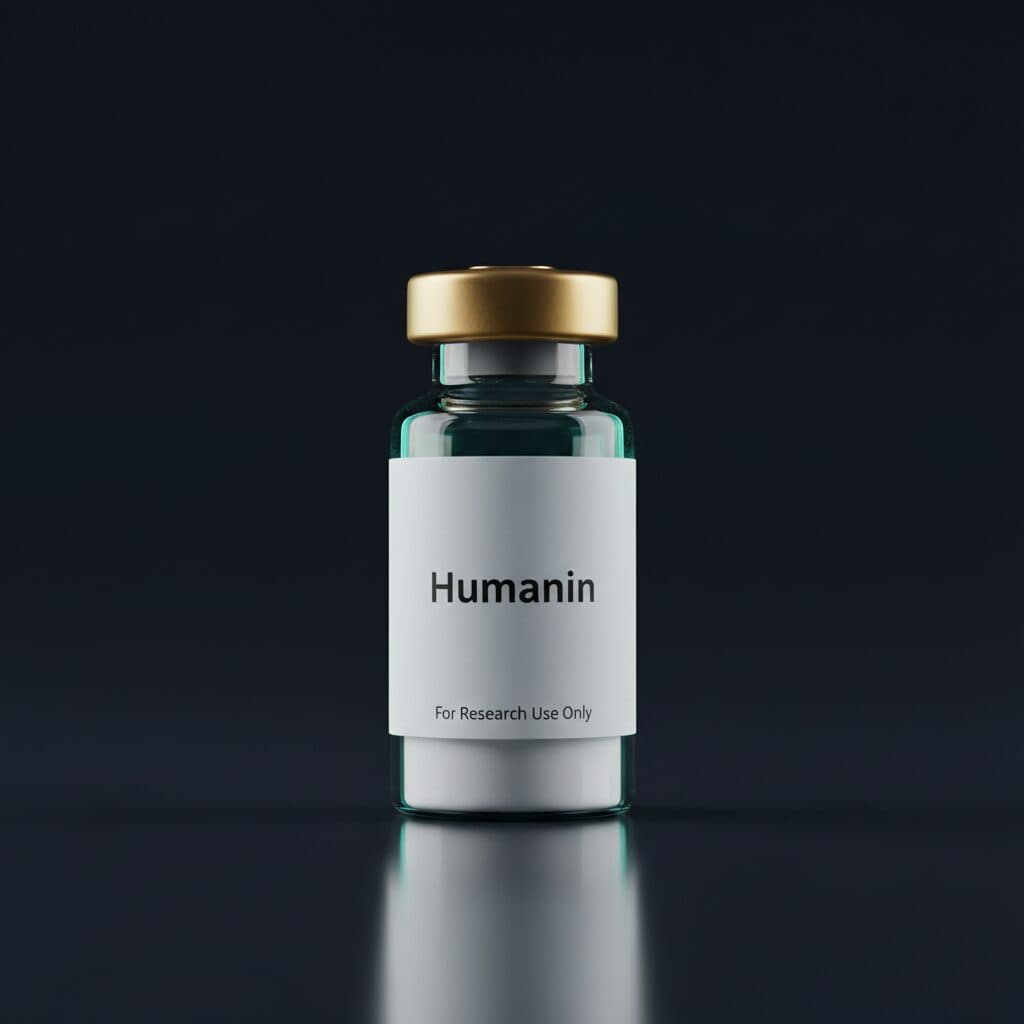
Humanin 10mg
Envío gratis en pedidos superiores a €200
- Si un producto no coincide con la especificación de su COA publicado, contacte con nosotros con su número de lote: investigamos contra el informe del lote y reemplazamos cualquier producto que no lo cumpla, sin coste para usted.
- Contacte con nosotros dentro de las 48 horas posteriores a la entrega con fotos de la caja exterior, el embalaje interior y los viales afectados con las etiquetas legibles. Los daños de transporte confirmados se reemplazan sin coste para usted.
3–7 días en la mayoría de los países de la UE · 10–14 días en los países nórdicos y bálticos
Envío estándar en la UE desde 4,99 € (RO) · principales países de la UE (GLS) 17,99 € · países nórdicos y bálticos 12,99 €–15,99 € · Despacho en un plazo de 1–2 días hábiles · Envío gratis a partir de 200,00 € · sin trámites aduaneros (UE) · a través de la red de transportistas de la UE
A 200,00 € del envío gratis a partir de 200,00 €. Por debajo de ese importe, el envío estándar en la UE cuesta 17,99 € (GLS, la mayoría de los países de la UE).
Cómo funcionan Paysera y SEPA
- Pague: envíe una transferencia SEPA manual con el IBAN que le enviamos por correo electrónico o, cuando el proceso de pago lo ofrezca para su dirección, apruebe una transferencia SEPA en su propio banco a través de la página alojada de Paysera.
- Confirmamos: Paysera nos avisa al instante, o asociamos la transferencia manual a su pedido cuando llega (normalmente 1 día hábil).
- Enviamos: los pedidos confirmados suelen enviarse en un plazo de 1-2 días hábiles.
Actualmente no se ofrecen pagos con tarjeta. Este proceso de pago no utiliza ningún procesador de tarjetas.
Research-grade Humanin. Class-level specification ≥98%. Lyophilized powder in sealed glass vial. For laboratory research use only. Not for human consumption.
| Cantidad | Precio por unidad | Total | Ahorro |
|---|---|---|---|
| 1 unit | 80,49 € | 80,49 € | -- |
| 3+ | 76,47 € | 229,40 € | 5% de descuento |
| 5+Más popular | 72,44 € | 362,21 € | 10% de descuento |
| 10+ | 68,42 € | 684,17 € | 15% de descuento |
Aviso importante
Este producto está destinado únicamente a uso en laboratorio e investigación. No apto para uso humano ni veterinario. Al comprarlo, confirma que este producto se utilizará exclusivamente con fines de investigación in vitro.
Debido a requisitos legales y normativos, este producto no se puede enviar a: Croacia, Eslovenia, Italia y Lituania.
Requiere reconstitución
Este péptido se envía liofilizado (polvo seco) y requiere agua bacteriostática para reconstituirlo antes de su uso. El agua BAC se vende por separado.
Cuándo este producto puede no adecuarse a su investigación
- ⚠Si su investigación requiere material de grado GMP para aplicaciones clínicas: los péptidos de grado de investigación no están destinados al uso clínico.
- ⚠Si su laboratorio carece de un almacenamiento en frío adecuado (congelador a -20°C): la estabilidad de este péptido puede verse comprometida a temperaturas más altas.
- ⚠Si su protocolo de estudio requiere estándares de referencia aprobados por la FDA: contacte con la USP o con un proveedor de material de referencia certificado.
Hay informes de laboratorio publicados para lotes seleccionados. Consulte cada informe para conocer su resultado y el método indicado. Solo para fines de investigación.
El informe de Janoshik se publica cuando está disponible
Expedición en un plazo de 1–2 días hábiles, envíos desde 4,99 € en Rumanía, desde 12,99 € en el resto de Europa
Especificación registrada a nivel de clase; informe independiente de Janoshik en lotes seleccionados
Acerca de Humanin 10mg
Humanin is a 21-amino acid peptide encoded not in the nuclear genome but in the mitochondrial 16S rRNA gene -- an unusual origin that has made it the founding member of a class of mitochondria-derived peptides (MDPs). It was originally identified in 2001 by researchers screening for factors that protect neurons from Alzheimer's disease-related cell death. The name reflects this discovery context: a peptide that made cells "more human" by rescuing them from neurodegeneration.
Humanin acts through multiple receptor pathways. It binds the formyl peptide receptor-like 1 (FPRL1/FPR2), the CNTF receptor alpha subunit, and has intracellular targets as well. In Alzheimer's disease cell models, it has been reported to protect neurons from amyloid-beta toxicity, ADDL (amyloid-derived diffusible ligand) toxicity, and oxidative stress. Beyond neuroprotection, preclinical studies report anti-apoptotic, insulin-signalling and anti-inflammatory effects in cell and animal models. Circulating humanin levels have been reported to decline with age, which has made it a subject of interest in mitochondrial aging research.
SHLP2 (small humanin-like peptide 2) and other humanin analogues are also being studied, but humanin itself remains the most characterized of the MDPs. It has been studied in rodent models for cognitive preservation, metabolic improvement in type 2 diabetes models, and cardiovascular protection.
Specifications
| Parameter | Value |
|---|---|
| Compound | Humanin (mitochondria-derived peptide, 21 amino acids) |
| Amount per Vial | 10mg |
| Purity | ≥98% (class-level specification) |
| Format | Lyophilized powder |
| Reconstitution | Sterile water or saline |
| Storage | -20°C; 2-8°C after reconstitution |
Storage
Store at -20°C before reconstitution. Refrigerate at 2-8°C after reconstitution and use within 28 days. Stable for 24+ months as lyophilized powder under proper conditions.
What makes humanin unusual compared to other peptides?
Most bioactive peptides are encoded in nuclear genes. Humanin is encoded within the mitochondrial genome -- specifically within the 16S ribosomal RNA gene -- which is an unusual location for a protein-coding sequence. This mitochondrial origin makes it the founding member of a class called mitochondria-derived peptides (MDPs). The mitochondrial genome is ancient and highly conserved, so mitochondria-derived signaling molecules have particular biological significance. Humanin's presence in this location suggests ancient origins for mitochondria-to-nucleus and mitochondria-to-extracellular signaling.
What were the original Alzheimer's disease findings for humanin?
Humanin was identified in 2001 by Nishimoto and colleagues through expression cloning from occipital cortex cDNA of an Alzheimer's patient. The screening assay looked for factors that could protect neurons from cell death induced by familial Alzheimer's mutations (V642I APP). Humanin potently rescued neurons from multiple Alzheimer's-related cytotoxic stimuli including amyloid-beta peptides, ADDL oligomers, and familial AD gene mutations. Subsequent work showed it works through FPRL1/FPR2 receptor signaling and intracellular IGFBP3 binding. These neuroprotective effects are among the most replicated findings in the humanin literature.
Why do humanin levels decline with aging?
Humanin is produced by mitochondria, and mitochondrial function and abundance decline with aging -- a process called mitochondrial aging or mitochondrial dysfunction in the context of aging biology. As mitochondrial function decreases, production of mitochondria-derived peptides including humanin appears to decrease as well. Several studies have measured circulating humanin in human populations and found inverse correlations with age and with aging-related diseases. Whether declining humanin contributes to aging pathology or is simply a consequence of aging mitochondria is an active research question.
Humanin is supplied for laboratory research use only. Not approved for human use. Handle in compliance with institutional biosafety guidelines.
Resumen de la especificación
Acerca de Humanin 10mg
Humanin is a 21-amino acid peptide encoded not in the nuclear genome but in the mitochondrial 16S rRNA gene -- an unusual origin that has made it the founding member of a class of mitochondria-derived peptides (MDPs). It was originally identified in 2001 by researchers screening for factors that protect neurons from Alzheimer's disease-related cell death. The name reflects this discovery context: a peptide that made cells "more human" by rescuing them from neurodegeneration.
Humanin acts through multiple receptor pathways. It binds the formyl peptide receptor-like 1 (FPRL1/FPR2), the CNTF receptor alpha subunit, and has intracellular targets as well. In Alzheimer's disease cell models, it has been reported to protect neurons from amyloid-beta toxicity, ADDL (amyloid-derived diffusible ligand) toxicity, and oxidative stress. Beyond neuroprotection, preclinical studies report anti-apoptotic, insulin-signalling and anti-inflammatory effects in cell and animal models. Circulating humanin levels have been reported to decline with age, which has made it a subject of interest in mitochondrial aging research.
SHLP2 (small humanin-like peptide 2) and other humanin analogues are also being studied, but humanin itself remains the most characterized of the MDPs. It has been studied in rodent models for cognitive preservation, metabolic improvement in type 2 diabetes models, and cardiovascular protection.
Specifications
| Parameter | Value |
|---|---|
| Compound | Humanin (mitochondria-derived peptide, 21 amino acids) |
| Amount per Vial | 10mg |
| Purity | ≥98% (class-level specification) |
| Format | Lyophilized powder |
| Reconstitution | Sterile water or saline |
| Storage | -20°C; 2-8°C after reconstitution |
Storage
Store at -20°C before reconstitution. Refrigerate at 2-8°C after reconstitution and use within 28 days. Stable for 24+ months as lyophilized powder under proper conditions.
What makes humanin unusual compared to other peptides?
Most bioactive peptides are encoded in nuclear genes. Humanin is encoded within the mitochondrial genome -- specifically within the 16S ribosomal RNA gene -- which is an unusual location for a protein-coding sequence. This mitochondrial origin makes it the founding member of a class called mitochondria-derived peptides (MDPs). The mitochondrial genome is ancient and highly conserved, so mitochondria-derived signaling molecules have particular biological significance. Humanin's presence in this location suggests ancient origins for mitochondria-to-nucleus and mitochondria-to-extracellular signaling.
What were the original Alzheimer's disease findings for humanin?
Humanin was identified in 2001 by Nishimoto and colleagues through expression cloning from occipital cortex cDNA of an Alzheimer's patient. The screening assay looked for factors that could protect neurons from cell death induced by familial Alzheimer's mutations (V642I APP). Humanin potently rescued neurons from multiple Alzheimer's-related cytotoxic stimuli including amyloid-beta peptides, ADDL oligomers, and familial AD gene mutations. Subsequent work showed it works through FPRL1/FPR2 receptor signaling and intracellular IGFBP3 binding. These neuroprotective effects are among the most replicated findings in the humanin literature.
Why do humanin levels decline with aging?
Humanin is produced by mitochondria, and mitochondrial function and abundance decline with aging -- a process called mitochondrial aging or mitochondrial dysfunction in the context of aging biology. As mitochondrial function decreases, production of mitochondria-derived peptides including humanin appears to decrease as well. Several studies have measured circulating humanin in human populations and found inverse correlations with age and with aging-related diseases. Whether declining humanin contributes to aging pathology or is simply a consequence of aging mitochondria is an active research question.
Humanin is supplied for laboratory research use only. Not approved for human use. Handle in compliance with institutional biosafety guidelines.
Confianza del investigador
Por qué los investigadores eligen CertaPeptides
¿Quién prueba esto realmente?
Los lotes seleccionados son verificados de forma independiente por Janoshik Analytical (República Checa) y se publican en el portal público de Janoshik. Los demás lotes se envían con la especificación del lote del proveedor. Consulte /coa para ver el muro publicado.
Ver COA →¿Qué ocurre si recibo el lote equivocado?
La etiqueta de cada vial lleva un código. Búsquelo en nuestra página de verificación: muestra lo que CertaPeptides publica para ese código y, para un lote retirado, que el lote se retiró y el motivo. Si el suyo se ha retirado, o si la búsqueda del código de su etiqueta no da ningún resultado, envíenos ese código por correo electrónico.
Ver COA →¿Desde dónde se envía?
Rumanía (UE). Somos CERTALAB SRL, CUI 54169956, registrada a efectos de IVA. Sameday para Rumanía, GLS para la mayoría de los destinos de la UE, TCE Worldwide para los demás mercados transfronterizos de la UE y fuera de la UE (Reino Unido, Suiza). Entrega en 1–15 días hábiles según el destino; el plazo exacto se muestra al finalizar la compra.
Detalles de envío →¿Qué ocurre si hay un problema?
Dispone de un derecho de desistimiento de 14 días en virtud de la OUG 34/2014 (legislación rumana/de la UE en materia de consumo), con posibilidad de escalado a la ANPC y de resolución alternativa de litigios (SAL). Contáctenos en support@certapeptides.com.
Política de devoluciones →Información del producto
Este producto está destinado únicamente a fines de investigación y desarrollo científicos. Es una sustancia química que no debe utilizarse como fármaco, medicamento, principio activo ni ingrediente en ningún producto destinado al consumo humano o animal. Los investigadores deben manipular este compuesto de acuerdo con las directrices de bioseguridad de su institución. Utilícese únicamente en entornos de laboratorio debidamente equipados y con el equipo de protección individual adecuado.