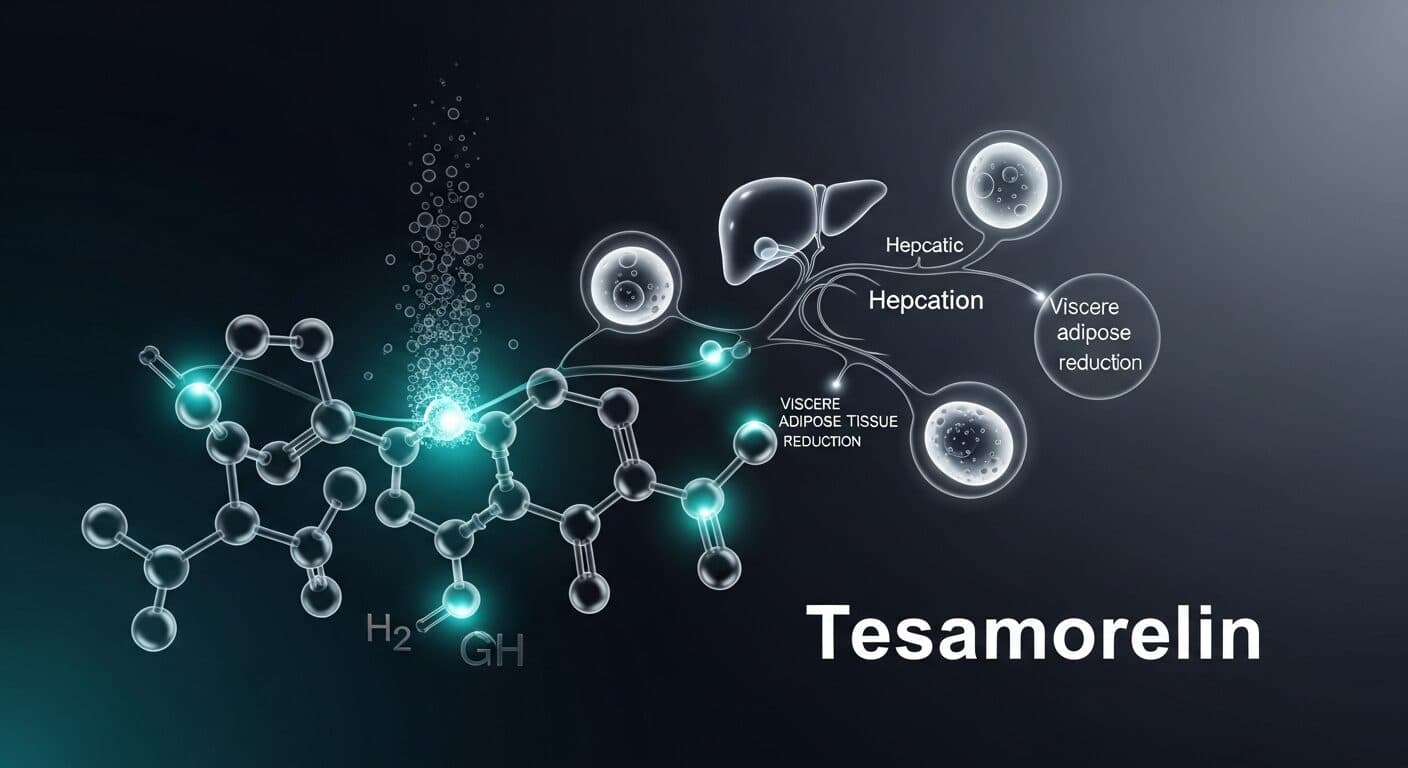
⚠️ For Research Purposes Only — This article discusses tesamorelin strictly as a laboratory research compound. It is not a drug recommendation, dosage guide, or medical advice. Tesamorelin is not for human consumption. It is not intended to diagnose, treat, cure, or prevent any disease. All claims below refer to published preclinical research, in vitro investigations, or published clinical literature cited for scientific context only.
Introduction
Tesamorelin is a synthetic analog of human growth hormone-releasing hormone (GHRH), specifically a stabilized form of GHRH(1-44). Among the peptide research compounds available to investigators, it is one of the most well-characterized GHRH analogs, with a published track record spanning structural chemistry, preclinical pharmacology, phase III controlled research in HIV-associated lipodystrophy populations, and a growing body of neurocognitive exploration in aging research models.
For laboratory researchers, tesamorelin is scientifically interesting because it offers a way to probe the endogenous somatotropic axis without directly introducing exogenous growth hormone. Instead of bypassing the pituitary, it activates GHRH receptors (GHRH-R) on somatotrophs, preserving the pulsatile architecture of downstream GH secretion that many researchers consider physiologically meaningful. This article reviews what the peer-reviewed literature actually says about tesamorelin’s structure, mechanism, and the principal research areas in which it has been studied: visceral adipose tissue biology, hepatic steatosis in preclinical models, and neurocognitive research in aging contexts.
This article is intended for researchers, students of peptide chemistry, and scientific writers who need a technically accurate reference. It does not constitute medical guidance. All references to “effects” describe outcomes reported in research studies in cell culture, animal models, or published clinical literature cited for scientific context.
Molecular Structure and Biochemistry
Native human GHRH exists in two principal bioactive forms, GHRH(1-40) and GHRH(1-44), produced from the same prepro-GHRH precursor. Both retain full biological activity at the GHRH receptor, and the critical pharmacophore for receptor binding resides in the N-terminal 29 amino acids. Tesamorelin is a modification of the full GHRH(1-44) sequence in which a trans-3-hexenoyl moiety is covalently attached to the N-terminal tyrosine residue. This single acylation is a small change on paper, but it has a disproportionate influence on the peptide’s stability profile.
The unmodified N-terminal Tyr1-Ala2 bond of native GHRH is the cleavage site for dipeptidyl peptidase-4 (DPP-4), the serum protease that rapidly truncates many incretin- and hypothalamic-family peptides. By adding a bulky, lipophilic N-terminal acyl group, tesamorelin sterically blocks DPP-4 access to that scissile bond, extending the circulating half-life of the intact bioactive species compared with native GHRH. This same strategy is used in other GHRH analogs, but tesamorelin’s trans-3-hexenoyl modification is distinctive and is the feature that defines it as a chemical entity.
The resulting molecule is 44 amino acids long plus the hexenoyl group, with a molecular mass of approximately 5.2 kDa. In aqueous solution it behaves like a typical small alpha-helical peptide hormone: amphipathic, prone to self-association at high concentrations, and sensitive to oxidation at methionine residues. Like native GHRH, tesamorelin binds the class B G-protein-coupled GHRH receptor (GHRHR) on anterior pituitary somatotrophs, triggering Gs-mediated adenylate cyclase activation, cAMP accumulation, and downstream pulsatile GH release.
Researchers studying tesamorelin in cell or animal systems should keep in mind that its biological read-out is indirect: the peptide itself has no direct action on adipose tissue, liver, or neuronal cultures in the absence of a functional GHRH receptor on somatotrophs. Downstream effects described in the research literature flow through endogenous GH secretion and, subsequently, through hepatic and peripheral IGF-1 production.
Mechanism of Action in Research Models
In preclinical and clinical research models, tesamorelin functions as a GHRH receptor agonist that restores a more physiological GH secretion pattern. Because it works through endogenous somatotrophs, it preserves the negative-feedback architecture of the somatotropic axis — IGF-1 still inhibits further GH release, and somatostatin tone still modulates pulse amplitude. This is the central mechanistic difference between GHRH-analog research and direct recombinant GH research.
Downstream, the research literature describes several mechanistically linked observations:
- Increased GH pulse amplitude with preserved pulsatility in aging-research cohorts. Review work on the somatopause of aging has discussed tesamorelin as a tool for restoring pulsatile GH secretion in older male research participants, in contrast to the tonic elevation produced by exogenous GH [1].
- Elevation of serum IGF-1 into the mid-to-upper normal range for younger adults, which is the principal biomarker used to confirm biological engagement in published studies.
- Selective reduction of visceral adipose tissue (VAT) without proportionate loss of subcutaneous adipose tissue, observed consistently in controlled studies of HIV-associated central fat accumulation [2][3][4][5][6].
- Reduction in hepatic fat fraction measured by proton magnetic resonance spectroscopy, reported in research populations with metabolic dysfunction-associated steatotic liver disease and HIV [3].
- Improvements in metabolic biomarkers including triglycerides and adiponectin among research subjects classified as VAT responders (≥8% VAT reduction), as defined in published phase III protocols [4].
At the cellular level, the VAT-selective response is thought to reflect the greater lipolytic sensitivity of visceral adipocytes to GH/IGF-1 signaling compared with subcutaneous adipocytes, a concept discussed in adipose-biology reviews and examined in the context of somatotropic axis research in aging populations [1].
Key Research Areas
1. Visceral Adipose Tissue Biology
The largest and most rigorous body of tesamorelin research concerns visceral adipose tissue (VAT) reduction in populations with HIV-associated lipodystrophy, a research context in which ectopic VAT accumulation is a well-characterized phenotype. According to PubMed, the two pivotal phase III randomized, double-blind trials enrolled over 800 research participants with HIV-associated abdominal obesity and used cross-sectional imaging to quantify VAT changes [2][3][4].
Published pooled analyses of these datasets have defined a priori “responder” criteria (≥8% VAT reduction at 26 weeks) and shown that the responder subset also exhibits measurable improvements in triglycerides, adiponectin, and glycemic indices [4]. Subsequent secondary analyses reported that VAT responders experienced greater reductions in alanine aminotransferase (ALT) and aspartate aminotransferase (AST) than non-responders, a finding that has been cited as suggestive of a VAT-liver axis in the research population [5].
More recent research has examined tesamorelin in HIV cohorts receiving integrase strand transfer inhibitor (INSTI)-based antiretroviral regimens — an important update because INSTI use is itself associated with weight gain and adipose tissue dysfunction. A 2024 randomized analysis of 38 participants on INSTIs reported significant declines in visceral fat, hepatic fat, and trunk-to-appendicular fat ratio over 12 months in the tesamorelin arm [3]. These findings are relevant for researchers studying adipose tissue dynamics under modern antiretroviral pharmacology.
For investigators working in in vitro adipocyte systems, tesamorelin itself is not a direct adipocyte agonist — the GHRH receptor is not a significant adipocyte target. Research models that seek to recapitulate the VAT phenotype therefore rely on co-culture with somatotroph-derived systems, injection into intact rodent models, or measurement of downstream GH/IGF-1 surrogates.
2. Hepatic Steatosis and Metabolic Research Models
Visceral adiposity and hepatic steatosis are tightly linked, and a growing research literature has examined whether restoring physiological GH pulsatility with a GHRH analog alters liver fat accumulation in preclinical and clinical research models. Published MR spectroscopy data from the HIV/steatotic-liver research population showed meaningful reductions in hepatic fat fraction in tesamorelin-treated arms relative to placebo [3][5].
Mechanistically, research reviews attribute this to a combination of reduced substrate delivery from lipolyzed VAT, GH/IGF-1 effects on hepatic lipid handling, and potentially reduced de novo lipogenesis under restored somatotropic tone [1][6]. For researchers working with dietary or genetic rodent models of steatosis, tesamorelin offers a tool for interrogating the liver-adipose axis under conditions of manipulated GH pulsatility, as opposed to tonic GH exposure.
3. Neurocognitive Research in Aging Models
A smaller but scientifically interesting body of research has explored whether GHRH-analog stimulation of the endogenous somatotropic axis has measurable effects on cognition in older research cohorts. The somatopause — the gradual decline in GH and IGF-1 with advancing age — has been proposed to contribute to age-related cognitive changes, and GHRH analogs have been investigated as experimental probes of this hypothesis [1][7].
Earlier research (2012) reported signals of cognitive improvement in older research participants treated with tesamorelin in controlled studies of mild cognitive impairment [7]. Review coverage at the time discussed tesamorelin as a candidate for research into the GH/IGF-1 axis and cognition [1]. More recent work has tested this hypothesis in HIV research cohorts where neurocognitive impairment is linked to abdominal obesity and reduced IGF-1. A 2025 phase 2 randomized open-label study (73 participants) reported a non-significant trend toward improved neurocognitive performance in the tesamorelin arm over 6 months, acknowledging limitations of power and lack of a placebo arm [8]. This mixed result is instructive for researchers: it reinforces that cognitive endpoints in GHRH-axis research require large, well-powered, placebo-controlled designs to detect modest effects.
Stability, Storage, and Handling in the Laboratory
Tesamorelin is typically supplied as a lyophilized white-to-off-white powder, often with mannitol or similar cryoprotectant as a bulking excipient. For laboratory research purposes, the following handling considerations are well-established for GHRH-family peptides:
- Storage of lyophilized material: Lyophilized tesamorelin is generally stable for extended periods at -20°C or colder when protected from light and moisture. Short-term storage at 2-8°C is acceptable for unopened vials in most research protocols.
- Reconstitution: Bacteriostatic water for injection (containing 0.9% benzyl alcohol), sterile water for injection, or 0.9% saline are the standard research reconstitution solvents. Acidic buffers should generally be avoided because GHRH-family peptides are most stable around neutral-to-slightly-basic pH.
- Post-reconstitution stability: Once reconstituted, GHRH analogs lose potency over time due to deamidation, oxidation of methionine residues, and aggregation. Research practice is to store reconstituted solutions at 2-8°C and use within a short window, or to aliquot and freeze at -20°C to -80°C for longer-term research storage. Repeated freeze-thaw cycles should be avoided.
- Light sensitivity: Aromatic residues make tesamorelin mildly photosensitive; amber vials or foil wrapping are recommended for in-lab research handling.
- Purity considerations: Analytical research use should be preceded by characterization via HPLC, mass spectrometry, and endotoxin testing where appropriate. Researchers should verify certificate of analysis data before designing quantitative experiments.
None of the above should be construed as preparation guidance for administration to humans or animals outside of an approved, regulated research protocol. These are general laboratory handling considerations for the peptide as a research chemical.
Research Considerations and Limitations
Several caveats deserve explicit mention for researchers designing studies with tesamorelin:
Species differences in GHRH receptor biology. While the GHRH receptor is well conserved, pulse architecture, clearance kinetics, and IGF-1 responsiveness vary across rodents, nonhuman primates, and humans. Extrapolation from mouse models to human research requires care.
Tachyphylaxis and axis desensitization. Chronic stimulation of GHRH receptors can produce receptor desensitization and blunted GH pulses over time in research models. Long-duration studies should include measurements of GH pulsatility rather than single time-point sampling.
Glucose homeostasis. GH is a counter-regulatory hormone. Preclinical and clinical research reports have noted small changes in glucose metabolism that should be monitored in any research protocol, particularly in models of insulin resistance [2][4].
IGF-1 ceiling effects. Once IGF-1 reaches the upper physiological range, further GH pulsatility may not translate into proportionate peripheral effects, a factor that complicates dose-response research designs.
Population specificity of published data. Much of the controlled research has been conducted in HIV-associated lipodystrophy populations. Generalization of findings to other adipose-tissue research contexts (e.g., non-HIV metabolic syndrome) is an open area of investigation.
Confounding with antiretroviral regimens. As the 2024 INSTI-era analysis makes clear [3], background pharmacology can substantially shift the adipose phenotype under study, and historical controls may not apply to contemporary research cohorts.
Frequently Asked Research Questions
Q1: How does tesamorelin differ structurally from sermorelin and CJC-1295?
Sermorelin is GHRH(1-29), the minimal bioactive fragment of native GHRH, with no stabilizing modifications. CJC-1295 (without DAC) is also GHRH(1-29) but with four amino acid substitutions to resist enzymatic degradation, while CJC-1295 with DAC adds a drug affinity complex for albumin binding and greatly extended half-life. Tesamorelin preserves the full 44-residue GHRH sequence and adds an N-terminal trans-3-hexenoyl group to block DPP-4 cleavage. Each design represents a different research strategy for stabilizing the GHRH pharmacophore [1].
Q2: What is the typical IGF-1 response reported in tesamorelin research studies?
Published research studies typically report IGF-1 increases into the mid-to-upper quartile of age-adjusted normal ranges, with the magnitude dependent on baseline somatotropic tone, age of the research cohort, and duration of exposure [1][6]. This is a surrogate biomarker commonly used in research settings to confirm axis engagement.
Q3: What study designs have been used to measure visceral adipose tissue changes?
The standard research methodology is a single-slice abdominal CT or MRI at the L4-L5 level to quantify VAT cross-sectional area, complemented by DEXA for trunk-to-appendicular fat ratio and proton MR spectroscopy for hepatic fat fraction [2][3][5]. Researchers should select the imaging modality that matches their scientific question — CT is fastest but uses ionizing radiation, MRI/MRS is radiation-free but more expensive and operator-dependent.
Q4: Can tesamorelin be used in in vitro adipocyte research?
Not directly. Cultured adipocytes do not express significant levels of GHRH receptor, so tesamorelin applied to an adipocyte culture is not expected to produce a direct effect. Research models that wish to study the downstream consequences typically use serum or conditioned media from treated animals, or apply recombinant GH or IGF-1 directly to the adipocytes as surrogates for the downstream signal [6].
Q5: What endpoints distinguish “responders” from “non-responders” in published tesamorelin research?
The phase III trial literature defined VAT responders a priori as those achieving ≥8% reduction in VAT cross-sectional area. Responders showed greater improvements in triglycerides, adiponectin, hemoglobin A1c, and liver enzymes than non-responders [4][5]. This dichotomization is a useful framework for research subgroup analyses but should be interpreted as a statistical convention rather than a biological threshold.
References
According to PubMed, the following peer-reviewed articles were used as primary sources for this research overview. DOI links are provided where available.
- Sattler FR. Growth hormone in the aging male. Best Pract Res Clin Endocrinol Metab. 2013;27(4):541-55. PMID: 24054930. DOI
- Dhillon S. Tesamorelin: a review of its use in the management of HIV-associated lipodystrophy. Drugs. 2011;71(8):1071-91. PMID: 21668043. DOI
- Russo SC, Ockene MW, Arpante AK, et al. Efficacy and safety of tesamorelin in people with HIV on integrase inhibitors. AIDS. 2024;38(12):1758-1764. PMID: 38905488. DOI
- Stanley TL, Falutz J, Marsolais C, et al. Reduction in visceral adiposity is associated with an improved metabolic profile in HIV-infected patients receiving tesamorelin. Clin Infect Dis. 2012;54(11):1642-51. PMID: 22495074. DOI
- Fourman LT, Czerwonka N, Feldpausch MN, et al. Visceral fat reduction with tesamorelin is associated with improved liver enzymes in HIV. AIDS. 2017;31(16):2253-2259. PMID: 28832410. DOI
- Dhillon S. Spotlight on tesamorelin in HIV-associated lipodystrophy. BioDrugs. 2011;25(6):405-8. PMID: 22050344. DOI
- McLarnon A. Neuroendocrinology: Tesamorelin can improve cognitive function. Nat Rev Endocrinol. 2012;8(10):568. PMID: 22926095. DOI
- Ellis RJ, Vaida F, Hu K, et al. Effects of Tesamorelin on Neurocognitive Impairment in Persons With HIV and Abdominal Obesity. J Infect Dis. 2025;231(5):1230-1238. PMID: 39813152. DOI
- Tomlinson B. Drug evaluation: tesamorelin, a synthetic human growth hormone releasing factor. Curr Opin Investig Drugs. 2006;7(10):936-45. PMID: 17086939.
Disclaimer: All products sold by CertaPeptides are intended for laboratory research use only. Not for human or veterinary use. Not for consumption. This article is provided for scientific and educational purposes and does not constitute medical advice, dosing guidance, or an endorsement of any particular use. Researchers are responsible for complying with all applicable institutional, national, and international regulations governing the acquisition, handling, and study of peptide research compounds.
Researcher Q&A
These questions come from researchers working with tesamorelin and adjacent GH-axis research peptides in laboratory settings. Answers reflect the published preclinical and clinical literature, are for research-use-only contexts, and include no dosing guidance. CertaPeptides assembled this appendix from technical questions our QA team sees most often.
Q: Beyond HPLC purity, which third-party tests are worth running on a tesamorelin batch?
A: For pharmaceutical-grade QA of a synthetic research peptide, the information-per-dollar hierarchy is fairly consistent.
HPLC purity plus mass spectrometry confirmation is non-negotiable. HPLC at 220 nm characterises the fraction of the sample that is the target sequence versus related impurities such as truncations, deletions, and oxidised forms. Mass spectrometry confirms the molecular weight matches expectation — tesamorelin should come in at approximately 5135.8 Da monoisotopic. A certificate showing a purity number without an MS trace is effectively a retention-time result.
Endotoxin testing (LAL or recombinant Factor C) is worth including for any peptide intended for parenteral research use. Lyophilised material from reputable synthesis houses is usually fine, but the assay is inexpensive at most EU contract labs and it catches gram-negative contamination introduced during fill, finish, or water-for-injection handling. USP <85> defines the standard.
Sterility testing under USP <71> is less informative than it is often assumed to be for lyophilised powder in a sealed vial — the dry cake is inhospitable to most organisms. It becomes more relevant for reconstituted solutions or when a fill-line contamination is suspected.
Heavy metal testing by ICP-MS is last priority unless there is a specific reason to suspect metal catalysts were used in the synthesis route. For SPPS-produced peptides it is rarely where problems originate.
For tesamorelin specifically, prioritise HPLC+MS and endotoxin. A batch that passes those is unlikely to fail on the remaining panels.
Q: How do tesamorelin, CJC-1295+ipamorelin, and AOD-9604 compare mechanistically for visceral adipose tissue research?
A: These three are mechanistically distinct, and that matters more than a direct “which works best” comparison, because they act on different parts of the GH axis.
Tesamorelin is a GHRH(1-44) analog with an N-terminal trans-3-hexenoic acid modification that blocks dipeptidyl peptidase-IV cleavage and extends its circulating half-life. It produces pulsatile endogenous GH release via the pituitary GHRH receptor. In HIV-associated lipodystrophy clinical trials it produced statistically significant visceral adipose tissue reduction measured by MRI — that represents the strongest VAT-specific data of the three compounds. EMA and FDA approval for HIV lipodystrophy rests on this data set.
CJC-1295 combined with ipamorelin is a dual-arm GH pulse. CJC-1295 (a GHRH analog) drives the GHRH arm; ipamorelin (a GHRP) drives the ghrelin-receptor arm. The combination is synergistic on GH release in preclinical and early clinical work, but does not carry VAT-specific trial data comparable to tesamorelin.
AOD-9604 is mechanistically separate. It is the C-terminal hGH(177-191) lipolytic fragment, developed by Metabolic Pharmaceuticals to isolate hGH’s adipose effects from its growth-promoting IGF-1-raising effects (Wilding 2004, PMID 15134286). Preclinically it is lipolytic in rodent obesity models. Clinically, the Phase IIa/IIb obesity program did not meet the efficacy bar required for approval. The research appeal is “fat loss without the IGF-1 rise,” but the human efficacy data are weak.
For research workflows specifically concerned with the visceral versus subcutaneous distribution of adipose response, tesamorelin has the cleanest preclinical-to-clinical story. CJC+ipamorelin is the broader GH-optimization pick. AOD-9604 remains historically interesting but clinically underperformed in its own program.