Research-grade compound. Laboratory use only. Not intended for human or animal use, ingestion, or injection. No medical claims are made or implied.
≥98% PurityIn-House HPLC & MS Tested
Cyclic and Neuropeptide Research CompoundsSKU: CP-MB20
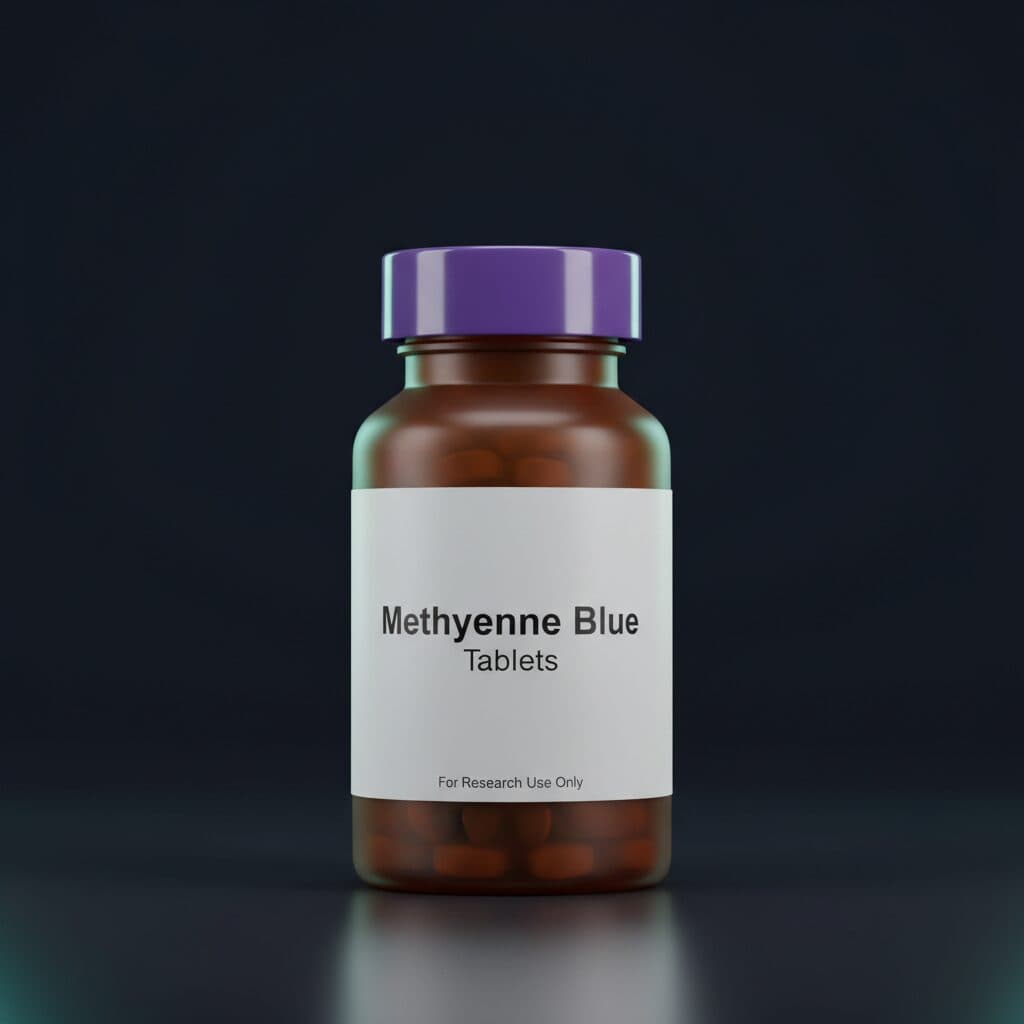
Methylene Blue 20mg
≥99% PurityHPLC & MS verified
€122.99Out of Stock
Delivers to EU in 7-10 business days
Free shipping over €200 · no customs paperwork (EU) · via EU carrier network
Research-grade Methylene Blue. 99.3% avg purity, HPLC & MS verified. Oral tablets in sealed bottle. For laboratory research use only. Not for human consumption.
📦
MADE TO ORDER — Expected delivery: ~3 weeks
Synthesized after your order is placed. We'll email you tracking details when it ships.
Currently Unavailable25 researchers waiting
This product is being restocked
We're working with our supplier to restock this item. Sign up below to be the first to know, or save it to your wishlist.
Important Notice
This product is intended for laboratory and research use only. Not for human or veterinary use. By purchasing, you confirm this product will be used exclusively for in-vitro research purposes.
When This Product May Not Suit Your Research
- ⚠If your research requires GMP-grade material for clinical applications — research-grade peptides are not intended for clinical use.
- ⚠If your lab lacks proper cold storage (-20°C freezer) — this peptide's stability may be compromised at higher temperatures.
- ⚠If your study protocol requires FDA-approved reference standards — contact USP or a certified reference material provider.
Purity HPLC
99.3% average HPLC purity, verified by independent third-party testing
Third-Party Tested
Janoshik report published when available
Fast Shipping
24h dispatch, EU-wide shipping from €4.99
Third-Party Tested
Independent lab verification for every batch
Last reviewed: 2026-04-24
About Methylene Blue 20mg
Methylene Blue (methylthioninium chloride) has a history unlike almost any other research compound -- it has been in continuous medical use since 1876, making it one of the oldest synthetic pharmaceuticals. Over that time its applications have evolved considerably: from antimalarial and antiseptic uses, to methemoglobinemia treatment (still its primary pharmaceutical indication), to a modern research focus on mitochondrial electron transport, neuroprotection, and anti-tau biology.
The mitochondrial mechanism is counterintuitive. At low concentrations, methylene blue acts as an alternative electron carrier in the electron transport chain -- it accepts electrons from NADH and delivers them to cytochrome c, effectively bypassing Complex I and Complex III. This bypass maintains mitochondrial membrane potential and ATP production even when these complexes are inhibited, which makes methylene blue a valuable rescue tool in models of mitochondrial dysfunction. At higher concentrations this same redox cycling generates reactive oxygen species -- concentration-dependency is important and common in methylene blue experiments. The anti-tau activity (inhibiting tau aggregation and promoting tau clearance) has generated research interest in Alzheimer's disease models, where tau pathology is a central feature. Clinical trials of methylene blue derivatives have had mixed results.
Each capsule provides 20mg, a standard research dose for chronic oral studies. Methylene blue turns urine blue or green at effective concentrations -- a useful internal indicator that the compound is being absorbed, though concentration-dependent behavior means the color should not be used as a dosing proxy.
Research Applications
Methylene blue is used in research on mitochondrial electron transport, tau biology and neurodegeneration, CNS receptor binding markers in aging models, oxidative stress, and as a cellular dye for histological and live-cell applications. Its complex dose-response relationship makes it particularly interesting for studying how concentration shapes biological outcomes.
Specifications
| Parameter | Value |
|---|---|
| Active Ingredient | Methylene Blue (methylthioninium chloride) |
| Dose per Capsule | 20mg |
| CAS Number | 61-73-4 |
| Purity | ≥99% pharmaceutical grade |
| Format | Oral capsule |
| Storage | Room temperature, protect from light |
Storage
Store at room temperature away from direct light. Methylene blue is photosensitive -- keep in the original packaging. Stable for extended periods under proper storage conditions.
How does methylene blue help mitochondrial function?
At low concentrations, methylene blue functions as an alternative electron carrier in the mitochondrial electron transport chain. It accepts electrons from NADH and donates them to cytochrome c, effectively creating a bypass around Complexes I and III. This allows mitochondria to continue generating the proton gradient needed for ATP synthesis even when these complexes are inhibited or dysfunctional. This bypass mechanism makes methylene blue a useful tool for studying Complex I and III dysfunction, as well as for rescue experiments in models of mitochondrial disease.
Why does concentration matter so much for methylene blue research?
Methylene blue shows a biphasic dose-response that is unusual among research compounds. At low concentrations it acts as an electron carrier that supports mitochondrial function. At higher concentrations, the same redox cycling generates reactive oxygen species, which produces oxidative stress rather than mitochondrial support. This means results are highly dose-dependent, and comparisons across studies require careful attention to concentration. Researchers new to methylene blue should plan dose-finding experiments rather than assuming a single dose will be appropriate.
What is the connection between methylene blue and tau biology?
Methylene blue has been shown to inhibit tau protein aggregation and promote tau clearance in cellular and animal models, which generated significant interest given tau pathology's role in Alzheimer's disease and other tauopathies. Clinical trials of methylene blue and its reduced form (LMTM) in Alzheimer's disease have had mixed results -- the phase III trials did not meet primary endpoints in large populations, though some subgroup analyses showed signals. The tau biology research continues to be active, particularly in cell and animal model contexts where dosing can be more precisely controlled.
Methylene Blue Capsule is supplied for laboratory research use only. Not approved as a supplement or drug for unapproved uses. Handle in compliance with institutional biosafety guidelines.
Specification Summary
Purity99.3% avg
FormLyophilized Powder
Storage-20\u00B0C
Researcher Confidence
Why researchers choose CertaPeptides
Who actually tests this?
Every batch is independently verified by Janoshik Analytical (100,000+ verifications/month), Eurofins Scientific, and Analytical Sciences International. We publish every Certificate of Analysis.
View COAs →What if I get the wrong batch?
Every bottle label carries a lot number that maps to a specific Certificate of Analysis. If a batch fails spec, we don't ship it — full stop.
View COAs →Where does it ship from?
Romania (EU). We are CERTALAB SRL, CUI RO54451735, VAT-registered. SameDay for Romania, FanCourier for Central/Eastern EU, TCE Worldwide for the rest. 3–7 business days EU-wide.
Shipping details →What if there's a problem?
You have a 14-day withdrawal right under OUG 34/2014 (Romanian/EU consumer law), with ANPC/ODR escalation available. Contact us at support@certapeptides.com.
Returns policy →Product Information
This product is intended for scientific research and development purposes only. It is a chemical substance that shall not be used as a drug, medicine, active substance, or ingredient in any product intended for human or animal consumption. Researchers must handle this compound in accordance with their institutional biosafety guidelines. Use only in properly equipped laboratory settings with appropriate personal protective equipment.
Frequently Asked
Research Library
Related Research Articles
Based on category & popularity
Researchers Also Studied
 20mgSAME FIELD
Cyclic and Neuropeptide Research Compounds
Dihexa 20mg
Research-grade Dihexa. 99.3% avg purity, HPLC & MS verified. Oral tablets in sealed bottle. For laboratory research use only. Not for human consumption.
€386.99
 5mgSAME FIELD
Cyclic and Neuropeptide Research Compounds
PTD-DBM 5mg
Research-grade PTD-DBM. 99.3% avg purity, HPLC & MS verified. Lyophilized powder in sealed glass vial. For laboratory research use only. Not for human consumption.
€55.99
 10mgSAME FIELD
Cyclic and Neuropeptide Research Compounds
P21 (Adamantane) 10mg
Research-grade P21 (Adamantane). 99.3% avg purity, HPLC & MS verified. Lyophilized powder in sealed glass vial. For laboratory research use only. Not for human consumption.
€73.99
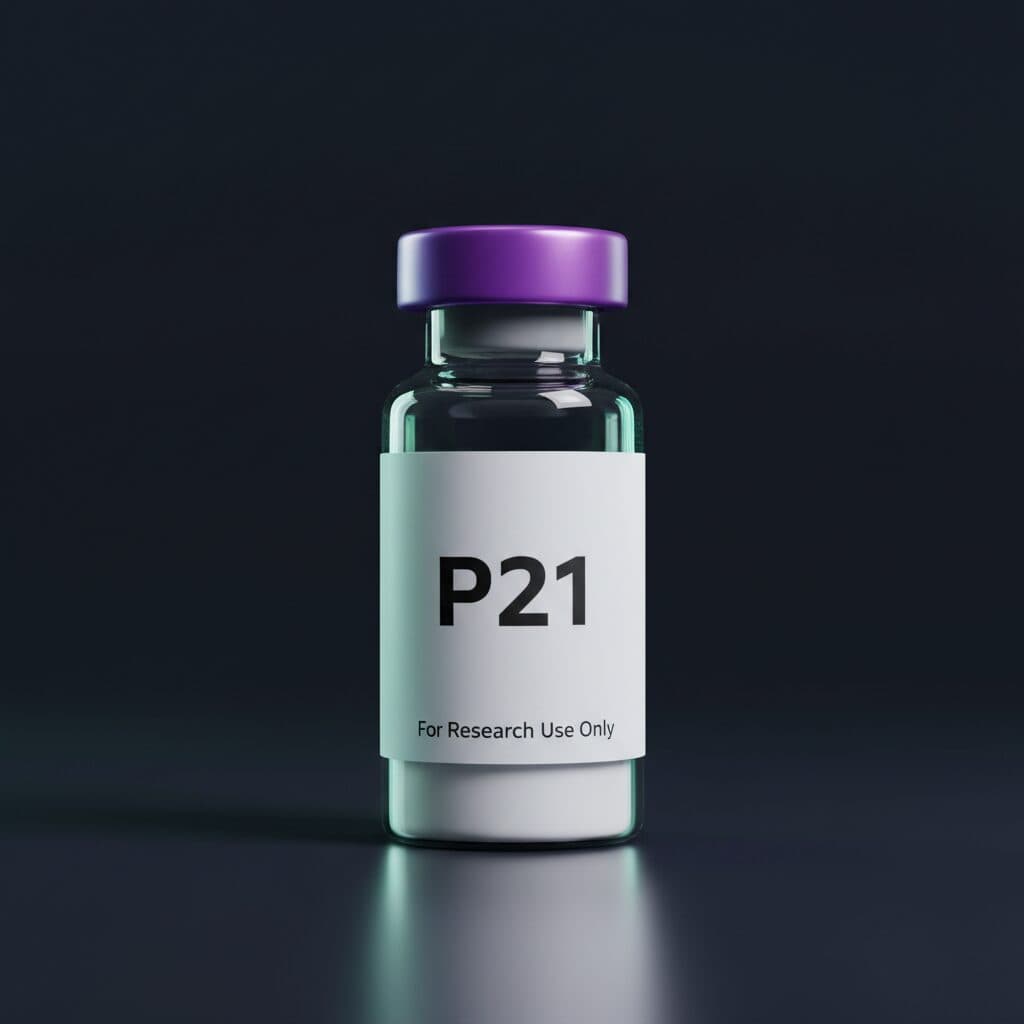 10mgSAME FIELD
Cyclic and Neuropeptide Research Compounds
P21 10mg
Research-grade P21. 99.3% avg purity, HPLC & MS verified. Lyophilized powder in sealed glass vial. For laboratory research use only. Not for human consumption.
€23.99