Research-grade compound. Laboratory use only. Not intended for human or animal use, ingestion, or injection. No medical claims are made or implied.
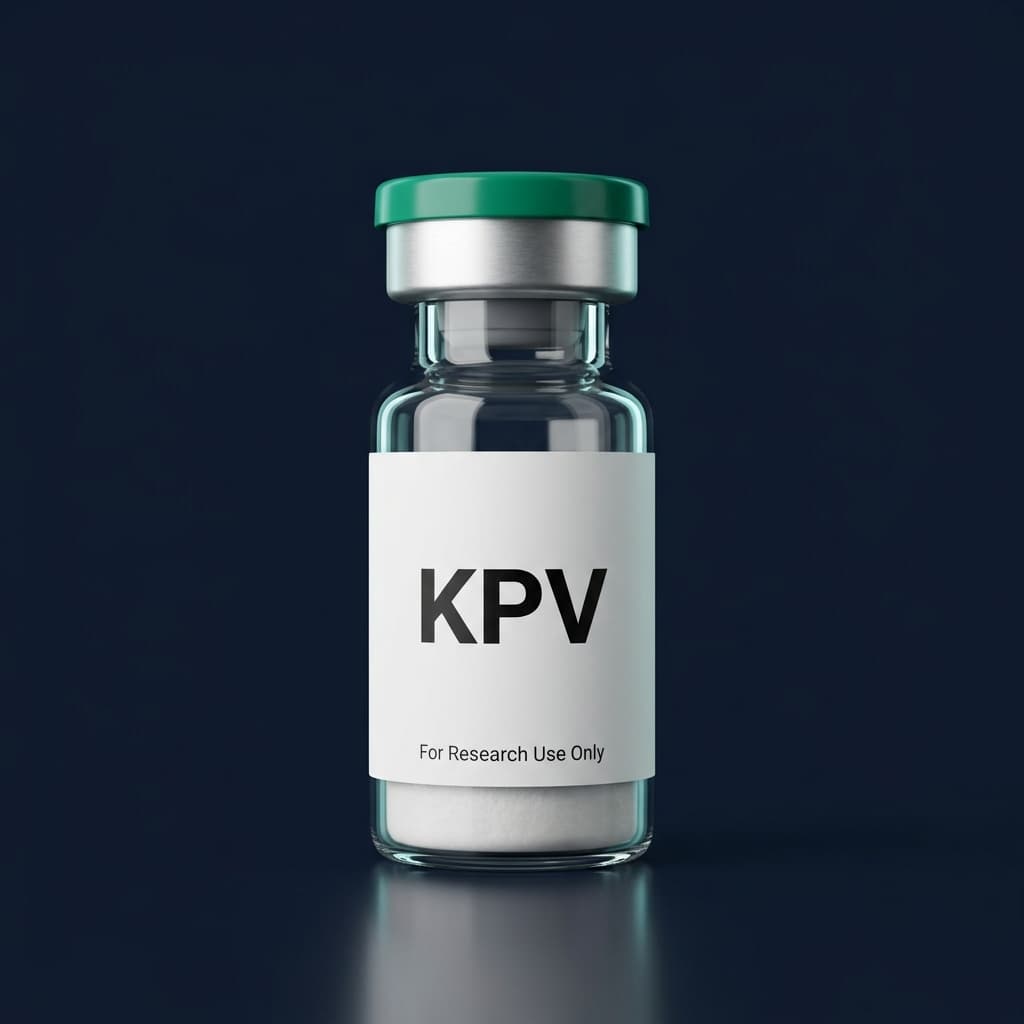
KPV
Purity is high at 98.786%, but this vial assayed 11.93 mg against a 10 mg label — 119.3% of the label claim, a 19.3% overfill.
Free shipping on orders over €200
- If a product doesn't match the specification on its published COA, contact us with your batch number: we investigate against the lot's report and replace any product that fails it, at no cost to you.
- Contact us within 48 hours of delivery with photos of the outer box, inner packing, and any affected vials with labels legible. Confirmed transit damage is replaced at no cost to you.
Purity is high at 98.786%, but this vial assayed 11.93 mg against a 10 mg label — 119.3% of the label claim, a 19.3% overfill.
3–7 days most of the EU · 10–14 Nordics/Baltics
Standard EU from €4.99 (RO) · core EU GLS €17.99 · Nordics/Baltics €12.99–€15.99 · Dispatched within 1–2 business days · Free shipping over €200.00 · no customs paperwork (EU) · via EU carrier network
€200.00 away from free shipping over €200.00. Under that, standard EU shipping is €17.99 (GLS, most of the EU).
How Paysera and SEPA work
- Pay: send a manual SEPA transfer using the IBAN we email you, or, where checkout offers it for your address, approve a SEPA transfer in your own bank via Paysera's hosted page.
- We confirm — Paysera notifies us instantly, or we match a manual transfer when it arrives (usually 1 business day).
- We dispatch — confirmed orders typically ship within 1–2 business days.
Card payments are not currently offered. There is no card processor on this checkout.
KPV is a naturally occurring tripeptide (Lys-Pro-Val) derived from the C-terminal end of alpha-melanocyte-stimulating hormone (alpha-MSH). It has been studied for its immunomodulatory signaling in gastrointestinal and immune biology research models. Alpha-MSH-derived immunomodulatory tripeptide Intestinal epithelial barrier and PepT1 transporter research NF-kB pathway modulation studies For research purposes only. Not for human consumption.
| Quantity | Price Each | Total | Savings |
|---|---|---|---|
| 1 unit | €46.99 | €46.99 | -- |
| 3+ | €44.64 | €133.92 | 5% off |
| 5+Most Popular | €42.29 | €211.46 | 10% off |
| 10+ | €39.94 | €399.41 | 15% off |
Important Notice
This product is intended for research purposes only. Not for human or veterinary use. By purchasing, you confirm this product will be used exclusively for in-vitro research purposes.
Due to legal and regulatory requirements, this product cannot be shipped to: Croatia, Italy, Lithuania, and Slovenia.
Reconstitution Required
This peptide ships lyophilized (dry powder) and requires bacteriostatic water to reconstitute before use. BAC water is sold separately.
Recommended: BAC water · stable for 28 days at 2-8°C once mixed.
When This Product May Not Suit Your Research
- ⚠If your research requires GMP-grade material for clinical applications — research-grade peptides are not intended for clinical use.
- ⚠If your lab lacks proper cold storage (-20°C freezer) — this peptide's stability may be compromised at higher temperatures.
- ⚠If your study protocol requires FDA-approved reference standards — contact USP or a certified reference material provider.
Published laboratory reports are available for selected lots. Check each report for its result and stated method. For research purposes only.
View report #233644 on janoshik.com →
Dispatched within 1–2 business days, shipping from €4.99 in Romania, from €12.99 across the rest of Europe
Class-level specification on record; independent Janoshik report on selected lots
About KPV
KPV (Lys-Pro-Val) is a tripeptide made up of the amino acids lysine, proline and valine. Its sequence matches the last three residues (positions 11-13) of alpha-melanocyte-stimulating hormone (alpha-MSH), a 13-amino-acid peptide cleaved from the precursor protein proopiomelanocortin (POMC).
In published laboratory research, KPV has been examined in cell-culture studies of intracellular signalling in human keratinocytes and in cells expressing the melanocortin-1 receptor (MC1R), of the NF-kB pathway in intestinal epithelial cell lines, and of its uptake by the peptide transporter PepT1.
Specifications
| Parameter | Value |
|---|---|
| Compound | KPV (Lys-Pro-Val, alpha-MSH C-terminal tripeptide) |
| Purity | ≥98% (class-level specification) |
| Format | Lyophilized powder |
| Reconstitution | Sterile water or saline |
| Storage | -20°C; 2-8°C after reconstitution |
Storage
Store at -20°C before reconstitution. Refrigerate at 2-8°C after reconstitution and use within 28 days. KPV is a small, stable tripeptide with good shelf life under proper storage conditions.
Where does the KPV sequence come from?
Alpha-MSH has the sequence Ser-Tyr-Ser-Met-Glu-His-Phe-Arg-Trp-Gly-Lys-Pro-Val, and KPV corresponds to its last three amino acids. Alpha-MSH is one of several peptides cleaved from proopiomelanocortin (POMC), the same precursor protein that gives rise to adrenocorticotropic hormone (ACTH).
In what kind of research is KPV studied?
The published studies summarised on this page are laboratory research: cell-culture work on melanocortin receptor signalling, on the NF-kB pathway and on peptide transport by PepT1. Their results describe observations made under experimental conditions only.
How does KPV differ from full-length alpha-MSH?
Alpha-MSH has 13 amino acids, while KPV consists of only its last three, so KPV is a much smaller molecule. Full-length alpha-MSH binds several melanocortin receptors (MC1R, MC3R, MC4R and MC5R). KPV is studied as a research compound in its own right.
KPV is supplied for research purposes only. Not for human use. Handle in compliance with institutional biosafety guidelines.
Specification Summary
About KPV
KPV (Lys-Pro-Val) is a tripeptide made up of the amino acids lysine, proline and valine. Its sequence matches the last three residues (positions 11-13) of alpha-melanocyte-stimulating hormone (alpha-MSH), a 13-amino-acid peptide cleaved from the precursor protein proopiomelanocortin (POMC).
In published laboratory research, KPV has been examined in cell-culture studies of intracellular signalling in human keratinocytes and in cells expressing the melanocortin-1 receptor (MC1R), of the NF-kB pathway in intestinal epithelial cell lines, and of its uptake by the peptide transporter PepT1.
Specifications
| Parameter | Value |
|---|---|
| Compound | KPV (Lys-Pro-Val, alpha-MSH C-terminal tripeptide) |
| Purity | ≥98% (class-level specification) |
| Format | Lyophilized powder |
| Reconstitution | Sterile water or saline |
| Storage | -20°C; 2-8°C after reconstitution |
Storage
Store at -20°C before reconstitution. Refrigerate at 2-8°C after reconstitution and use within 28 days. KPV is a small, stable tripeptide with good shelf life under proper storage conditions.
Where does the KPV sequence come from?
Alpha-MSH has the sequence Ser-Tyr-Ser-Met-Glu-His-Phe-Arg-Trp-Gly-Lys-Pro-Val, and KPV corresponds to its last three amino acids. Alpha-MSH is one of several peptides cleaved from proopiomelanocortin (POMC), the same precursor protein that gives rise to adrenocorticotropic hormone (ACTH).
In what kind of research is KPV studied?
The published studies summarised on this page are laboratory research: cell-culture work on melanocortin receptor signalling, on the NF-kB pathway and on peptide transport by PepT1. Their results describe observations made under experimental conditions only.
How does KPV differ from full-length alpha-MSH?
Alpha-MSH has 13 amino acids, while KPV consists of only its last three, so KPV is a much smaller molecule. Full-length alpha-MSH binds several melanocortin receptors (MC1R, MC3R, MC4R and MC5R). KPV is studied as a research compound in its own right.
KPV is supplied for research purposes only. Not for human use. Handle in compliance with institutional biosafety guidelines.
What research shows
Selected peer-reviewed studies from the published literature. Each describes laboratory or preclinical findings and is attributed to the cited study, not to this product. For research purposes only — not medical guidance.
Keratinocyte signalling
In human keratinocyte cell-culture research, the alpha-MSH C-terminal fragment KPV was examined within melanocortin signalling pathways.
alpha-Melanocyte-stimulating hormone, MSH 11-13 KPV and adrenocorticotropic hormone signalling in human keratinocyte cells. Journal of Investigative Dermatology (2004). PMID: 15102092Citations are provided for research reference. CertaPeptides (CERTALAB S.R.L.) is a reseller, not a manufacturer, and makes no medical, therapeutic, or efficacy claims. Products are for research purposes only and are not for human or animal consumption.
Researcher Confidence
Why researchers choose CertaPeptides
Who actually tests this?
Selected lots are independently verified by Janoshik Analytical (Czech Republic) and published on the Janoshik public portal. Other lots ship with the supplier's batch specification. See /coa for the published wall.
View COAs →What if I get the wrong batch?
Every vial label carries a code. Look it up on our Verify page: it shows what CertaPeptides publishes for that code and, for a withdrawn lot, that the lot was withdrawn and why. If yours is withdrawn, or if the code on your label finds nothing, email us that code.
View COAs →Where does it ship from?
Romania (EU). We are CERTALAB SRL, CUI 54169956, VAT-registered. Sameday for Romania, GLS for most EU destinations, TCE Worldwide for the remaining cross-border EU and non-EU markets (UK, Switzerland). Delivery 1–15 business days depending on destination — exact window shown at checkout.
Shipping details →What if there's a problem?
You have a 14-day withdrawal right under OUG 34/2014 (Romanian/EU consumer law), with escalation to ANPC and alternative dispute resolution (SAL) available. Contact us at support@certapeptides.com.
Returns policy →Product Information
This product is intended for scientific research and development purposes only. It is a chemical substance that shall not be used as a drug, medicine, active substance, or ingredient in any product intended for human or animal consumption. Researchers must handle this compound in accordance with their institutional biosafety guidelines. Use only in properly equipped laboratory settings with appropriate personal protective equipment.