Research-grade compound. Laboratory use only. Not intended for human or animal use, ingestion, or injection. No medical claims are made or implied.
≥98% PurityJanoshik Verified
Tissue Healing and Regeneration Research CompoundsSKU: CP-KPV
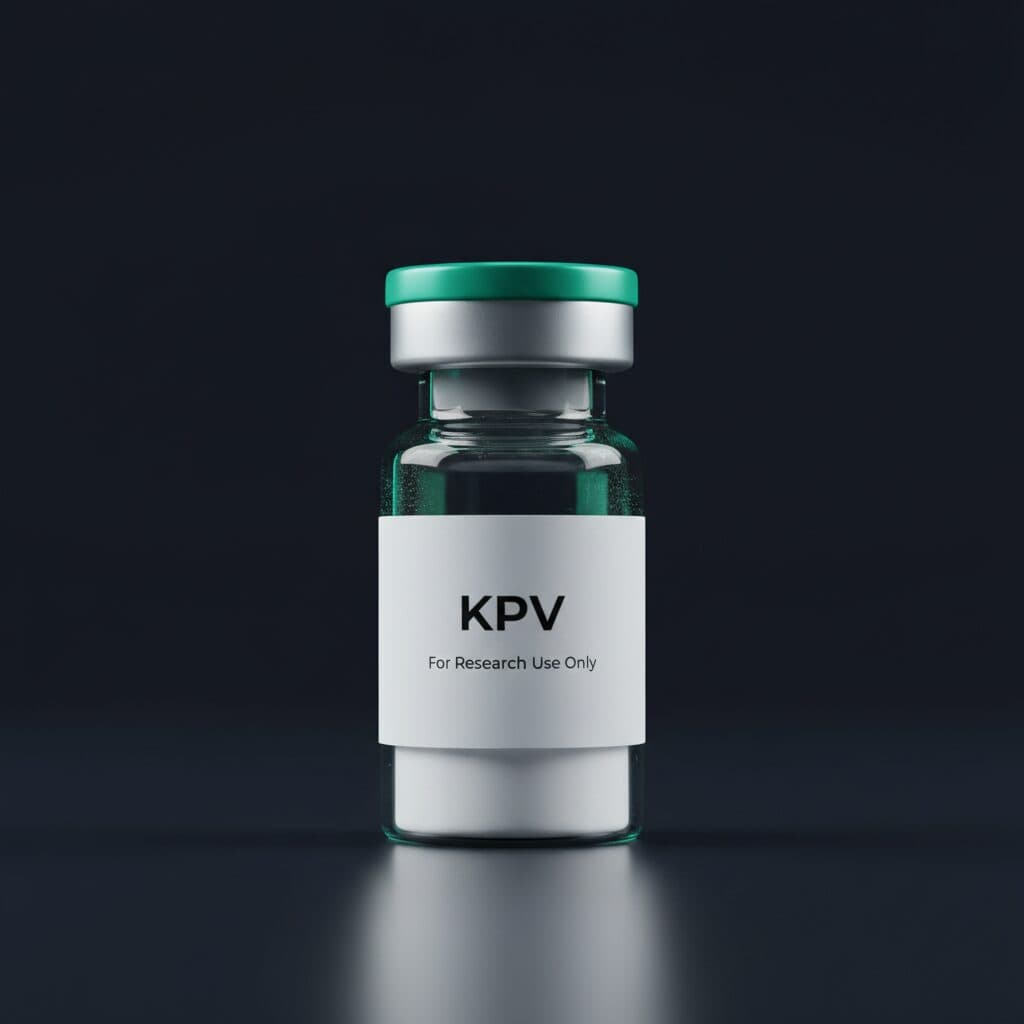
KPV
≥98% PuritySupplier batch spec; selected lots Janoshik-tested
Janoshik Verified
97.56% HPLC
10mg · Report #172222
This lot's independent HPLC came in at 97.559% — just under our usual ≥98% supplier specification. We publish it in full, unedited, rather than withhold it.
Related PeptidesDB entry (same owner)
peptidesdb.org
/p/kpv
Delivers to EU in 3-7 business days
Free shipping over €200 · no customs paperwork (EU) · via EU carrier network
Size5mg
€31.49
1
Total: €31.49
Free shipping on orders over €200
KPV is a naturally occurring tripeptide (Lys-Pro-Val) derived from the C-terminal end of alpha-melanocyte-stimulating hormone (alpha-MSH). It has been studied for its immunomodulatory signaling in gastrointestinal and immune biology research models. Alpha-MSH-derived immunomodulatory tripeptide Intestinal epithelial barrier and PepT1 transporter research NF-kB pathway modulation studies For research purposes only. Not for human consumption.
Volume PricingApplied automatically at checkout
| Quantity | Price Each | Total | Savings |
|---|---|---|---|
| 1 unit | €31.49 | €31.49 | -- |
| 3+ | €29.92 | €89.75 | 5% off |
| 5+Most Popular | €28.34 | €141.70 | 10% off |
| 10+ | €26.77 | €267.66 | 15% off |
Important Notice
This product is intended for laboratory and research use only. Not for human or veterinary use. By purchasing, you confirm this product will be used exclusively for in-vitro research purposes.
Reconstitution Required
This peptide ships lyophilized (dry powder) and requires bacteriostatic water to reconstitute before use. BAC water is sold separately.
Recommended: BAC water · stable for 21 days at 2-8°C once mixed.
When This Product May Not Suit Your Research
- ⚠If your research requires GMP-grade material for clinical applications — research-grade peptides are not intended for clinical use.
- ⚠If your lab lacks proper cold storage (-20°C freezer) — this peptide's stability may be compromised at higher temperatures.
- ⚠If your study protocol requires FDA-approved reference standards — contact USP or a certified reference material provider.
Purity HPLC
99.2% average HPLC purity, verified by independent third-party testing
Janoshik Verified
View report #172222 on janoshik.com →
Fast Shipping
24h dispatch, EU-wide shipping from €4.99
Third-Party Tested
Supplier batch specification on every product; independent Janoshik report on selected lots
Last reviewed: 2026-07-19
About KPV
KPV (Lys-Pro-Val) is a tripeptide derived from the C-terminus of alpha-melanocyte-stimulating hormone (alpha-MSH). This three-amino acid sequence retains the core anti-inflammatory activity of the parent molecule. Alpha-MSH is a POMC-derived neuropeptide known for its roles in pigmentation, energy balance, and inflammation suppression. The C-terminal KPV sequence was identified as the minimal active unit responsible for the anti-inflammatory effects.
In research models, KPV is studied for its activity through melanocortin receptors (particularly MC1R) and its direct anti-inflammatory activity in intestinal epithelial cells -- specifically suppressing NF-kB activation and downstream inflammatory cytokine production. This intestinal epithelial activity has made KPV particularly interesting for research into inflammatory bowel disease (IBD) models, where inflammation of the intestinal mucosal layer is the central pathology under study. Unlike the full alpha-MSH molecule, KPV is a small, stable tripeptide that can potentially survive GI transit and act locally on intestinal mucosa -- a useful delivery route to study for GI inflammatory pathways.
KPV is also found in the Klow Blend product, where it is combined with BPC-157, GHK-Cu, and TB-500. As a standalone product, KPV is suited for studies where the anti-inflammatory mechanism specifically is being investigated without the additional tissue repair signals of the combined blend.
Specifications
| Parameter | Value |
|---|---|
| Compound | KPV (Lys-Pro-Val, alpha-MSH C-terminal tripeptide) |
| Purity | ≥98% (supplier batch spec; 99.3% avg across independently tested lots) |
| Format | Lyophilized powder |
| Reconstitution | Sterile water or saline |
| Storage | -20°C; 2-8°C after reconstitution |
Storage
Store at -20°C before reconstitution. Refrigerate at 2-8°C after reconstitution and use within 28 days. KPV is a small, stable tripeptide with good shelf life under proper storage conditions.
How does KPV suppress inflammation?
In research models, KPV acts through melanocortin receptor 1 (MC1R) and through direct intracellular mechanisms in epithelial cells. It suppresses NF-kB nuclear translocation -- a critical step in the inflammatory signaling cascade -- and downstream production of pro-inflammatory cytokines including IL-6, IL-8, and TNF-alpha. In intestinal epithelial cell studies, KPV has been shown to reduce inflammatory cytokine production induced by bacterial components (LPS) and by cytokines like IL-1beta. The MC1R-mediated component adds an additional layer of anti-inflammatory signaling through cAMP pathway activation.
Why is KPV specifically studied for IBD rather than other inflammatory conditions?
KPV's intestinal epithelial cell activity and potential oral stability make it particularly suited for GI inflammatory research. IBD models (Crohn's disease, ulcerative colitis) involve inflammatory activation of intestinal mucosal cells, and local delivery of anti-inflammatory signals to these cells is a research goal. KPV's small size (tripeptide) gives it better potential for surviving GI transit than larger peptides, though stability is still formulation-dependent. Nanoparticle formulations for oral KPV delivery to the intestinal mucosa have been developed and studied in colitis models specifically for this reason.
How does KPV compare to full alpha-MSH for anti-inflammatory research?
Full alpha-MSH (13 amino acids) activates all five melanocortin receptors (MC1R-MC5R) including MC4R, which mediates GLP-1 receptor signalling and sexual effects in the hypothalamus. KPV retains the anti-inflammatory C-terminal activity with more selective receptor engagement and much smaller molecular size. For research specifically on the anti-inflammatory arm of alpha-MSH activity without confounding appetite/endocrine effects, KPV is a more tractable tool. The small size also makes it more amenable to oral delivery research for GI applications.
KPV is supplied for laboratory research use only. Not approved for human use. Handle in compliance with institutional biosafety guidelines.
Specification Summary
Purity99.2% avg
FormLyophilized Powder
Storage-20\u00B0C
About KPV
KPV (Lys-Pro-Val) is a tripeptide derived from the C-terminus of alpha-melanocyte-stimulating hormone (alpha-MSH). This three-amino acid sequence retains the core anti-inflammatory activity of the parent molecule. Alpha-MSH is a POMC-derived neuropeptide known for its roles in pigmentation, energy balance, and inflammation suppression. The C-terminal KPV sequence was identified as the minimal active unit responsible for the anti-inflammatory effects.
In research models, KPV is studied for its activity through melanocortin receptors (particularly MC1R) and its direct anti-inflammatory activity in intestinal epithelial cells -- specifically suppressing NF-kB activation and downstream inflammatory cytokine production. This intestinal epithelial activity has made KPV particularly interesting for research into inflammatory bowel disease (IBD) models, where inflammation of the intestinal mucosal layer is the central pathology under study. Unlike the full alpha-MSH molecule, KPV is a small, stable tripeptide that can potentially survive GI transit and act locally on intestinal mucosa -- a useful delivery route to study for GI inflammatory pathways.
KPV is also found in the Klow Blend product, where it is combined with BPC-157, GHK-Cu, and TB-500. As a standalone product, KPV is suited for studies where the anti-inflammatory mechanism specifically is being investigated without the additional tissue repair signals of the combined blend.
Specifications
| Parameter | Value |
|---|---|
| Compound | KPV (Lys-Pro-Val, alpha-MSH C-terminal tripeptide) |
| Purity | ≥98% (supplier batch spec; 99.3% avg across independently tested lots) |
| Format | Lyophilized powder |
| Reconstitution | Sterile water or saline |
| Storage | -20°C; 2-8°C after reconstitution |
Storage
Store at -20°C before reconstitution. Refrigerate at 2-8°C after reconstitution and use within 28 days. KPV is a small, stable tripeptide with good shelf life under proper storage conditions.
How does KPV suppress inflammation?
In research models, KPV acts through melanocortin receptor 1 (MC1R) and through direct intracellular mechanisms in epithelial cells. It suppresses NF-kB nuclear translocation -- a critical step in the inflammatory signaling cascade -- and downstream production of pro-inflammatory cytokines including IL-6, IL-8, and TNF-alpha. In intestinal epithelial cell studies, KPV has been shown to reduce inflammatory cytokine production induced by bacterial components (LPS) and by cytokines like IL-1beta. The MC1R-mediated component adds an additional layer of anti-inflammatory signaling through cAMP pathway activation.
Why is KPV specifically studied for IBD rather than other inflammatory conditions?
KPV's intestinal epithelial cell activity and potential oral stability make it particularly suited for GI inflammatory research. IBD models (Crohn's disease, ulcerative colitis) involve inflammatory activation of intestinal mucosal cells, and local delivery of anti-inflammatory signals to these cells is a research goal. KPV's small size (tripeptide) gives it better potential for surviving GI transit than larger peptides, though stability is still formulation-dependent. Nanoparticle formulations for oral KPV delivery to the intestinal mucosa have been developed and studied in colitis models specifically for this reason.
How does KPV compare to full alpha-MSH for anti-inflammatory research?
Full alpha-MSH (13 amino acids) activates all five melanocortin receptors (MC1R-MC5R) including MC4R, which mediates GLP-1 receptor signalling and sexual effects in the hypothalamus. KPV retains the anti-inflammatory C-terminal activity with more selective receptor engagement and much smaller molecular size. For research specifically on the anti-inflammatory arm of alpha-MSH activity without confounding appetite/endocrine effects, KPV is a more tractable tool. The small size also makes it more amenable to oral delivery research for GI applications.
KPV is supplied for laboratory research use only. Not approved for human use. Handle in compliance with institutional biosafety guidelines.
What research shows
Selected peer-reviewed studies from the published literature. Each describes laboratory or preclinical findings and is attributed to the cited study, not to this product. For research use only — not medical guidance.
[1]
Intestinal inflammation
In in-vitro and murine research, PepT1-mediated uptake of the tripeptide KPV was reported to reduce intestinal inflammation.
PepT1-mediated tripeptide KPV uptake reduces intestinal inflammation. Gastroenterology (2008). PMID: 18061177[2]
Inflammatory bowel disease models
In murine models of inflammatory bowel disease, the melanocortin-derived tripeptide KPV was studied for its anti-inflammatory potential.
Melanocortin-derived tripeptide KPV has anti-inflammatory potential in murine models of inflammatory bowel disease. Inflammatory Bowel Diseases (2008). PMID: 18092346[3]
Keratinocyte signalling
In human keratinocyte cell-culture research, the alpha-MSH C-terminal fragment KPV was examined within melanocortin signalling pathways.
alpha-Melanocyte-stimulating hormone, MSH 11-13 KPV and adrenocorticotropic hormone signalling in human keratinocyte cells. Journal of Investigative Dermatology (2004). PMID: 15102092Citations are provided for research reference. CertaPeptides (CERTALAB S.R.L.) is a reseller, not a manufacturer, and makes no medical, therapeutic, or efficacy claims. Products are for laboratory research use only and are not for human or animal consumption.
Researcher Confidence
Why researchers choose CertaPeptides
Who actually tests this?
Selected lots are independently verified by Janoshik Analytical (Czech Republic) and published on the Janoshik public portal. Other lots ship with the supplier's batch specification. See /coa for the published wall.
View COAs →What if I get the wrong batch?
Every bottle label carries a lot number that maps to a specific Certificate of Analysis. If a batch fails spec, we don't ship it — full stop.
View COAs →Where does it ship from?
Romania (EU). We are CERTALAB SRL, CUI 54169956, VAT-registered. Sameday for Romania, GLS for most EU destinations, TCE Worldwide for the remaining cross-border EU and non-EU markets (UK, Switzerland, Norway, Iceland, Israel, Serbia). Delivery 1–15 business days depending on destination — exact window shown at checkout.
Shipping details →What if there's a problem?
You have a 14-day withdrawal right under OUG 34/2014 (Romanian/EU consumer law), with ANPC/ODR escalation available. Contact us at support@certapeptides.com.
Returns policy →Product Information
This product is intended for scientific research and development purposes only. It is a chemical substance that shall not be used as a drug, medicine, active substance, or ingredient in any product intended for human or animal consumption. Researchers must handle this compound in accordance with their institutional biosafety guidelines. Use only in properly equipped laboratory settings with appropriate personal protective equipment.
Frequently Asked
Research Library
Related Research Articles
Frequently researched together
Combined Price
€153.46
KPV€31.49