Composto di grado ricerca. Solo per uso di laboratorio. Non destinato all'uso umano o animale, all'ingestione o all'iniezione. Non viene formulata né implicata alcuna affermazione di natura medica.
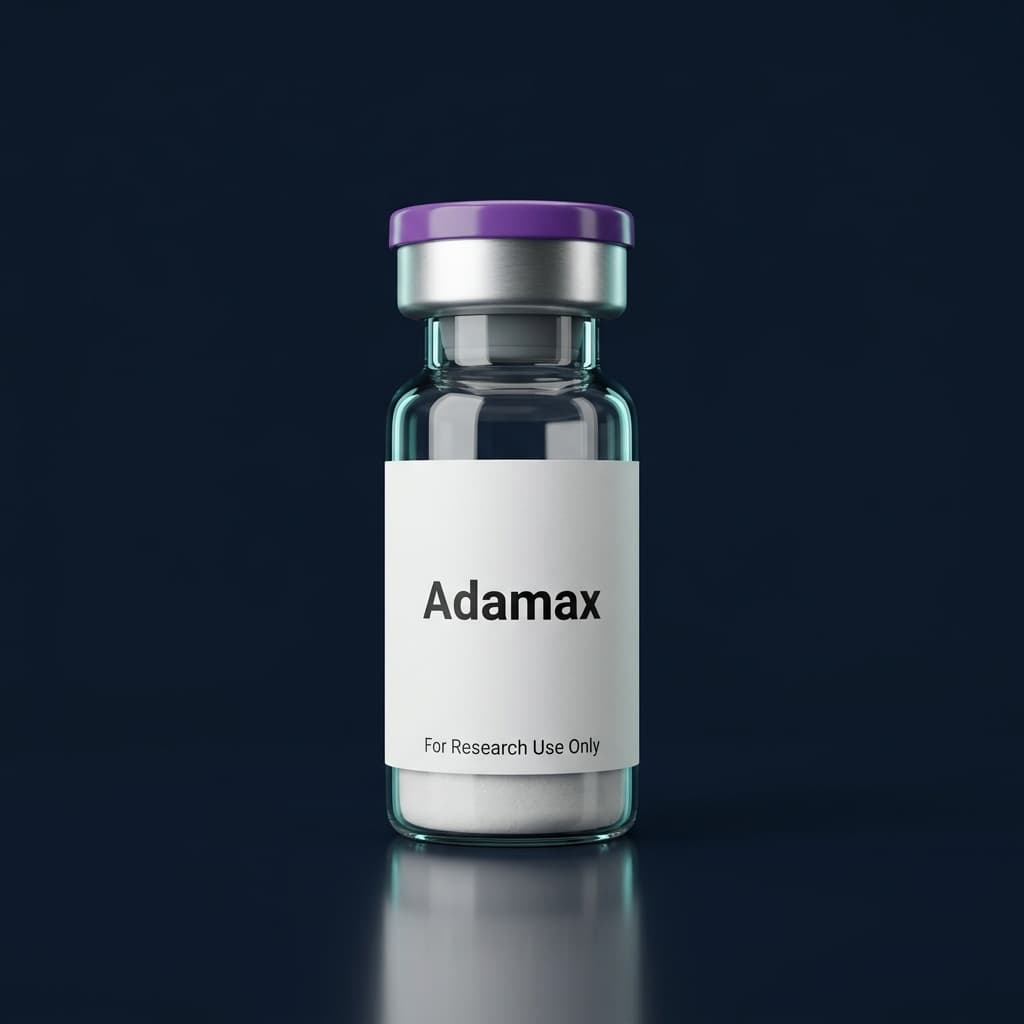
Adamax
Il laboratorio l'ha identificato come la forma di Adamax da 984 Da, senza gruppo adamantano. Il nostro lotto da 10 mg è questa forma.
Spedizione gratuita sugli ordini superiori a €200
- Se un prodotto non corrisponde alla specifica del suo COA pubblicato, ci contatti con il numero di lotto: verifichiamo rispetto al report del lotto e sostituiamo qualsiasi prodotto che non lo soddisfi, senza alcun costo per Lei.
- Ci contatti entro 48 ore dalla consegna con le foto della scatola esterna, dell'imballaggio interno e di eventuali fiale interessate con le etichette leggibili. I danni da trasporto confermati vengono sostituiti senza alcun costo per Lei.
Il laboratorio l'ha identificato come la forma di Adamax da 984 Da, senza gruppo adamantano. Il nostro lotto da 10 mg è questa forma.
3–7 giorni nella maggior parte dei paesi dell'UE · 10–14 giorni nei paesi nordici e baltici
Spedizione standard nell'UE da 4,99 € (RO) · principali paesi UE (GLS) 17,99 € · paesi nordici e baltici 12,99 €–15,99 € · Spedizione entro 1–2 giorni lavorativi · Spedizione gratuita oltre 200,00 € · nessuna pratica doganale (UE) · tramite la rete di corrieri dell'UE
Ancora 200,00 € alla spedizione gratuita oltre 200,00 €. Al di sotto, la spedizione standard nell'UE costa 17,99 € (GLS, la maggior parte dei paesi dell'UE).
Come funzionano Paysera e SEPA
- Paghi: invii un bonifico SEPA manuale utilizzando l'IBAN che Le inviamo via email oppure, ove il checkout lo offra per il Suo indirizzo, approvi un bonifico SEPA nella Sua banca tramite la pagina ospitata di Paysera.
- Confermiamo: Paysera ci avvisa immediatamente, oppure abbiniamo il bonifico manuale al Suo ordine quando arriva (di solito 1 giorno lavorativo).
- Spediamo: gli ordini confermati partono di norma entro 1-2 giorni lavorativi.
I pagamenti con carta non sono attualmente offerti. Questo checkout non utilizza alcun processore di carte.
Research-grade Adamax, 984 Da form without the adamantane group. Class-level specification ≥97%; selected lots independently tested. Lyophilized powder in sealed glass vial. For research purposes only. Not for human consumption.
| Quantità | Prezzo unitario | Totale | Risparmio |
|---|---|---|---|
| 1 unità | 49,99 € | 49,99 € | -- |
| 3+ | 47,49 € | 142,47 € | 5% di sconto |
| 5+Più popolare | 44,99 € | 224,95 € | 10% di sconto |
| 10+ | 42,49 € | 424,92 € | 15% di sconto |
Avviso importante
Questo prodotto è destinato esclusivamente a scopi di ricerca. Non destinato all'uso umano o veterinario. Effettuando l'acquisto, conferma che questo prodotto sarà utilizzato esclusivamente per scopi di ricerca in vitro.
Per requisiti legali e normativi, questo prodotto non può essere spedito in: Italia.
Ricostituzione necessaria
Questo peptide viene spedito liofilizzato (polvere secca) e richiede acqua batteriostatica per la ricostituzione prima dell'uso. L'acqua BAC è venduta separatamente.
Quando questo prodotto potrebbe non essere adatto alla sua ricerca
- ⚠Se la sua ricerca richiede materiale di grado GMP per applicazioni cliniche — i peptidi di grado da ricerca non sono destinati all'uso clinico.
- ⚠Se il suo laboratorio non dispone di un'adeguata conservazione a freddo (congelatore a -20°C) — la stabilità di questo peptide può essere compromessa a temperature più elevate.
- ⚠Se il protocollo del suo studio richiede standard di riferimento approvati dalla FDA — contatti USP o un fornitore di materiale di riferimento certificato.
Sono disponibili rapporti di laboratorio pubblicati per lotti selezionati. Consultare ogni rapporto per il risultato e il metodo indicato. Solo per scopi di ricerca.
Visualizza il report #241505 su janoshik.com →
Spedizione entro 1–2 giorni lavorativi, consegna da 4,99 € in Romania, da 12,99 € nel resto d'Europa
Specifica registrata a livello di classe; report Janoshik indipendente su lotti selezionati
Informazioni su Adamax
Adamax is a synthetic research peptide in the Semax family. Semax is a heptapeptide built from the ACTH(4-7) fragment extended with Pro-Gly-Pro, and Adamax is offered in more than one form under the same name: one carries an adamantane group, one does not.
This product is the 984 Da form, without the adamantane group. Janoshik identified the 10mg lot CP-2609-ADM10 as this form in report #241505.
Research use is in laboratory studies of Semax-family peptides, including comparisons between modified and unmodified analogues and studies of peptide stability.
Specifications
| Parameter | Value |
|---|---|
| Compound | Adamax, 984 Da form (no adamantane group) |
| Amount per Vial | 10mg |
| Purity | ≥97% (class-level specification) |
| Format | Lyophilized powder |
| Storage | -20°C; 2-8°C after reconstitution |
Storage
Store at -20°C before reconstitution. Refrigerate at 2-8°C after reconstitution.
Adamax is supplied for laboratory research use only. Not approved for human use. Handle in compliance with institutional biosafety guidelines.
Riepilogo delle specifiche
Informazioni su Adamax
Adamax is a synthetic research peptide in the Semax family. Semax is a heptapeptide built from the ACTH(4-7) fragment extended with Pro-Gly-Pro, and Adamax is offered in more than one form under the same name: one carries an adamantane group, one does not.
This product is the 984 Da form, without the adamantane group. Janoshik identified the 10mg lot CP-2609-ADM10 as this form in report #241505.
Research use is in laboratory studies of Semax-family peptides, including comparisons between modified and unmodified analogues and studies of peptide stability.
Specifications
| Parameter | Value |
|---|---|
| Compound | Adamax, 984 Da form (no adamantane group) |
| Amount per Vial | 10mg |
| Purity | ≥97% (class-level specification) |
| Format | Lyophilized powder |
| Storage | -20°C; 2-8°C after reconstitution |
Storage
Store at -20°C before reconstitution. Refrigerate at 2-8°C after reconstitution.
Adamax is supplied for laboratory research use only. Not approved for human use. Handle in compliance with institutional biosafety guidelines.
Fiducia dei ricercatori
Perché i ricercatori scelgono CertaPeptides
Chi esegue effettivamente i test?
I lotti selezionati sono verificati in modo indipendente da Janoshik Analytical (Repubblica Ceca) e pubblicati sul portale pubblico Janoshik. Gli altri lotti vengono spediti con la specifica del lotto del fornitore. Consulti /coa per la bacheca pubblicata.
Visualizza i COA →Cosa succede se ricevo il lotto sbagliato?
Ogni etichetta del flaconcino riporta un codice. Lo cerchi sulla nostra pagina di verifica: mostra ciò che CertaPeptides pubblica per quel codice e, per un lotto ritirato, che il lotto è stato ritirato e il motivo. Se il Suo è stato ritirato, o se la ricerca del codice riportato sulla Sua etichetta non trova nulla, ci invii quel codice via e-mail.
Visualizza i COA →Da dove viene spedito?
Romania (UE). Siamo CERTALAB SRL, CUI 54169956, registrata ai fini IVA. Sameday per la Romania, GLS per la maggior parte delle destinazioni UE, TCE Worldwide per gli altri mercati transfrontalieri UE ed extra-UE (Regno Unito, Svizzera). Consegna in 1–15 giorni lavorativi a seconda della destinazione — la finestra esatta è indicata al momento del pagamento.
Dettagli sulla spedizione →Cosa succede se c'è un problema?
Ha un diritto di recesso di 14 giorni ai sensi dell'OUG 34/2014 (normativa rumena/UE sui consumatori), con possibilità di ricorso ad ANPC e alla risoluzione alternativa delle controversie (SAL). Ci contatti all'indirizzo support@certapeptides.com.
Politica di reso →Informazioni sul prodotto
Questo prodotto è destinato esclusivamente a scopi di ricerca e sviluppo scientifico. È una sostanza chimica che non deve essere utilizzata come farmaco, medicinale, principio attivo o ingrediente in alcun prodotto destinato al consumo umano o animale. I ricercatori devono manipolare questo composto in conformità alle linee guida di biosicurezza del proprio istituto. Utilizzare esclusivamente in ambienti di laboratorio adeguatamente attrezzati e con dispositivi di protezione individuale appropriati.