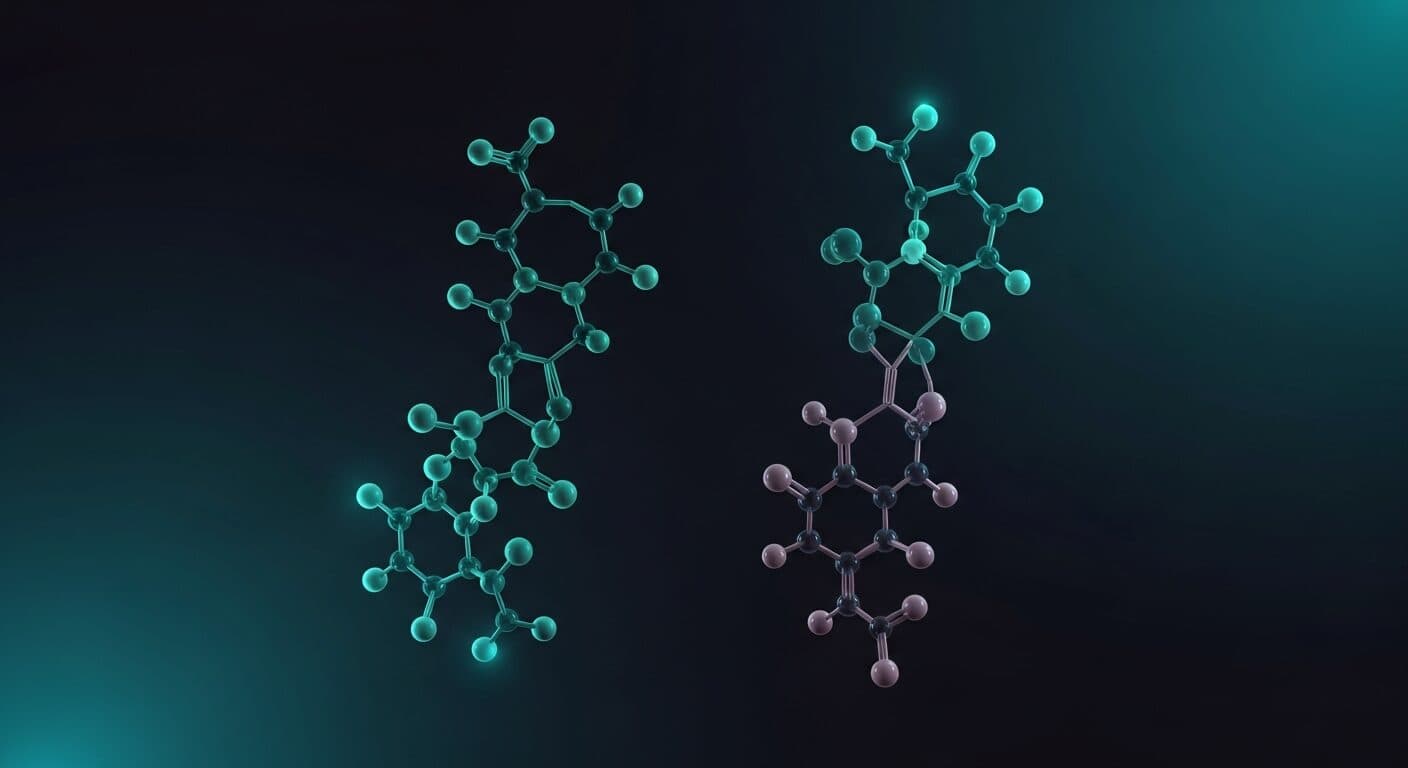
Anti-aging research has produced a range of peptide compounds with proposed roles in cellular maintenance, tissue repair, and longevity-related signaling. Among these, Epitalon and GHK-Cu occupy distinct positions in the research landscape: Epitalon is a tetrapeptide studied primarily for its effects on telomere biology and neuroendocrine regulation, while GHK-Cu (glycine-histidine-lysine tripeptide copper complex) has been extensively researched for wound healing, extracellular matrix remodeling, and antioxidant effects. Despite their shared classification as “anti-aging peptides” in many research contexts, they act through fundamentally different mechanisms and address different aspects of cellular aging biology.
This article compares Epitalon and GHK-Cu across their research profiles, mechanisms, and practical research considerations. Content is for educational purposes only.
Epitalon: Telomerase and Neuroendocrine Aging
Epitalon (Ala-Glu-Asp-Gly) is a synthetic tetrapeptide analog of Epithalamin, a pineal gland extract. It has been studied in the context of telomere biology, with the key published finding by Khavinson, Bondarev, and Butyugov (2003) reporting that Epitalon induces telomerase activity and telomere elongation in human somatic cells in culture (PMID: 12937682). This finding positioned Epitalon within aging biology research focused on the DNA-level mechanisms of cellular senescence.
Separately, Epitalon has been studied for its effects on the pineal gland and melatonin regulation. Sibarov et al. (2002) showed that Epitalon influences pineal secretion in stress-exposed rats (PMID: 12500171), linking the peptide to neuroendocrine regulation of the circadian-aging axis. This line of research connects Epitalon to systemic aging through its effects on hormonal regulation rather than direct cellular mechanisms.
Anisimov et al. (2002) reported anti-tumor and longevity effects in transgenic cancer-prone mice treated with Epitalon (PMID: 12459848), providing in vivo data suggesting whole-organism effects beyond the cell culture findings on telomerase.
GHK-Cu: Extracellular Matrix and Wound Repair
GHK-Cu (glycine-L-histidyl-L-lysine copper complex) is a naturally occurring tripeptide found in human plasma, saliva, and urine, where it is released during tissue injury. The copper-complexed form of the peptide has been studied for its effects on wound healing, skin remodeling, collagen and glycosaminoglycan synthesis, anti-inflammatory activity, and antioxidant protection. GHK-Cu has a substantially larger body of research than Epitalon, with studies spanning multiple decades and multiple independent research groups globally.
The primary mechanism of GHK-Cu involves interactions with cell surface receptors and intracellular signaling pathways that upregulate extracellular matrix gene expression. GHK-Cu has been shown in cell culture and animal models to increase production of type I collagen, fibronectin, and glycosaminoglycans by dermal fibroblasts. The copper component is a cofactor for lysyl oxidase, an enzyme required for collagen and elastin cross-linking — providing a functional basis for GHK-Cu’s effects on connective tissue integrity.
Beyond extracellular matrix effects, GHK-Cu has been studied for broader gene expression changes. Research using DNA microarrays has documented that GHK-Cu exposure modulates hundreds of genes in tissue culture systems, including genes involved in inflammation resolution, antioxidant defense, and tissue remodeling. This broad transcriptional activity has led to characterization of GHK-Cu as a “tissue restoration signal” — a peptide released at injury sites that orchestrates a coordinated repair response.
Mechanism Comparison: Where the Pathways Diverge
| Dimension | Epitalon | GHK-Cu |
|---|---|---|
| Primary target | Telomerase/TERT expression | Extracellular matrix synthesis, gene expression |
| Cellular compartment | Nuclear (chromatin regulation) | Cell surface receptors, extracellular matrix, cytoplasm |
| Natural analog | Epithalamin (pineal extract) | Endogenous plasma tripeptide released at injury |
| Copper dependency | None | Copper required for full biological activity |
| Primary research tissue | Whole organism, somatic cells | Skin, wound, connective tissue |
| Research origin | Russian biogerontology program | International, multiple independent groups |
| Key gene target | TERT (telomerase catalytic subunit) | Collagen I, fibronectin, MMP-2, antioxidant genes |
The “Anti-Aging” Label: Different Definitions
One source of confusion in comparing Epitalon and GHK-Cu is the use of the term “anti-aging” to describe both, without specifying which aspect of aging each addresses. Aging is not a single process — it involves telomere attrition, cellular senescence, extracellular matrix degradation, chronic inflammation, mitochondrial dysfunction, and multiple other parallel changes. Different “anti-aging” compounds typically address specific subsets of these processes rather than aging as a unified phenomenon.
Epitalon’s anti-aging research primarily addresses the DNA-level aging clock — telomere attrition and replicative senescence. If its telomerase-activating effects are real and translate to the whole organism, Epitalon would act by slowing the cellular aging clock in somatic cells.
GHK-Cu’s anti-aging research primarily addresses the structural aging of connective tissue — the degradation of collagen networks, the loss of skin firmness and wound healing capacity, and the accumulation of inflammatory damage. GHK-Cu would act by maintaining extracellular matrix integrity and promoting repair of damaged tissue.
These are complementary rather than competing mechanisms. A research strategy that examines both in combination could in principle address aging at both the nuclear (telomere/gene expression) and extracellular (matrix/tissue integrity) levels — though combined studies of this type are not currently a prominent feature of the published literature.
Evidence Base Quality
There are important differences in the breadth and independence of the evidence base for each compound:
GHK-Cu has been studied by multiple independent research groups across different countries and institutions, with consistent findings on its effects on collagen synthesis, wound healing, and gene expression. The breadth of the GHK-Cu literature provides higher confidence in its primary biological effects.
Epitalon’s research base is more concentrated in a single Russian research program. The telomerase activation finding (PMID: 12937682) and related studies have not yet been independently replicated using contemporary molecular methods by unaffiliated groups. The biological plausibility is reasonable given known telomere biology, but independent verification would strengthen the evidence base considerably.
Neither compound has completed the type of large-scale, placebo-controlled human clinical trials that would establish their efficacy for specific anti-aging applications in humans. Both remain in the research stage.
Research Applications: Which to Use for What
For researchers designing studies, the choice between Epitalon and GHK-Cu should follow the specific research question:
- Telomere biology, cellular senescence, replicative lifespan studies: Epitalon is the appropriate tool based on current published data, with the understanding that the mechanism requires further independent characterization.
- Wound healing, skin biology, fibroblast function, extracellular matrix remodeling: GHK-Cu is the better-characterized compound with a broader independent research base for these applications.
- Neuroendocrine regulation of aging, pineal function, circadian-aging interactions: Epitalon is more relevant based on its origins as a pineal extract analog and published effects on melatonin regulation.
- Antioxidant defense, inflammatory resolution, gene expression profiling: GHK-Cu has more published data in these areas.
For researchers interested in the broader anti-aging peptide landscape, the Epitalon research guide and the GHK-Cu complete research guide on CertaPeptides provide detailed coverage of each compound’s research history. Both peptides are available for research purposes: CertaPeptides Epitalon and the CertaPeptides GHK-Cu product page.
Key Takeaways
- Epitalon and GHK-Cu are both classified as anti-aging peptides but address fundamentally different biological processes: Epitalon focuses on telomere/DNA-level aging; GHK-Cu focuses on extracellular matrix integrity and tissue repair.
- Epitalon’s proposed mechanism involves TERT gene upregulation and telomerase activation; GHK-Cu acts through extracellular matrix receptors to increase collagen synthesis and coordinate broad gene expression changes in tissue repair.
- GHK-Cu has a larger, more internationally diverse research base; Epitalon’s primary research comes from a single Russian biogerontology program, with limited independent replication to date.
- The two compounds are not competing alternatives — they address different aging mechanisms and could in principle be studied in combination to address aging at both nuclear and extracellular levels.
- Neither compound has established efficacy in large-scale human clinical trials; both remain in the research stage.
Frequently Asked Questions
Are Epitalon and GHK-Cu ever studied together?
Published combination studies of Epitalon and GHK-Cu are not prominent in the current literature. They address different aging mechanisms — telomere biology versus extracellular matrix maintenance — and would likely need to be combined in a well-designed study to assess any additive or complementary effects. This is an area where original research could make a meaningful contribution.
Which has more human data — Epitalon or GHK-Cu?
GHK-Cu has more human-relevant data, including cosmetic and wound care studies in human subjects. Epitalon’s primary human-relevant data come from cell culture studies using human somatic cells (in vitro) and rodent in vivo studies. Neither has completed large-scale controlled clinical trials for anti-aging indications in humans.
Why does GHK-Cu need copper to be biologically active?
The GHK peptide (without copper) has significantly reduced biological activity in wound healing and extracellular matrix assays compared to the copper-complexed form. Copper serves as a cofactor for lysyl oxidase, the enzyme that cross-links collagen and elastin — essential for the structural integrity of connective tissue. Copper also participates in superoxide dismutase (Cu/Zn-SOD) activity and other antioxidant mechanisms. The tripeptide GHK acts partly as a copper transport/delivery vehicle, chaperoneing copper to sites where these copper-dependent enzymes are needed.
Does Epitalon’s telomerase activation pose any cancer risk?
This is a legitimate research question. Interestingly, published studies by Anisimov et al. in cancer-prone transgenic mice found anti-tumor effects rather than tumor promotion with Epitalon. The interpretation requires nuance: restoring limited telomerase activity in aging normal cells differs from the constitutive high-level activity that characterizes cancer. However, this question requires further independent research in appropriate models before definitive conclusions can be drawn.
Can Epitalon and GHK-Cu be combined in research protocols?
There is no published evidence of antagonistic interactions between the two peptides at the mechanistic level, given that they act through different pathways. However, combination use in research protocols should follow the principles of good experimental design — testing each compound independently before combining, and establishing baseline characterization of each alone before drawing conclusions from combined data. No human safety or efficacy data for the combination exists in the published literature.
References
- Khavinson VKh, Bondarev IE, Butyugov AA. (2003). Epithalon peptide induces telomerase activity and telomere elongation in human somatic cells. Bull Exp Biol Med. PMID: 12937682
- Anisimov VN, Khavinson VKh, Alimova IN, et al. (2002). Epithalon decelerates aging and suppresses development of breast adenocarcinomas in transgenic her-2/neu mice. Bull Exp Biol Med. PMID: 12459848
- Sibarov DA, Kovalenko RI, Malinin VV, et al. (2002). Epitalon influences pineal secretion in stress-exposed rats in the daytime. Neuro Endocrinol Lett. PMID: 12500171
Disclaimer: This article is for educational and research purposes only. The information provided does not constitute medical advice. Always consult qualified professionals before beginning any research protocol. CertaPeptides products are sold for research purposes only and are not intended for human consumption.
Verify before you research
Product pages show a class-level specification where one is on record, and selected lots carry an independent third-party COA.