Research-grade compound. Laboratory use only. Not intended for human or animal use, ingestion, or injection. No medical claims are made or implied.
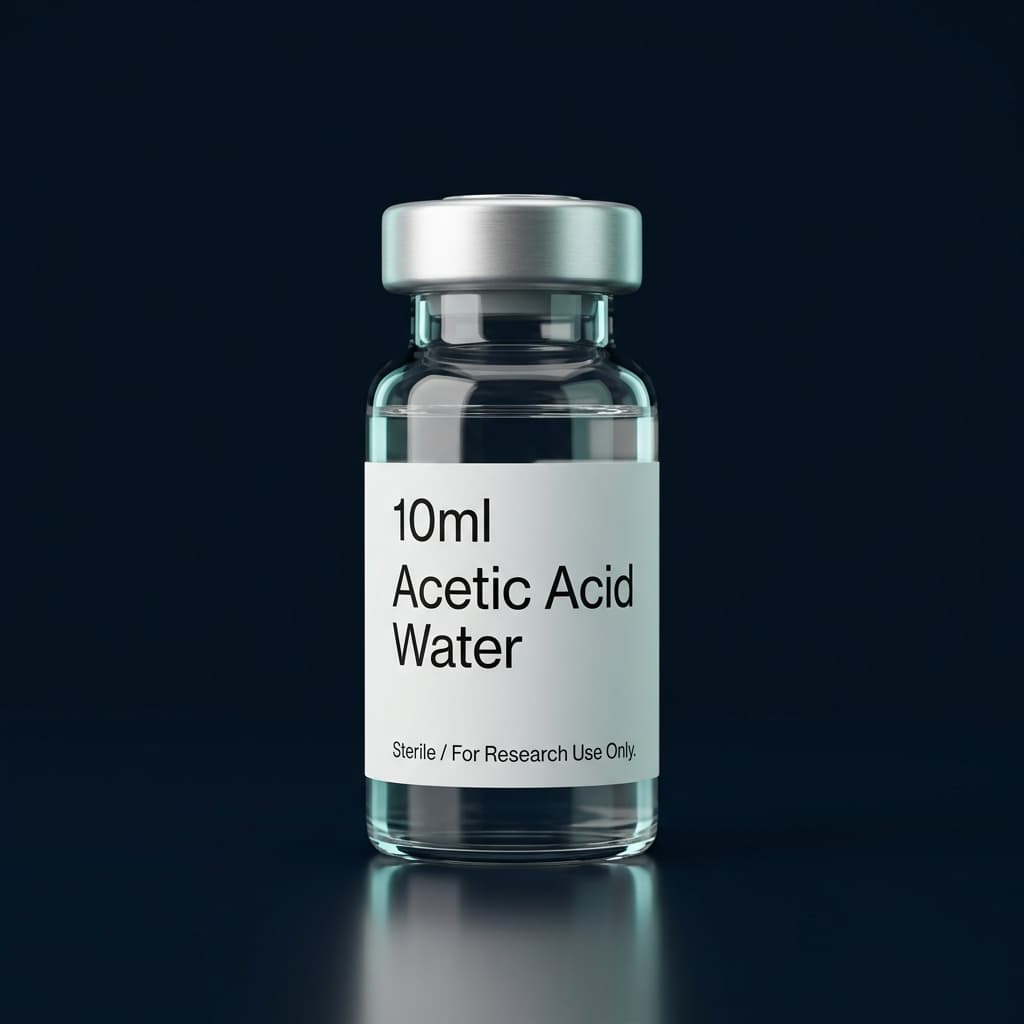
Acetic Acid Water 10ml
No lab report for this lot.
Free shipping on orders over €200
- If a product doesn't match the specification on its published COA, contact us with your batch number: we investigate against the lot's report and replace any product that fails it, at no cost to you.
- Contact us within 48 hours of delivery with photos of the outer box, inner packing, and any affected vials with labels legible. Confirmed transit damage is replaced at no cost to you.
No lab report for this lot.
3–7 days most of the EU · 10–14 Nordics/Baltics
Standard EU from €4.99 (RO) · core EU GLS €17.99 · Nordics/Baltics €12.99–€15.99 · Dispatched within 1–2 business days · Free shipping over €200.00 · no customs paperwork (EU) · via EU carrier network
€200.00 away from free shipping over €200.00. Under that, standard EU shipping is €17.99 (GLS, most of the EU).
How Paysera and SEPA work
- Pay: send a manual SEPA transfer using the IBAN we email you, or, where checkout offers it for your address, approve a SEPA transfer in your own bank via Paysera's hosted page.
- We confirm — Paysera notifies us instantly, or we match a manual transfer when it arrives (usually 1 business day).
- We dispatch — confirmed orders typically ship within 1–2 business days.
Research-grade Acetic Acid Water. For peptide reconstitution. For research purposes only. Not for human consumption.
| Quantity | Price Each | Total | Savings |
|---|---|---|---|
| 1 unit | €5.99 | €5.99 | -- |
| 3+ | €5.69 | €17.07 | 5% off |
| 5+Most Popular | €5.39 | €26.96 | 10% off |
| 10+ | €5.09 | €50.92 | 15% off |
Important Notice
This product is intended for research purposes only. Not for human or veterinary use. By purchasing, you confirm this product will be used exclusively for in-vitro research purposes.
Published laboratory reports are available for selected lots. Check each report for its result and stated method. For research purposes only.
Janoshik report published when available
Dispatched within 1–2 business days, shipping from €4.99 in Romania, from €12.99 across the rest of Europe
Class-level specification on record; independent Janoshik report on selected lots
About Acetic Acid Water 10ml
Acetic acid water (0.6% acetic acid in USP-grade water for injection, per the specification on record) is an alternative reconstitution medium for research peptides that are poorly soluble in neutral aqueous solutions. At physiological pH, many cationic peptides -- particularly those rich in arginine and lysine -- form aggregates through intermolecular electrostatic and hydrophobic interactions. Lowering the pH protonates more amino groups, increases electrostatic repulsion between peptide chains, and disrupts aggregation, producing a clear, stable solution that can then be diluted into higher-pH buffers for experimental use.
When to Use Acetic Acid Water
The protocol is typically: dissolve in acetic acid water first to produce a concentrated stock, then dilute into PBS, saline, or media for the working solution.
Do not use acetic acid reconstitution for peptides with acid-sensitive bonds -- aspartyl-proline sequences and some modified peptides can undergo acid hydrolysis. Also avoid for experiments where a precisely controlled pH is critical to the readout. For standard peptide solubilization where your primary concern is getting the compound into solution, dilute acetic acid is a well-established approach that the peptide research community has used for decades.
Specifications
| Parameter | Value |
|---|---|
| Volume | 10ml vial |
| Acetic acid concentration | 0.6% (specification on record) |
| Sterility | Sterile filtered |
| Solvent | Water for injection grade |
Storage
Store at room temperature, away from heat sources and direct sunlight. Acetic acid water does not require refrigeration before opening. Once opened and added to a peptide vial, store reconstituted solution at 4°C -- acetic acid water lacks the benzyl alcohol preservative of bacteriostatic water, so the stability window is shorter.
Does the acidic pH affect peptide stability?
For most synthetic peptides, mild acidity is actually stabilizing compared to neutral pH -- it reduces deamidation of asparagine and glutamine, which are hydrolysis-susceptible amino acids that preferentially degrade at neutral to basic pH. The concern is that strongly acidic conditions (below pH 2) can cleave Asp-Pro bonds in certain peptide sequences. The bigger stability risk at acidic pH is oxidation of methionine and tryptophan if oxygen is not excluded during storage.
Acetic acid water is supplied for laboratory research. For research purposes only.
Specification Summary
About Acetic Acid Water 10ml
Acetic acid water (0.6% acetic acid in USP-grade water for injection, per the specification on record) is an alternative reconstitution medium for research peptides that are poorly soluble in neutral aqueous solutions. At physiological pH, many cationic peptides -- particularly those rich in arginine and lysine -- form aggregates through intermolecular electrostatic and hydrophobic interactions. Lowering the pH protonates more amino groups, increases electrostatic repulsion between peptide chains, and disrupts aggregation, producing a clear, stable solution that can then be diluted into higher-pH buffers for experimental use.
When to Use Acetic Acid Water
The protocol is typically: dissolve in acetic acid water first to produce a concentrated stock, then dilute into PBS, saline, or media for the working solution.
Do not use acetic acid reconstitution for peptides with acid-sensitive bonds -- aspartyl-proline sequences and some modified peptides can undergo acid hydrolysis. Also avoid for experiments where a precisely controlled pH is critical to the readout. For standard peptide solubilization where your primary concern is getting the compound into solution, dilute acetic acid is a well-established approach that the peptide research community has used for decades.
Specifications
| Parameter | Value |
|---|---|
| Volume | 10ml vial |
| Acetic acid concentration | 0.6% (specification on record) |
| Sterility | Sterile filtered |
| Solvent | Water for injection grade |
Storage
Store at room temperature, away from heat sources and direct sunlight. Acetic acid water does not require refrigeration before opening. Once opened and added to a peptide vial, store reconstituted solution at 4°C -- acetic acid water lacks the benzyl alcohol preservative of bacteriostatic water, so the stability window is shorter.
Does the acidic pH affect peptide stability?
For most synthetic peptides, mild acidity is actually stabilizing compared to neutral pH -- it reduces deamidation of asparagine and glutamine, which are hydrolysis-susceptible amino acids that preferentially degrade at neutral to basic pH. The concern is that strongly acidic conditions (below pH 2) can cleave Asp-Pro bonds in certain peptide sequences. The bigger stability risk at acidic pH is oxidation of methionine and tryptophan if oxygen is not excluded during storage.
Acetic acid water is supplied for laboratory research. For research purposes only.