Związek klasy badawczej. Wyłącznie do użytku laboratoryjnego. Nieprzeznaczony do stosowania u ludzi ani zwierząt, do spożycia ani iniekcji. Nie formułuje się ani nie sugeruje żadnych twierdzeń o charakterze medycznym.
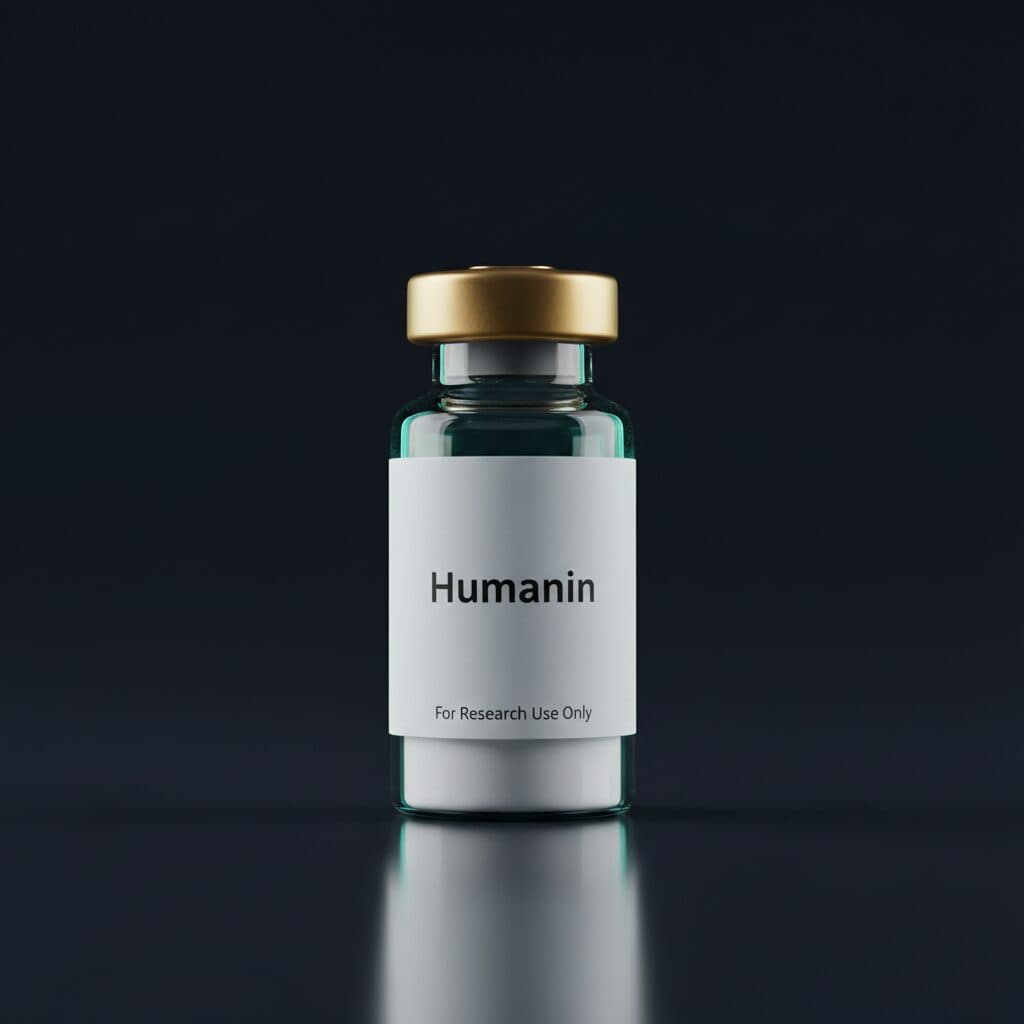
Humanin 10mg
Bezpłatna wysyłka przy zamówieniach powyżej €200
- Jeśli produkt nie odpowiada specyfikacji w jego opublikowanym COA, prosimy o kontakt z podaniem numeru partii: weryfikujemy go względem raportu danej partii i wymieniamy każdy produkt, który jej nie spełnia, bez kosztów dla Państwa.
- Prosimy o kontakt w ciągu 48 godzin od dostawy ze zdjęciami zewnętrznego pudełka, wewnętrznego wypełnienia oraz wszelkich uszkodzonych fiolek z czytelnymi etykietami. Potwierdzone uszkodzenie w transporcie jest wymieniane bez kosztów dla Państwa.
3–7 dni do większości krajów UE · 10–14 dni do krajów nordyckich i bałtyckich
Standardowa wysyłka w UE od 4,99 € (RO) · główne kraje UE (GLS) 17,99 € · kraje nordyckie i bałtyckie 12,99 €–15,99 € · Nadanie w ciągu 1–2 dni roboczych · Bezpłatna wysyłka powyżej 200,00 € · bez formalności celnych (UE) · przez sieć przewoźników w UE
Jeszcze 200,00 € do bezpłatnej wysyłki powyżej 200,00 €. Poniżej tej kwoty standardowa wysyłka w UE kosztuje 17,99 € (GLS, większość krajów UE).
Jak działają Paysera i SEPA
- Zapłać: wykonaj ręczny przelew SEPA na numer IBAN, który przesyłamy e-mailem, lub, jeśli kasa oferuje tę metodę dla podanego adresu, zatwierdź przelew SEPA we własnym banku przez hostowaną stronę Paysera.
- Potwierdzamy: Paysera powiadamia nas natychmiast albo przypisujemy przelew ręczny do zamówienia, gdy wpłynie (zwykle 1 dzień roboczy).
- Wysyłamy: potwierdzone zamówienia zwykle nadajemy w ciągu 1-2 dni roboczych.
Płatności kartą nie są obecnie oferowane. W tej kasie nie ma operatora płatności kartą.
Research-grade Humanin. Class-level specification ≥98%. Lyophilized powder in sealed glass vial. For laboratory research use only. Not for human consumption.
| Ilość | Cena za sztukę | Razem | Oszczędność |
|---|---|---|---|
| 1 unit | 80,49 € | 80,49 € | -- |
| 3+ | 76,47 € | 229,40 € | 5% taniej |
| 5+Najpopularniejsze | 72,44 € | 362,21 € | 10% taniej |
| 10+ | 68,42 € | 684,17 € | 15% taniej |
Ważna informacja
Ten produkt jest przeznaczony wyłącznie do użytku laboratoryjnego i badawczego. Nie do użytku przez ludzi ani w weterynarii. Dokonując zakupu, potwierdzają Państwo, że produkt ten będzie wykorzystywany wyłącznie do celów badań in vitro.
Ze względu na wymogi prawne i regulacyjne tego produktu nie można wysłać do: Chorwacja, Litwa, Słowenia i Włochy.
Wymagana rekonstytucja
Ten peptyd jest wysyłany w postaci liofilizowanej (suchy proszek) i wymaga wody bakteriostatycznej do rekonstytucji przed użyciem. Woda BAC jest sprzedawana osobno.
Kiedy ten produkt może nie odpowiadać Państwa badaniom
- ⚠Jeśli Państwa badania wymagają materiału klasy GMP do zastosowań klinicznych — peptydy klasy badawczej nie są przeznaczone do użytku klinicznego.
- ⚠Jeśli Państwa laboratorium nie dysponuje odpowiednim przechowywaniem w chłodzie (zamrażarka -20°C) — stabilność tego peptydu może być zagrożona w wyższych temperaturach.
- ⚠Jeśli Państwa protokół badawczy wymaga wzorców referencyjnych zatwierdzonych przez FDA — należy skontaktować się z USP lub dostawcą certyfikowanego materiału referencyjnego.
Dla wybranych partii dostępne są opublikowane raporty laboratoryjne. Sprawdź wynik i podaną metodę w każdym raporcie. Wyłącznie do celów badawczych.
Raport Janoshik publikowany, gdy będzie dostępny
Wysyłka w ciągu 1–2 dni roboczych, dostawa od 4,99 € w Rumunii, od 12,99 € w pozostałej części Europy
Specyfikacja na poziomie klasy w dokumentacji; niezależny raport Janoshik dla wybranych partii
O Humanin 10mg
Humanin is a 21-amino acid peptide encoded not in the nuclear genome but in the mitochondrial 16S rRNA gene -- an unusual origin that has made it the founding member of a class of mitochondria-derived peptides (MDPs). It was originally identified in 2001 by researchers screening for factors that protect neurons from Alzheimer's disease-related cell death. The name reflects this discovery context: a peptide that made cells "more human" by rescuing them from neurodegeneration.
Humanin acts through multiple receptor pathways. It binds the formyl peptide receptor-like 1 (FPRL1/FPR2), the CNTF receptor alpha subunit, and has intracellular targets as well. In Alzheimer's disease cell models, it has been reported to protect neurons from amyloid-beta toxicity, ADDL (amyloid-derived diffusible ligand) toxicity, and oxidative stress. Beyond neuroprotection, preclinical studies report anti-apoptotic, insulin-signalling and anti-inflammatory effects in cell and animal models. Circulating humanin levels have been reported to decline with age, which has made it a subject of interest in mitochondrial aging research.
SHLP2 (small humanin-like peptide 2) and other humanin analogues are also being studied, but humanin itself remains the most characterized of the MDPs. It has been studied in rodent models for cognitive preservation, metabolic improvement in type 2 diabetes models, and cardiovascular protection.
Specifications
| Parameter | Value |
|---|---|
| Compound | Humanin (mitochondria-derived peptide, 21 amino acids) |
| Amount per Vial | 10mg |
| Purity | ≥98% (class-level specification) |
| Format | Lyophilized powder |
| Reconstitution | Sterile water or saline |
| Storage | -20°C; 2-8°C after reconstitution |
Storage
Store at -20°C before reconstitution. Refrigerate at 2-8°C after reconstitution and use within 28 days. Stable for 24+ months as lyophilized powder under proper conditions.
What makes humanin unusual compared to other peptides?
Most bioactive peptides are encoded in nuclear genes. Humanin is encoded within the mitochondrial genome -- specifically within the 16S ribosomal RNA gene -- which is an unusual location for a protein-coding sequence. This mitochondrial origin makes it the founding member of a class called mitochondria-derived peptides (MDPs). The mitochondrial genome is ancient and highly conserved, so mitochondria-derived signaling molecules have particular biological significance. Humanin's presence in this location suggests ancient origins for mitochondria-to-nucleus and mitochondria-to-extracellular signaling.
What were the original Alzheimer's disease findings for humanin?
Humanin was identified in 2001 by Nishimoto and colleagues through expression cloning from occipital cortex cDNA of an Alzheimer's patient. The screening assay looked for factors that could protect neurons from cell death induced by familial Alzheimer's mutations (V642I APP). Humanin potently rescued neurons from multiple Alzheimer's-related cytotoxic stimuli including amyloid-beta peptides, ADDL oligomers, and familial AD gene mutations. Subsequent work showed it works through FPRL1/FPR2 receptor signaling and intracellular IGFBP3 binding. These neuroprotective effects are among the most replicated findings in the humanin literature.
Why do humanin levels decline with aging?
Humanin is produced by mitochondria, and mitochondrial function and abundance decline with aging -- a process called mitochondrial aging or mitochondrial dysfunction in the context of aging biology. As mitochondrial function decreases, production of mitochondria-derived peptides including humanin appears to decrease as well. Several studies have measured circulating humanin in human populations and found inverse correlations with age and with aging-related diseases. Whether declining humanin contributes to aging pathology or is simply a consequence of aging mitochondria is an active research question.
Humanin is supplied for laboratory research use only. Not approved for human use. Handle in compliance with institutional biosafety guidelines.
Podsumowanie specyfikacji
O Humanin 10mg
Humanin is a 21-amino acid peptide encoded not in the nuclear genome but in the mitochondrial 16S rRNA gene -- an unusual origin that has made it the founding member of a class of mitochondria-derived peptides (MDPs). It was originally identified in 2001 by researchers screening for factors that protect neurons from Alzheimer's disease-related cell death. The name reflects this discovery context: a peptide that made cells "more human" by rescuing them from neurodegeneration.
Humanin acts through multiple receptor pathways. It binds the formyl peptide receptor-like 1 (FPRL1/FPR2), the CNTF receptor alpha subunit, and has intracellular targets as well. In Alzheimer's disease cell models, it has been reported to protect neurons from amyloid-beta toxicity, ADDL (amyloid-derived diffusible ligand) toxicity, and oxidative stress. Beyond neuroprotection, preclinical studies report anti-apoptotic, insulin-signalling and anti-inflammatory effects in cell and animal models. Circulating humanin levels have been reported to decline with age, which has made it a subject of interest in mitochondrial aging research.
SHLP2 (small humanin-like peptide 2) and other humanin analogues are also being studied, but humanin itself remains the most characterized of the MDPs. It has been studied in rodent models for cognitive preservation, metabolic improvement in type 2 diabetes models, and cardiovascular protection.
Specifications
| Parameter | Value |
|---|---|
| Compound | Humanin (mitochondria-derived peptide, 21 amino acids) |
| Amount per Vial | 10mg |
| Purity | ≥98% (class-level specification) |
| Format | Lyophilized powder |
| Reconstitution | Sterile water or saline |
| Storage | -20°C; 2-8°C after reconstitution |
Storage
Store at -20°C before reconstitution. Refrigerate at 2-8°C after reconstitution and use within 28 days. Stable for 24+ months as lyophilized powder under proper conditions.
What makes humanin unusual compared to other peptides?
Most bioactive peptides are encoded in nuclear genes. Humanin is encoded within the mitochondrial genome -- specifically within the 16S ribosomal RNA gene -- which is an unusual location for a protein-coding sequence. This mitochondrial origin makes it the founding member of a class called mitochondria-derived peptides (MDPs). The mitochondrial genome is ancient and highly conserved, so mitochondria-derived signaling molecules have particular biological significance. Humanin's presence in this location suggests ancient origins for mitochondria-to-nucleus and mitochondria-to-extracellular signaling.
What were the original Alzheimer's disease findings for humanin?
Humanin was identified in 2001 by Nishimoto and colleagues through expression cloning from occipital cortex cDNA of an Alzheimer's patient. The screening assay looked for factors that could protect neurons from cell death induced by familial Alzheimer's mutations (V642I APP). Humanin potently rescued neurons from multiple Alzheimer's-related cytotoxic stimuli including amyloid-beta peptides, ADDL oligomers, and familial AD gene mutations. Subsequent work showed it works through FPRL1/FPR2 receptor signaling and intracellular IGFBP3 binding. These neuroprotective effects are among the most replicated findings in the humanin literature.
Why do humanin levels decline with aging?
Humanin is produced by mitochondria, and mitochondrial function and abundance decline with aging -- a process called mitochondrial aging or mitochondrial dysfunction in the context of aging biology. As mitochondrial function decreases, production of mitochondria-derived peptides including humanin appears to decrease as well. Several studies have measured circulating humanin in human populations and found inverse correlations with age and with aging-related diseases. Whether declining humanin contributes to aging pathology or is simply a consequence of aging mitochondria is an active research question.
Humanin is supplied for laboratory research use only. Not approved for human use. Handle in compliance with institutional biosafety guidelines.
Zaufanie badaczy
Dlaczego badacze wybierają CertaPeptides
Kto faktycznie to testuje?
Wybrane partie są niezależnie weryfikowane przez Janoshik Analytical (Czechy) i publikowane na publicznym portalu Janoshik. Pozostałe partie są wysyłane ze specyfikacją serii dostawcy. Opublikowaną listę wyników można znaleźć pod /coa.
Zobacz dokumenty COA →Co jeśli otrzymam niewłaściwą partię?
Każda etykieta fiolki zawiera kod. Można go sprawdzić na naszej stronie weryfikacyjnej: pokazuje ona to, co CertaPeptides publikuje dla tego kodu, a dla wycofanej partii także to, że partia została wycofana, i dlaczego. Jeśli Państwa partia została wycofana lub jeśli wyszukiwanie kodu z Państwa etykiety nic nie zwraca, prosimy o przesłanie nam tego kodu e-mailem.
Zobacz dokumenty COA →Skąd jest wysyłany?
Rumunia (UE). Jesteśmy CERTALAB SRL, CUI 54169956, zarejestrowani jako płatnik VAT. Sameday w przypadku Rumunii, GLS dla większości kierunków w UE, TCE Worldwide na pozostałe transgraniczne rynki UE oraz spoza UE (Wielka Brytania, Szwajcaria). Dostawa w ciągu 1–15 dni roboczych w zależności od miejsca przeznaczenia — dokładne okno podane przy składaniu zamówienia.
Szczegóły wysyłki →Co jeśli wystąpi problem?
Przysługuje Państwu 14-dniowe prawo odstąpienia od umowy zgodnie z OUG 34/2014 (rumuńskie/unijne prawo konsumenckie), z możliwością eskalacji do ANPC i skorzystania z pozasądowego rozwiązywania sporów (SAL). Prosimy o kontakt pod adresem support@certapeptides.com.
Polityka zwrotów →Informacje o produkcie
Ten produkt jest przeznaczony wyłącznie do celów badań naukowych i prac rozwojowych. Jest to substancja chemiczna, która nie może być stosowana jako lek, produkt leczniczy, substancja czynna ani składnik jakiegokolwiek produktu przeznaczonego do spożycia przez ludzi lub zwierzęta. Badacze muszą obchodzić się z tym związkiem zgodnie z wytycznymi dotyczącymi bezpieczeństwa biologicznego obowiązującymi w ich instytucji. Stosować wyłącznie w odpowiednio wyposażonych warunkach laboratoryjnych, przy użyciu odpowiednich środków ochrony indywidualnej.