Composto di grado ricerca. Solo per uso di laboratorio. Non destinato all'uso umano o animale, all'ingestione o all'iniezione. Non viene formulata né implicata alcuna affermazione di natura medica.
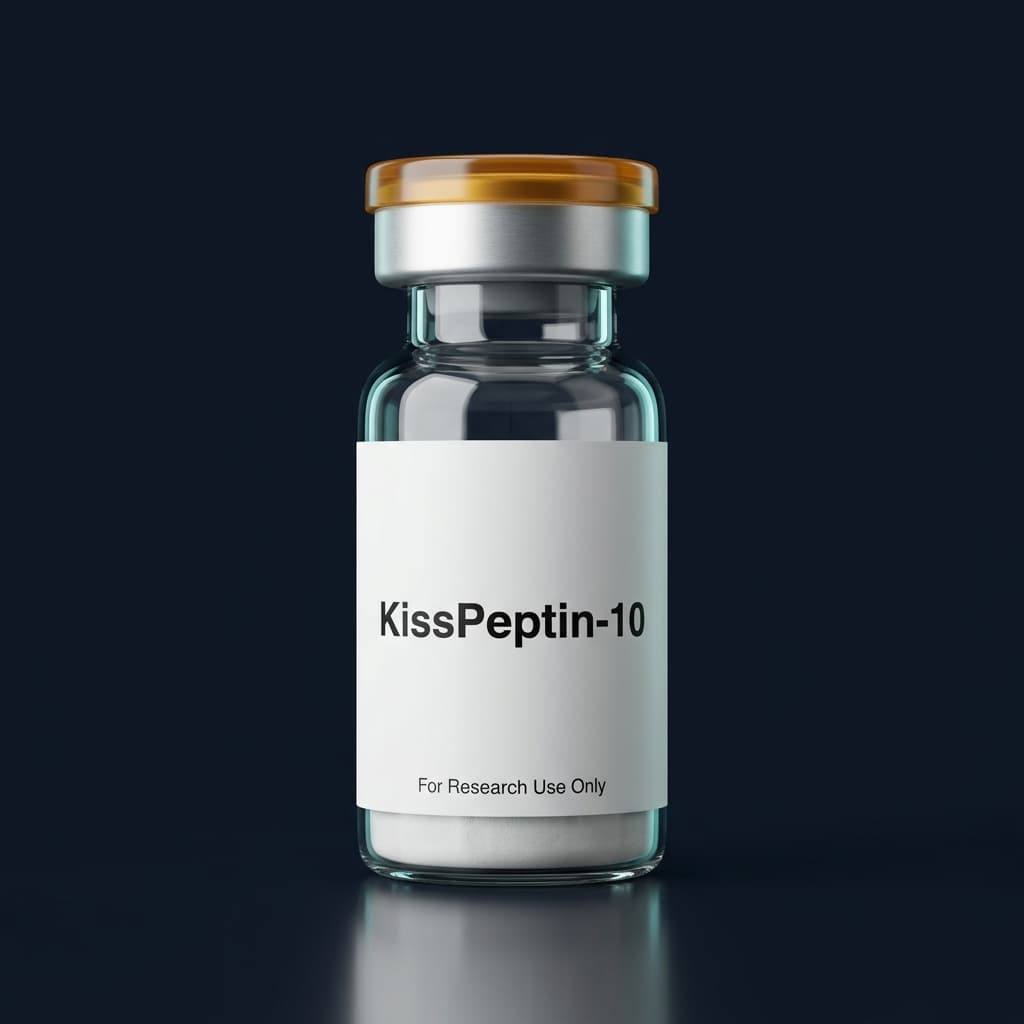
KissPeptin-10
Spedizione gratuita sugli ordini superiori a €200
- Se un prodotto non corrisponde alla specifica del suo COA pubblicato, ci contatti con il numero di lotto: verifichiamo rispetto al report del lotto e sostituiamo qualsiasi prodotto che non lo soddisfi, senza alcun costo per Lei.
- Ci contatti entro 48 ore dalla consegna con le foto della scatola esterna, dell'imballaggio interno e di eventuali fiale interessate con le etichette leggibili. I danni da trasporto confermati vengono sostituiti senza alcun costo per Lei.
3–7 giorni nella maggior parte dei paesi dell'UE · 10–14 giorni nei paesi nordici e baltici
Spedizione standard nell'UE da 4,99 € (RO) · principali paesi UE (GLS) 17,99 € · paesi nordici e baltici 12,99 €–15,99 € · Spedizione entro 1–2 giorni lavorativi · Spedizione gratuita oltre 200,00 € · nessuna pratica doganale (UE) · tramite la rete di corrieri dell'UE
Ancora 200,00 € alla spedizione gratuita oltre 200,00 €. Al di sotto, la spedizione standard nell'UE costa 17,99 € (GLS, la maggior parte dei paesi dell'UE).
Come funzionano Paysera e SEPA
- Paghi: invii un bonifico SEPA manuale utilizzando l'IBAN che Le inviamo via email oppure, ove il checkout lo offra per il Suo indirizzo, approvi un bonifico SEPA nella Sua banca tramite la pagina ospitata di Paysera.
- Confermiamo: Paysera ci avvisa immediatamente, oppure abbiniamo il bonifico manuale al Suo ordine quando arriva (di solito 1 giorno lavorativo).
- Spediamo: gli ordini confermati partono di norma entro 1-2 giorni lavorativi.
I pagamenti con carta non sono attualmente offerti. Questo checkout non utilizza alcun processore di carte.
Research-grade KissPeptin-10. ≥98% supplier batch specification; selected lots independently tested (99.4% avg across published reports). Lyophilized powder in sealed glass vial. For laboratory research use only. Not for human consumption.
| Quantità | Prezzo unitario | Totale | Risparmio |
|---|---|---|---|
| 1 unit | 35,99 € | 35,99 € | -- |
| 3+ | 34,19 € | 102,57 € | 5% di sconto |
| 5+Più popolare | 32,39 € | 161,96 € | 10% di sconto |
| 10+ | 30,59 € | 305,92 € | 15% di sconto |
Avviso importante
Questo prodotto è destinato esclusivamente all'uso di laboratorio e di ricerca. Non destinato all'uso umano o veterinario. Effettuando l'acquisto, conferma che questo prodotto sarà utilizzato esclusivamente per scopi di ricerca in vitro.
Per requisiti legali e normativi, questo prodotto non può essere spedito in: Belgio, Croazia, Danimarca, Italia, Lituania, Polonia, Portogallo, Slovenia e Svezia.
Ricostituzione necessaria
Questo peptide viene spedito liofilizzato (polvere secca) e richiede acqua batteriostatica per la ricostituzione prima dell'uso. L'acqua BAC è venduta separatamente.
Quando questo prodotto potrebbe non essere adatto alla sua ricerca
- ⚠Se la sua ricerca richiede materiale di grado GMP per applicazioni cliniche — i peptidi di grado da ricerca non sono destinati all'uso clinico.
- ⚠Se il suo laboratorio non dispone di un'adeguata conservazione a freddo (congelatore a -20°C) — la stabilità di questo peptide può essere compromessa a temperature più elevate.
- ⚠Se il protocollo del suo studio richiede standard di riferimento approvati dalla FDA — contatti USP o un fornitore di materiale di riferimento certificato.
Sono disponibili rapporti di laboratorio pubblicati per lotti selezionati. Consultare ogni rapporto per il risultato e il metodo indicato. Solo per scopi di ricerca.
Visualizza il report #233649 su janoshik.com →
Spedizione entro 1–2 giorni lavorativi, consegna da 4,99 € in Romania, da 12,99 € nel resto d'Europa
Specifica registrata a livello di classe; report Janoshik indipendente su lotti selezionati
Informazioni su KissPeptin-10
Kisspeptin-10 is the minimum active fragment of the kisspeptin family -- a 10-amino acid C-terminal peptide derived from the KISS1 gene product. It binds the kisspeptin receptor (GPR54/KISS1R) and is the most potent naturally occurring kisspeptin isoform at this receptor. Kisspeptins are the most important upstream activators of GnRH neurons, making them the master regulators of reproductive function and central integrators of metabolic state with fertility.
The discovery of kisspeptin's role in GnRH regulation in 2003-2004 was a significant advance in reproductive endocrinology. Prior to this, the signal that drove GnRH neurons was not clearly identified. Kisspeptin neurons in the arcuate nucleus and the anteroventral periventricular nucleus receive metabolic and hormonal inputs -- leptin, sex steroids, thyroid hormones, metabolic state -- and translate these into GnRH drive. This makes kisspeptin the integration point between metabolic and reproductive signalling studied in models: how energy balance is coupled to GnRH drive, and how puberty timing relates to body weight in research models.
Research applications include stimulation testing of the HPG axis (kisspeptin-10 stimulation paradigm to assess GnRH neuron function), study of GnRH-axis signalling in hypothalamic hypogonadism models, and research into the neuroendocrine control of puberty and reproduction.
Specifications
| Parameter | Value |
|---|---|
| Compound | Kisspeptin-10 (KISS1 decapeptide, C-terminal fragment) |
| Purity | ≥98% (supplier batch spec; 99.4% avg across independently tested lots) |
| Format | Lyophilized powder |
| Reconstitution | Sterile water or saline |
| Storage | -20°C; 2-8°C after reconstitution |
Storage
Store at -20°C before reconstitution. Refrigerate at 2-8°C after reconstitution and use within 14 days. Protect from repeated freeze-thaw cycles.
How does kisspeptin control GnRH release?
Kisspeptin neurons in the hypothalamus (particularly in the arcuate nucleus for pulsatile GnRH regulation, and the anteroventral periventricular nucleus for the preovulatory LH surge) project directly to GnRH neurons, which express KISS1R. In research models, when kisspeptin binds KISS1R on GnRH neurons it is studied for its role in potently stimulating GnRH release. The arcuate kisspeptin neurons, which also co-express neurokinin B and dynorphin (KNDy neurons), are studied as the GnRH pulse generator -- the coordinated activity associated with pulsatile GnRH secretion that underlies LH and FSH secretion in model systems.
Why is kisspeptin important for understanding metabolic-reproductive connections?
Kisspeptin neurons receive input from leptin receptors, and leptin (the adipocyte hormone that signals nutritional adequacy) is required for normal kisspeptin neuron activity. In leptin-deficient or leptin-resistant states modelled in research, kisspeptin signaling is impaired and GnRH drive is reduced. This is studied to understand why severe nutritional restriction and extreme exercise suppress reproductive signalling in models -- the body uses kisspeptin as a gate through which metabolic status must pass before reproductive function proceeds. Kisspeptin research is central to understanding how energy balance and reproduction are coupled.
What is the kisspeptin stimulation paradigm?
The kisspeptin stimulation paradigm administers kisspeptin-10 (or kisspeptin-54) and measures LH, FSH, and testosterone/estradiol response. Unlike the standard GnRH stimulation paradigm which probes pituitary function, the kisspeptin paradigm examines the GnRH neuron and pituitary together -- it tests whether GnRH neurons can respond to kisspeptin and whether the pituitary can respond to the resulting GnRH release. This allows distinction between GnRH neuron dysfunction (no response to kisspeptin) and pituitary dysfunction (response to GnRH direct stimulation but not to kisspeptin). Research groups in the UK have published kisspeptin stimulation protocols.
Kisspeptin-10 is supplied for laboratory research use only. Not for human use. Handle in compliance with institutional biosafety guidelines.
Riepilogo delle specifiche
Informazioni su KissPeptin-10
Kisspeptin-10 is the minimum active fragment of the kisspeptin family -- a 10-amino acid C-terminal peptide derived from the KISS1 gene product. It binds the kisspeptin receptor (GPR54/KISS1R) and is the most potent naturally occurring kisspeptin isoform at this receptor. Kisspeptins are the most important upstream activators of GnRH neurons, making them the master regulators of reproductive function and central integrators of metabolic state with fertility.
The discovery of kisspeptin's role in GnRH regulation in 2003-2004 was a significant advance in reproductive endocrinology. Prior to this, the signal that drove GnRH neurons was not clearly identified. Kisspeptin neurons in the arcuate nucleus and the anteroventral periventricular nucleus receive metabolic and hormonal inputs -- leptin, sex steroids, thyroid hormones, metabolic state -- and translate these into GnRH drive. This makes kisspeptin the integration point between metabolic and reproductive signalling studied in models: how energy balance is coupled to GnRH drive, and how puberty timing relates to body weight in research models.
Research applications include stimulation testing of the HPG axis (kisspeptin-10 stimulation paradigm to assess GnRH neuron function), study of GnRH-axis signalling in hypothalamic hypogonadism models, and research into the neuroendocrine control of puberty and reproduction.
Specifications
| Parameter | Value |
|---|---|
| Compound | Kisspeptin-10 (KISS1 decapeptide, C-terminal fragment) |
| Purity | ≥98% (supplier batch spec; 99.4% avg across independently tested lots) |
| Format | Lyophilized powder |
| Reconstitution | Sterile water or saline |
| Storage | -20°C; 2-8°C after reconstitution |
Storage
Store at -20°C before reconstitution. Refrigerate at 2-8°C after reconstitution and use within 14 days. Protect from repeated freeze-thaw cycles.
How does kisspeptin control GnRH release?
Kisspeptin neurons in the hypothalamus (particularly in the arcuate nucleus for pulsatile GnRH regulation, and the anteroventral periventricular nucleus for the preovulatory LH surge) project directly to GnRH neurons, which express KISS1R. In research models, when kisspeptin binds KISS1R on GnRH neurons it is studied for its role in potently stimulating GnRH release. The arcuate kisspeptin neurons, which also co-express neurokinin B and dynorphin (KNDy neurons), are studied as the GnRH pulse generator -- the coordinated activity associated with pulsatile GnRH secretion that underlies LH and FSH secretion in model systems.
Why is kisspeptin important for understanding metabolic-reproductive connections?
Kisspeptin neurons receive input from leptin receptors, and leptin (the adipocyte hormone that signals nutritional adequacy) is required for normal kisspeptin neuron activity. In leptin-deficient or leptin-resistant states modelled in research, kisspeptin signaling is impaired and GnRH drive is reduced. This is studied to understand why severe nutritional restriction and extreme exercise suppress reproductive signalling in models -- the body uses kisspeptin as a gate through which metabolic status must pass before reproductive function proceeds. Kisspeptin research is central to understanding how energy balance and reproduction are coupled.
What is the kisspeptin stimulation paradigm?
The kisspeptin stimulation paradigm administers kisspeptin-10 (or kisspeptin-54) and measures LH, FSH, and testosterone/estradiol response. Unlike the standard GnRH stimulation paradigm which probes pituitary function, the kisspeptin paradigm examines the GnRH neuron and pituitary together -- it tests whether GnRH neurons can respond to kisspeptin and whether the pituitary can respond to the resulting GnRH release. This allows distinction between GnRH neuron dysfunction (no response to kisspeptin) and pituitary dysfunction (response to GnRH direct stimulation but not to kisspeptin). Research groups in the UK have published kisspeptin stimulation protocols.
Kisspeptin-10 is supplied for laboratory research use only. Not for human use. Handle in compliance with institutional biosafety guidelines.
Fiducia dei ricercatori
Perché i ricercatori scelgono CertaPeptides
Chi esegue effettivamente i test?
I lotti selezionati sono verificati in modo indipendente da Janoshik Analytical (Repubblica Ceca) e pubblicati sul portale pubblico Janoshik. Gli altri lotti vengono spediti con la specifica del lotto del fornitore. Consulti /coa per la bacheca pubblicata.
Visualizza i COA →Cosa succede se ricevo il lotto sbagliato?
Ogni etichetta del flaconcino riporta un codice. Lo cerchi sulla nostra pagina di verifica: mostra ciò che CertaPeptides pubblica per quel codice e, per un lotto ritirato, che il lotto è stato ritirato e il motivo. Se il Suo è stato ritirato, o se la ricerca del codice riportato sulla Sua etichetta non trova nulla, ci invii quel codice via e-mail.
Visualizza i COA →Da dove viene spedito?
Romania (UE). Siamo CERTALAB SRL, CUI 54169956, registrata ai fini IVA. Sameday per la Romania, GLS per la maggior parte delle destinazioni UE, TCE Worldwide per gli altri mercati transfrontalieri UE ed extra-UE (Regno Unito, Svizzera). Consegna in 1–15 giorni lavorativi a seconda della destinazione — la finestra esatta è indicata al momento del pagamento.
Dettagli sulla spedizione →Cosa succede se c'è un problema?
Ha un diritto di recesso di 14 giorni ai sensi dell'OUG 34/2014 (normativa rumena/UE sui consumatori), con possibilità di ricorso ad ANPC e alla risoluzione alternativa delle controversie (SAL). Ci contatti all'indirizzo support@certapeptides.com.
Politica di reso →Informazioni sul prodotto
Questo prodotto è destinato esclusivamente a scopi di ricerca e sviluppo scientifico. È una sostanza chimica che non deve essere utilizzata come farmaco, medicinale, principio attivo o ingrediente in alcun prodotto destinato al consumo umano o animale. I ricercatori devono manipolare questo composto in conformità alle linee guida di biosicurezza del proprio istituto. Utilizzare esclusivamente in ambienti di laboratorio adeguatamente attrezzati e con dispositivi di protezione individuale appropriati.