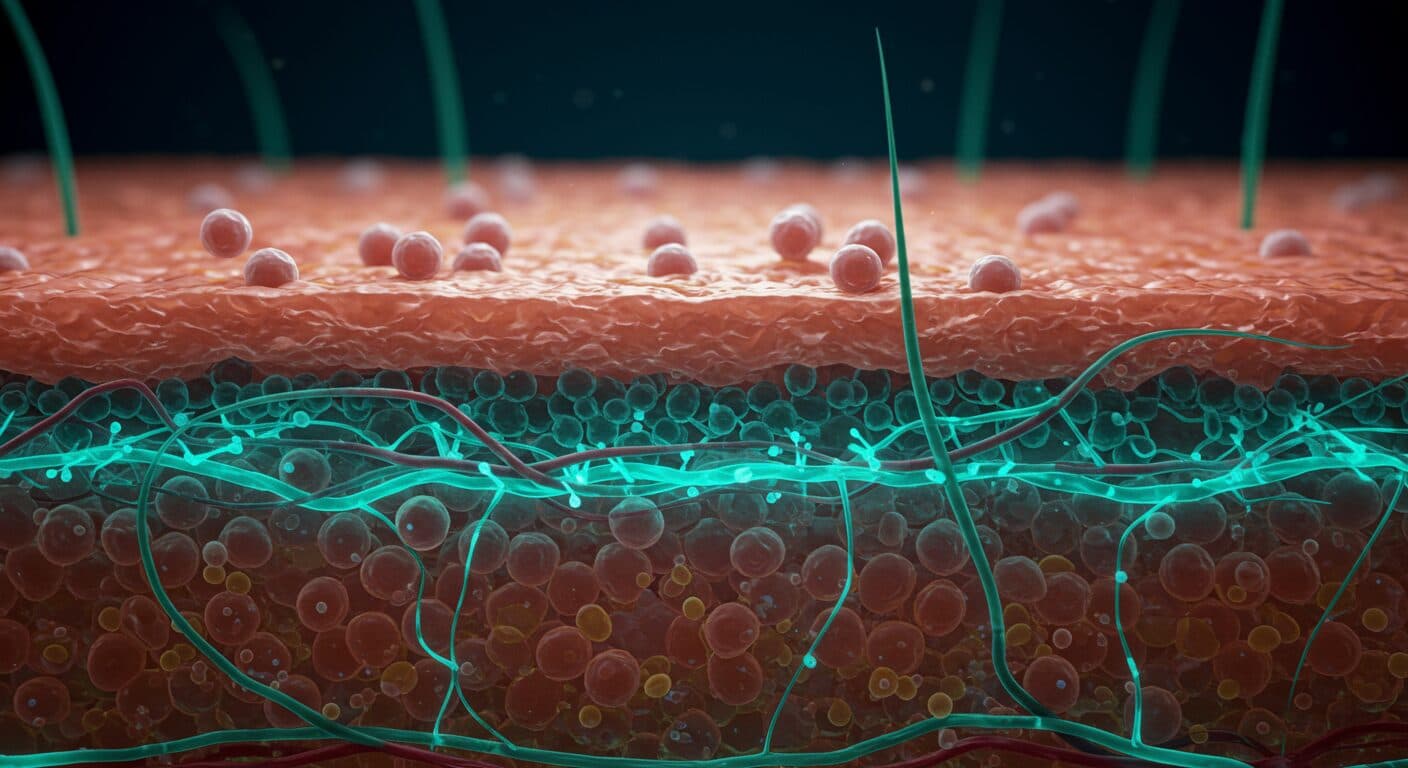
Wenn es einen Bereich gibt, in dem die GHK-Cu-Literatur echte Tiefe hat, dann ist es die Wundheilung. Von Pickarts frühen Exzisionswundstudien an Nagetieren in den 1980er-Jahren bis hin zu moderner Arbeit mit Kollagengerüsten in den 2000er-Jahren stellt die Wundheilung den am besten dokumentierten Bereich der GHK-Cu-Aktivität in vivo dar. Dieser Beitrag zeichnet diese Forschungslinie nach: was untersucht wurde, was gefunden wurde und wo die Evidenzbasis am stärksten ist beziehungsweise wo sie dünner wird. Alle zitierten Daten stammen aus peer-reviewten experimentellen Publikationen. Dieser Inhalt dient ausschließlich Bildungs- und Forschungszwecken.
Warum Wundheilungsforschung für die Peptidwissenschaft wichtig ist
Wundheilungsmodelle nehmen in der Bindegewebeforschung eine privilegierte Stellung ein, weil sie quantifizierbar, reproduzierbar und mechanistisch interpretierbar sind. Vollschichtige dermale Wunden bei Nagetieren haben gut etablierte Endpunkte — Wundverschlussrate, Hydroxyprolingehalt (ein Proxy für Kollagenablagerung), Zugfestigkeit und histologische Bewertung der Infiltration von Entzündungszellen sowie der Bildung von Granulationsgewebe. Diese Endpunkte ermöglichen den Vergleich von Verbindungen über Studien hinweg auf eine Weise, die subjektivere Ergebnismaße nicht leisten.
GHK-Cu gelangte aus zwei Richtungen gleichzeitig in die Wundheilungsforschung: durch seine bekannte kollagenstimulierende Aktivität in Fibroblastenkulturen und durch seine dokumentierte angiogene Aktivität in Chorioallantoismembran-Assays von Küken. Beide Eigenschaften sind direkt relevant für die Wundreparatur, bei der Kollagenablagerung und Neovaskularisierung geschwindigkeitsbestimmende Schritte der Geweberegeneration sind. Für einen breiteren Kontext zum Mechanismus und zur molekularen Struktur von GHK-Cu siehe unseren vollständigen Forschungsleitfaden: GHK-Cu-Kupferpeptid: Der vollständige Forschungsleitfaden.
Die Grundlagenphase 1973-1990
Pickarts ursprüngliche Arbeit von 1973 in Nature etablierte GHK als endogenes Plasmatripeptid, doch die Anwendung in der Wundheilung kam später. Pickart und Lovejoy (1987) dokumentierten in einem Kapitel in Methods in Enzymology (10.1016/0076-6879(87)47121-8), dass die topische Anwendung von GHK-Cu auf vollschichtige Exzisionswunden bei Ratten im Vergleich zu mit Vehikel behandelten Kontrollen einen beschleunigten Wundverschluss bewirkte. Die wichtigsten berichteten Kennzahlen waren die Verringerung der Wundfläche im Zeitverlauf und der Kollagengehalt mittels Hydroxyprolin-Assay.
Diese grundlegende Arbeit wurde durchgeführt, bevor moderne molekularbiologische Werkzeuge verfügbar waren, sodass die mechanistische Interpretation auf das beschränkt war, was auf Gewebeebene gemessen werden konnte. Die histologischen Beobachtungen — dichtere Kollagennetzwerke, besser organisiertes Granulationsgewebe, frühere Re-Epithelialisierung — standen im Einklang mit der dokumentierten fibroblastenstimulierenden Aktivität von GHK-Cu, aber die spezifischen Signalvermittler waren noch nicht charakterisiert.
Der Kollagenmechanismus: warum das Kupferchelat wichtig ist
Die Kupferkomponente von GHK-Cu trägt unabhängig zur Wundreparatur bei, und zwar über einen Mechanismus, der sich von den Wachstumsfaktoreffekten des Peptids unterscheidet. Kupfer ist ein essenzieller Cofaktor für Lysyl-Oxidase (LOX), das Enzym, das für die Quervernetzung neu synthetisierter Kollagen- und Elastinfasern zu reifer extrazellulärer Matrix verantwortlich ist. Ohne ausreichendes Kupfer sammelt sich neu synthetisiertes Kollagen als schlecht quervernetzte, mechanisch schwache Fasern an.
Dies ergibt ein interessantes mechanistisches Bild: GHK-Cu kann die Kollagensynthese durch seine fibroblastenaktivierende Peptidaktivität stimulieren (über die Hochregulierung von Wachstumsfaktoren) und gleichzeitig Kupfer für den nachgelagerten Quervernetzungsschritt bereitstellen. Die Verbindung adressiert damit gewissermaßen zwei aufeinanderfolgende Anforderungen der Gewebereparatur — Synthese und Reifung — mit einem einzigen Molekül.
Maquart et al. (1988) quantifizierten in ihrer FEBS Letters-Arbeit (PMID: 3169264) die Kollagensynthese in humanen dermalen Fibroblasten mittels Einbau von radioaktiv markiertem Prolin und zeigten dosisabhängige Anstiege, die GHK-Cu zugeschrieben wurden. Dieselbe Forschungsgruppe erweiterte diese Befunde anschließend auf ein in vivo-Ratten-Wundkammermodell und dokumentierte gleichzeitige Zunahmen der Akkumulation von Kollagen und Glykosaminoglykanen (Maquart et al. 1993, J Clin Invest, 92(5), 2368–2376, DOI: 10.1172/JCI116842), beide relevant für Gewebegerüste und Hydratation in der Wundheilung.
Maquart et al. (1993) verglichen GHK und GHK-Cu ausdrücklich parallel und stellten fest, dass das Kupferchelat durchgehend eine stärkere Fibroblastenstimulation bewirkte. Für einen detaillierten Vergleich der Forschungsaktivität von GHK vs. GHK-Cu siehe unseren Beitrag: GHK vs GHK-Cu: Was ist der Unterschied in Forschungsanwendungen.
Dermale Wundmodelle bei Kaninchen
Dermale Wundmodelle bei Kaninchen bieten eine größere Wundfläche als Rattenmodelle und wurden genutzt, um topische Formulierungen von GHK-Cu in klinisch relevanteren Szenarien zu untersuchen. Mehrere Studien verwendeten Kaninchenohrkammern oder vollschichtige dorsale Wunden, um GHK-Cu in Kombination mit Wundauflagen oder Matrixgerüsten zu prüfen.
Das Kaninchenmodell zeigte konsistent eine verstärkte Angiogenese in mit GHK-Cu behandelten Wunden, im Einklang mit der dokumentierten Aktivität der Verbindung in CAM-Assays. Lane et al (1994) 10.1083/jcb.125.4.929 präsentierten Daten, die zeigten, dass mit Kupferpeptid behandelte Wunden 7 und 14 Tage nach der Verletzung eine höhere Gefäßdichte aufwiesen als Kontrollen. Diese frühe Vaskularisierung unterstützt eine schnellere Sauerstoffzufuhr zum Wundbett, was mechanistisch wichtig für die Lebensfähigkeit und Proliferation von Fibroblasten in der frühen Reparaturphase ist.
Diabetische Wundmodelle
Diabetische Wundheilung stellt einen der wichtigsten translationalen Bereiche der Wundforschung dar, aufgrund der gut dokumentierten Heilungsbeeinträchtigung im Zusammenhang mit Diabetes. Beeinträchtigte Angiogenese, reduzierte Wachstumsfaktorexpression und kompromittierte Makrophagenfunktion tragen alle zum diabetischen Wundphänotyp bei. Jedes dieser Defizite entspricht einem Mechanismus, den GHK-Cu mutmaßlich adressieren kann.
Studien mit durch Streptozotocin (STZ) induzierten diabetischen Ratten haben die Fähigkeit von GHK-Cu untersucht, die Kinetik der Wundheilung teilweise wiederherzustellen. Das STZ-Modell erzeugt einen Typ-1-diabetesähnlichen hyperglykämischen Zustand mit der charakteristischen Wundheilungsbeeinträchtigung, die bei klinischen diabetischen Fußulzera beobachtet wird.
Arul et al. (2005) (10.1002/jbm.b.30246) untersuchten GHK-Cu, das in ein Kollagengerüst eingearbeitet war, statt es in Lösung anzuwenden, was einen besser übertragbaren Verabreichungsansatz für Anwendungen in der Wundversorgung darstellt. Ihr Rattenwundmodell zeigte eine verbesserte Wundverschlussrate und einen erhöhten Hydroxyprolingehalt in der GHK-Cu-Gerüstgruppe im Vergleich zu Kontrollen mit einfachem Kollagengerüst. Die Kombination der strukturellen Unterstützung des Gerüsts mit der biologischen Aktivität von GHK-Cu erschien additiv und nicht einfach redundant.
Kang et al. (2009): mechanistische Arbeit mit humanen Zellen
In vivo-Studien an Nagetieren liefern die direktesten Wundheilungsdaten, aber mechanistische Studien in humanen Hautzellen helfen, die Tierbefunde mit der humanen Biologie zu verbinden. Kang et al. (2009), veröffentlicht in Archives of Dermatological Research (DOI: 10.1007/s00403-009-0942-x), untersuchten GHK-Cu-Effekte auf humane Keratinozyten in Monolayer-Kultur und rekonstruierten hautäquivalenten Modellen.
Integrine sind die Zelloberflächenrezeptoren, über die Keratinozyten und Fibroblasten mit Komponenten der extrazellulären Matrix interagieren. In einer heilenden Wunde müssen beide Zelltypen migrieren, an die provisorische Matrix anhaften und sie umbauen — alles Prozesse, die eine angemessene Integrinexpression erfordern. Kang et al. berichteten über eine Hochregulierung von Integrin α6 und β1 — den kollagen- und lamininbindenden Untereinheiten, die die Anheftung von Keratinozyten an die Basalmembran vermitteln — zusammen mit erhöhter PCNA- und p63-Positivität in mit GHK-Cu behandelten Keratinozyten. Dies liefert eine mechanistische Verbindung auf Zellebene zwischen Copper–GHK-Exposition und dem epithelialen Proliferations- und Adhäsionsverhalten, das für die Re-Epithelialisierung beim Wundverschluss relevant ist.
Entzündungshemmende Komponente
Wundheilung hat eine entzündliche Phase, die ordnungsgemäß aufgelöst werden muss, damit eine wirksame Reparatur fortschreiten kann. Übermäßige oder verlängerte Entzündung beeinträchtigt die Fibroblastenfunktion und verhindert den Übergang in die proliferative Phase. Die berichtete entzündungshemmende Aktivität von GHK-Cu in Makrophagen- und Fibroblastenmodellen ist daher über seine direkten anabolen Effekte auf die Kollagensynthese hinaus für die Wundheilung relevant.
Hong et al. (2001) berichteten, dass GHK TNF-alpha-induzierte Reaktionen in Makrophagenzelllinien hemmte. Maquart et al. (1993) dokumentierten nach GHK-Cu-Verabreichung ein reduziertes carrageenaninduziertes Pfotenödem bei Meerschweinchen. Ob diese entzündungshemmenden Effekte in vivo in Wundheilungsmodellen bei biologisch relevanten GHK-Cu-Konzentrationen wirken, wurde in einer dedizierten mechanistischen Studie nicht vollständig etabliert, aber die vorhandenen Daten stützen die Plausibilität eines entzündungshemmenden Beitrags zur Wundheilungsaktivität.
BPC-157-Vergleich: unterschiedliche Mechanismen, überlappende Forschungsbereiche
Forscher, die Peptideffekte auf die Wundheilung untersuchen, vergleichen GHK-Cu häufig mit BPC-157, einer weiteren gut untersuchten Verbindung in diesem Bereich. Die beiden Peptide haben überlappende Forschungsdomänen (Wundheilung, Angiogenese), aber unterschiedliche molekulare Mechanismen. Die Wundheilungsaktivität von BPC-157 wurde hauptsächlich seinen Effekten auf das Stickstoffmonoxid-System und die Modulation des Wachstumshormonrezeptors zugeschrieben, während GHK-Cu über kupfervermittelte Hochregulierung von Wachstumsfaktoren und direkte Lysyl-Oxidase-Cofaktoraktivität wirkt. Für Forscher, die vergleichende Studien konzipieren, machen die unterschiedlichen Mechanismen GHK-Cu und BPC-157 potenziell komplementär statt redundant. Siehe unseren umfassenden BPC-157-Forschungsüberblick unter Der vollständige BPC-157-Forschungsleitfaden.
Grenzen der aktuellen Evidenzbasis
Die Wundheilungsliteratur zu GHK-Cu ist die stärkste im Forschungsportfolio der Verbindung, hat aber echte Grenzen:
- Mangel an unabhängiger Replikation: Ein unverhältnismäßig großer Anteil der primären Wundheilungsdaten stammt aus Pickarts eigenem Labor oder von Kooperationspartnern. Mehr unabhängige Replikation durch nicht affiliierte Gruppen würde die Evidenzbasis stärken.
- Zeitpunkt der Veröffentlichung: Ein Großteil der grundlegenden Daten wurde in den 1980er- und frühen 1990er-Jahren veröffentlicht, vor modernen Berichtsstandards (ARRIVE-Leitlinien, Präregistrierung).
- Variabilität des Verabreichungssystems: Studien verwendeten unterschiedliche Verabreichungsvehikel (wässrige Lösung, Kollagengerüst, Salbe), Konzentrationen und Wundmodelle. Vergleiche zwischen Studien erfordern sorgfältige Beachtung dieser Variablen.
- Keine klinischen Studien am Menschen: Es gibt keine veröffentlichten Phase-I-, II- oder III-Studien zu GHK-Cu für irgendeine Wundheilungsindikation beim Menschen.
Beschaffung von GHK-Cu für Wundheilungsforschung
Für in vivo-Wundheilungsstudien ist die Reinheit von GHK-Cu entscheidend. Die in veröffentlichten Studien verwendete HPLC-Schwelle beträgt ≥98%. Für Rekonstitutionsprotokolle, die für Arbeiten mit Tiermodellen relevant sind, siehe unseren Leitfaden: Wie man GHK-Cu für die Forschung rekonstituiert.
GHK-Cu in Forschungsqualität ist erhältlich unter certapeptides.com/shop/ghk-cu. COA-Dokumentation von Drittanbietern ist verfügbar unter certapeptides.com/coa.
Wichtigste Erkenntnisse
- Die GHK-Cu-Wundheilungsforschung erstreckt sich über 40+ Jahre, von Pickarts grundlegenden Exzisionswundstudien an Ratten (1987) bis zu Verabreichungsmodellen mit Kollagengerüsten in den 2000er-Jahren
- Das Kupferchelat trägt über zwei parallele Mechanismen bei: Hochregulierung von Fibroblasten-Wachstumsfaktoren (durch das Peptid) und Lysyl-Oxidase-Cofaktoraktivität (durch das Kupferion)
- Diabetische Wundmodelle zeigen, dass GHK-Cu die Heilungskinetik bei STZ-induzierten diabetischen Nagetieren teilweise wiederherstellen kann, indem es beeinträchtigte Angiogenese und Kollagenquervernetzung adressiert
- Die stärkste mechanistische Evidenz stammt von Maquart et al. (1988, 1993) zur Kollagen- und Glykosaminoglykansynthese in Fibroblasten und Ratten-Wundkammern sowie von Kang et al. (2009) zur Hochregulierung von Integrin α6/β1 und p63 in humanen Keratinozyten
- Es liegen keine Daten aus klinischen Studien am Menschen vor; die Evidenzbasis besteht aus Nagetier- und Zellkulturdaten, die mechanistische Einblicke liefern, aber keine Wirksamkeitsansprüche beim Menschen begründen
Referenzen
- Pickart L, Lovejoy S. (1987). Biological activity of human plasma copper-binding growth factor glycyl-L-histidyl-L-lysine. Methods in Enzymology, 147, 314-328. 10.1016/0076-6879(87)47121-8
- Lane TF, Iruela-Arispe ML, Johnson RS, Sage EH. (1994). SPARC is a source of copper-binding peptides that stimulate angiogenesis. Journal of Cell Biology, 125(4), 929–943. DOI: 10.1083/jcb.125.4.929
- Kang YA, Choi HR, Na JI, et al. (2009). Copper–GHK increases integrin expression and p63 positivity by keratinocytes. Archives of Dermatological Research, 301(4), 301–306. DOI: 10.1007/s00403-009-0942-x
- Arul V, Gopinath D, Gomathi K, Jayakumar R. (2005). Biotinylated GHK peptide incorporated collagenous matrix. Journal of Biomedical Materials Research. 10.1002/jbm.b.30246
- Pickart L, Margolina A. (2018). Regenerative and protective actions of the GHK-Cu peptide in the light of the new gene data. Biomolecules, 8(2), 29. DOI: 10.3390/biom8020029
Referenzen
- Pickart L, Thaler MM. (1973). Tripeptide in human serum which prolongs survival of normal liver cells and stimulates growth of neoplastic liver cells. Nature New Biology, 243(124), 85–87. PMID: 4349963.
- Maquart FX, et al. (1988). Stimulation of collagen synthesis in fibroblast cultures by the tripeptide-copper complex glycyl-L-histidyl-L-lysine-Cu2+. FEBS Letters, 238(2), 343–346. PMID: 3169264.
- Pickart L, Vasquez-Soltero JM, Margolina A. (2015). GHK Peptide as a Natural Modulator of Multiple Cellular Pathways in Skin Regeneration. BioMed Research International, 2015, 648108. PMID: 26236730.
Alle Produkte sind nur für Forschungszwecke bestimmt. Nicht für den menschlichen Verzehr.
Verifizieren, bevor Sie forschen
Produktseiten zeigen eine Spezifikation auf Klassenebene, sofern eine hinterlegt ist, und ausgewählte Chargen verfügen über ein unabhängiges Drittanbieter-COA.