Sloučenina výzkumné kvality. Pouze pro laboratorní použití. Není určeno k použití, požití ani injekčnímu podání u lidí nebo zvířat. Nejsou činěna ani naznačována žádná lékařská tvrzení.
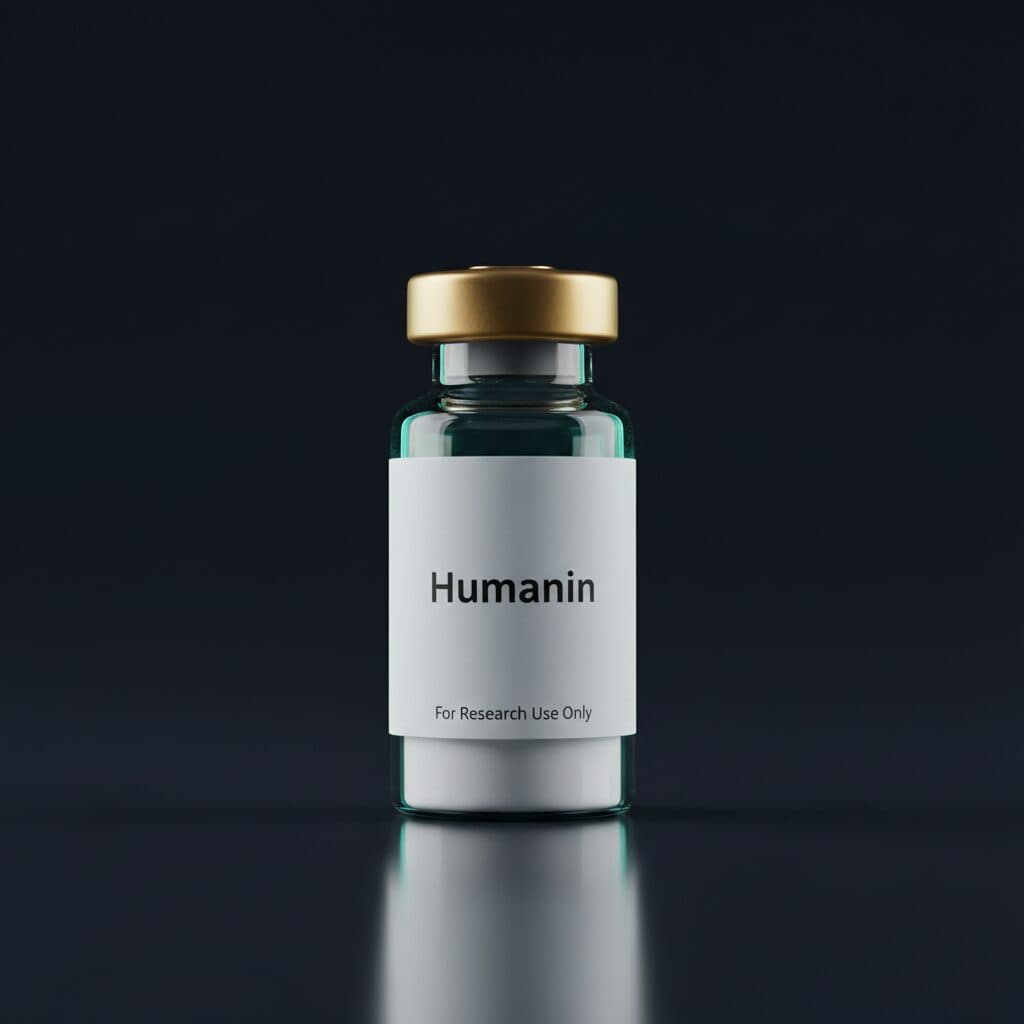
Humanin 10mg
Doprava zdarma u objednávek nad €200
- Pokud produkt neodpovídá specifikaci v jeho zveřejněném COA, kontaktujte nás s číslem šarže: prověříme jej oproti protokolu dané šarže a každý produkt, který tomu nevyhoví, vyměníme bez jakýchkoli nákladů pro vás.
- Kontaktujte nás do 48 hodin od doručení s fotografiemi vnější krabice, vnitřního balení a všech dotčených lahviček s čitelnými štítky. Potvrzené poškození při přepravě vyměníme bez jakýchkoli nákladů pro vás.
3–7 dnů do většiny zemí EU · 10–14 dnů do severských a pobaltských zemí
Standardní doprava v EU od 4,99 € (RO) · hlavní země EU (GLS) 17,99 € · severské a pobaltské země 12,99 €–15,99 € · Odeslání do 1–2 pracovních dnů · Doprava zdarma nad 200,00 € · bez celních dokladů (EU) · prostřednictvím sítě přepravců v EU
Ještě 200,00 € do dopravy zdarma nad 200,00 €. Pod touto částkou stojí standardní doprava v EU 17,99 € (GLS, většina zemí EU).
Jak fungují Paysera a SEPA
- Zaplaťte: odešlete ruční převod SEPA na IBAN, který vám pošleme e-mailem, nebo, pokud to pokladna pro vaši adresu nabízí, schvalte převod SEPA ve své vlastní bance prostřednictvím hostované stránky Paysera.
- Potvrdíme: Paysera nás okamžitě upozorní, nebo ruční převod spárujeme, jakmile dorazí (obvykle 1 pracovní den).
- Expedujeme: potvrzené objednávky obvykle odesíláme do 1-2 pracovních dnů.
Platby kartou v současné době nenabízíme. Tato pokladna nepoužívá žádného zpracovatele karetních plateb.
Research-grade Humanin. Class-level specification ≥98%. Lyophilized powder in sealed glass vial. For laboratory research use only. Not for human consumption.
| Množství | Cena za kus | Celkem | Úspora |
|---|---|---|---|
| 1 unit | 80,49 € | 80,49 € | -- |
| 3+ | 76,47 € | 229,40 € | 5% sleva |
| 5+Nejoblíbenější | 72,44 € | 362,21 € | 10% sleva |
| 10+ | 68,42 € | 684,17 € | 15% sleva |
Důležité upozornění
Tento produkt je určen výhradně pro laboratorní a výzkumné použití. Není určen k lidskému ani veterinárnímu použití. Nákupem potvrzujete, že tento produkt bude použit výhradně pro výzkumné účely in vitro.
Z důvodu právních a regulačních požadavků nelze tento produkt odeslat do: Chorvatsko, Itálie, Litva a Slovinsko.
Vyžaduje rekonstituci
Tento peptid je dodáván lyofilizovaný (suchý prášek) a před použitím vyžaduje rekonstituci bakteriostatickou vodou. BAC water se prodává samostatně.
Kdy tento produkt nemusí vyhovovat vašemu výzkumu
- ⚠Pokud váš výzkum vyžaduje materiál v jakosti GMP pro klinické aplikace – peptidy výzkumné jakosti nejsou určeny pro klinické použití.
- ⚠Pokud vaše laboratoř nemá řádné chladicí skladování (mrazák -20°C) – stabilita tohoto peptidu může být při vyšších teplotách narušena.
- ⚠Pokud váš studijní protokol vyžaduje referenční standardy schválené FDA – kontaktujte USP nebo poskytovatele certifikovaného referenčního materiálu.
Pro vybrané šarže jsou zveřejněny laboratorní zprávy. V každé zprávě ověřte výsledek a uvedenou metodu. Pouze pro výzkumné účely.
Protokol Janoshik bude publikován, jakmile bude k dispozici
Odeslání do 1–2 pracovních dnů, doručení od 4,99 € v Rumunsku, od 12,99 € ve zbytku Evropy
Evidovaná specifikace na úrovni třídy; nezávislý protokol Janoshik u vybraných šarží
O přípravku Humanin 10mg
Humanin is a 21-amino acid peptide encoded not in the nuclear genome but in the mitochondrial 16S rRNA gene -- an unusual origin that has made it the founding member of a class of mitochondria-derived peptides (MDPs). It was originally identified in 2001 by researchers screening for factors that protect neurons from Alzheimer's disease-related cell death. The name reflects this discovery context: a peptide that made cells "more human" by rescuing them from neurodegeneration.
Humanin acts through multiple receptor pathways. It binds the formyl peptide receptor-like 1 (FPRL1/FPR2), the CNTF receptor alpha subunit, and has intracellular targets as well. In Alzheimer's disease cell models, it has been reported to protect neurons from amyloid-beta toxicity, ADDL (amyloid-derived diffusible ligand) toxicity, and oxidative stress. Beyond neuroprotection, preclinical studies report anti-apoptotic, insulin-signalling and anti-inflammatory effects in cell and animal models. Circulating humanin levels have been reported to decline with age, which has made it a subject of interest in mitochondrial aging research.
SHLP2 (small humanin-like peptide 2) and other humanin analogues are also being studied, but humanin itself remains the most characterized of the MDPs. It has been studied in rodent models for cognitive preservation, metabolic improvement in type 2 diabetes models, and cardiovascular protection.
Specifications
| Parameter | Value |
|---|---|
| Compound | Humanin (mitochondria-derived peptide, 21 amino acids) |
| Amount per Vial | 10mg |
| Purity | ≥98% (class-level specification) |
| Format | Lyophilized powder |
| Reconstitution | Sterile water or saline |
| Storage | -20°C; 2-8°C after reconstitution |
Storage
Store at -20°C before reconstitution. Refrigerate at 2-8°C after reconstitution and use within 28 days. Stable for 24+ months as lyophilized powder under proper conditions.
What makes humanin unusual compared to other peptides?
Most bioactive peptides are encoded in nuclear genes. Humanin is encoded within the mitochondrial genome -- specifically within the 16S ribosomal RNA gene -- which is an unusual location for a protein-coding sequence. This mitochondrial origin makes it the founding member of a class called mitochondria-derived peptides (MDPs). The mitochondrial genome is ancient and highly conserved, so mitochondria-derived signaling molecules have particular biological significance. Humanin's presence in this location suggests ancient origins for mitochondria-to-nucleus and mitochondria-to-extracellular signaling.
What were the original Alzheimer's disease findings for humanin?
Humanin was identified in 2001 by Nishimoto and colleagues through expression cloning from occipital cortex cDNA of an Alzheimer's patient. The screening assay looked for factors that could protect neurons from cell death induced by familial Alzheimer's mutations (V642I APP). Humanin potently rescued neurons from multiple Alzheimer's-related cytotoxic stimuli including amyloid-beta peptides, ADDL oligomers, and familial AD gene mutations. Subsequent work showed it works through FPRL1/FPR2 receptor signaling and intracellular IGFBP3 binding. These neuroprotective effects are among the most replicated findings in the humanin literature.
Why do humanin levels decline with aging?
Humanin is produced by mitochondria, and mitochondrial function and abundance decline with aging -- a process called mitochondrial aging or mitochondrial dysfunction in the context of aging biology. As mitochondrial function decreases, production of mitochondria-derived peptides including humanin appears to decrease as well. Several studies have measured circulating humanin in human populations and found inverse correlations with age and with aging-related diseases. Whether declining humanin contributes to aging pathology or is simply a consequence of aging mitochondria is an active research question.
Humanin is supplied for laboratory research use only. Not approved for human use. Handle in compliance with institutional biosafety guidelines.
Souhrn specifikace
O přípravku Humanin 10mg
Humanin is a 21-amino acid peptide encoded not in the nuclear genome but in the mitochondrial 16S rRNA gene -- an unusual origin that has made it the founding member of a class of mitochondria-derived peptides (MDPs). It was originally identified in 2001 by researchers screening for factors that protect neurons from Alzheimer's disease-related cell death. The name reflects this discovery context: a peptide that made cells "more human" by rescuing them from neurodegeneration.
Humanin acts through multiple receptor pathways. It binds the formyl peptide receptor-like 1 (FPRL1/FPR2), the CNTF receptor alpha subunit, and has intracellular targets as well. In Alzheimer's disease cell models, it has been reported to protect neurons from amyloid-beta toxicity, ADDL (amyloid-derived diffusible ligand) toxicity, and oxidative stress. Beyond neuroprotection, preclinical studies report anti-apoptotic, insulin-signalling and anti-inflammatory effects in cell and animal models. Circulating humanin levels have been reported to decline with age, which has made it a subject of interest in mitochondrial aging research.
SHLP2 (small humanin-like peptide 2) and other humanin analogues are also being studied, but humanin itself remains the most characterized of the MDPs. It has been studied in rodent models for cognitive preservation, metabolic improvement in type 2 diabetes models, and cardiovascular protection.
Specifications
| Parameter | Value |
|---|---|
| Compound | Humanin (mitochondria-derived peptide, 21 amino acids) |
| Amount per Vial | 10mg |
| Purity | ≥98% (class-level specification) |
| Format | Lyophilized powder |
| Reconstitution | Sterile water or saline |
| Storage | -20°C; 2-8°C after reconstitution |
Storage
Store at -20°C before reconstitution. Refrigerate at 2-8°C after reconstitution and use within 28 days. Stable for 24+ months as lyophilized powder under proper conditions.
What makes humanin unusual compared to other peptides?
Most bioactive peptides are encoded in nuclear genes. Humanin is encoded within the mitochondrial genome -- specifically within the 16S ribosomal RNA gene -- which is an unusual location for a protein-coding sequence. This mitochondrial origin makes it the founding member of a class called mitochondria-derived peptides (MDPs). The mitochondrial genome is ancient and highly conserved, so mitochondria-derived signaling molecules have particular biological significance. Humanin's presence in this location suggests ancient origins for mitochondria-to-nucleus and mitochondria-to-extracellular signaling.
What were the original Alzheimer's disease findings for humanin?
Humanin was identified in 2001 by Nishimoto and colleagues through expression cloning from occipital cortex cDNA of an Alzheimer's patient. The screening assay looked for factors that could protect neurons from cell death induced by familial Alzheimer's mutations (V642I APP). Humanin potently rescued neurons from multiple Alzheimer's-related cytotoxic stimuli including amyloid-beta peptides, ADDL oligomers, and familial AD gene mutations. Subsequent work showed it works through FPRL1/FPR2 receptor signaling and intracellular IGFBP3 binding. These neuroprotective effects are among the most replicated findings in the humanin literature.
Why do humanin levels decline with aging?
Humanin is produced by mitochondria, and mitochondrial function and abundance decline with aging -- a process called mitochondrial aging or mitochondrial dysfunction in the context of aging biology. As mitochondrial function decreases, production of mitochondria-derived peptides including humanin appears to decrease as well. Several studies have measured circulating humanin in human populations and found inverse correlations with age and with aging-related diseases. Whether declining humanin contributes to aging pathology or is simply a consequence of aging mitochondria is an active research question.
Humanin is supplied for laboratory research use only. Not approved for human use. Handle in compliance with institutional biosafety guidelines.
Důvěra výzkumníků
Proč si výzkumníci vybírají CertaPeptides
Kdo to vlastně testuje?
Vybrané loty jsou nezávisle ověřovány společností Janoshik Analytical (Česká republika) a zveřejňovány na veřejném portálu Janoshik. Ostatní loty se odesílají se specifikací šarže dodavatele. Zveřejněný přehled najdete na /coa.
Zobrazit COA →Co když dostanu špatnou šarži?
Každá etiketa lahvičky nese kód. Vyhledejte ho na naší ověřovací stránce: ta zobrazí, co k tomuto kódu CertaPeptides zveřejňuje, a u stažené šarže také to, že byla stažena, a proč. Pokud je vaše šarže stažena nebo pokud vyhledání kódu z vaší etikety nic nenajde, pošlete nám tento kód e-mailem.
Zobrazit COA →Odkud se to odesílá?
Z Rumunska (EU). Jsme CERTALAB SRL, CUI 54169956, registrovaní k DPH. Sameday pro Rumunsko, GLS pro většinu destinací v EU, TCE Worldwide pro ostatní přeshraniční trhy v rámci EU i mimo ni (Velká Británie, Švýcarsko). Doručení 1–15 pracovních dní podle destinace — přesné okno se zobrazí u pokladny.
Podrobnosti o dopravě →Co když nastane problém?
Máte 14denní právo na odstoupení podle OUG 34/2014 (rumunské/EU spotřebitelské právo), s možností eskalace na ANPC a alternativního řešení sporů (SAL). Kontaktujte nás na support@certapeptides.com.
Zásady vracení →Informace o produktu
Tento produkt je určen výhradně pro účely vědeckého výzkumu a vývoje. Jde o chemickou látku, kterou nelze používat jako lék, léčivo, účinnou látku ani jako složku jakéhokoli produktu určeného ke konzumaci lidmi či zvířaty. Výzkumní pracovníci musí s touto sloučeninou zacházet v souladu se svými institucionálními pokyny pro biologickou bezpečnost. Používejte ji pouze v náležitě vybavených laboratorních prostorách s odpovídajícími osobními ochrannými prostředky.