Why Purity Testing Is Non-Negotiable
Peptide purity directly impacts research reproducibility. Impurities — truncated sequences, deletion peptides, oxidized variants, and residual solvents — introduce confounding variables that can invalidate experimental results. Third-party analytical testing using HPLC and mass spectrometry provides objective, quantitative verification of both purity and identity.
HPLC: Measuring Purity
High-Performance Liquid Chromatography (HPLC) separates peptide components by their interaction with a stationary phase column. Reversed-phase HPLC (RP-HPLC) using C18 columns is the standard method:
- A mobile phase gradient (typically water/acetonitrile with TFA) flows through a column packed with C18 silica beads
- Different peptide components interact differently with the column, eluting at different retention times
- A UV detector measures absorbance at 214nm (peptide bond absorption), generating a chromatogram
Reading an HPLC Chromatogram
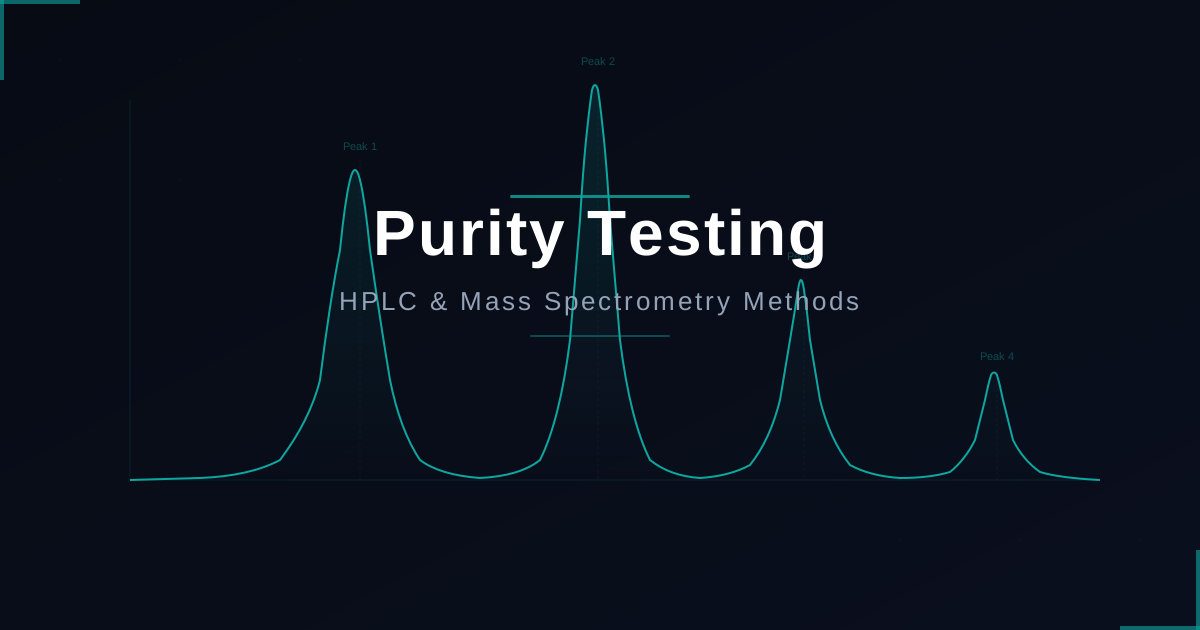
The chromatogram shows peaks for each component. Your target peptide should appear as a single dominant peak. Purity is calculated as: (main peak area ÷ total peak area) × 100%. For research-grade peptides, look for ≥98% main peak purity. Minor satellite peaks (<2% combined) are normal and represent trace synthesis byproducts.
Mass Spectrometry: Confirming Identity
While HPLC tells you how pure a peptide is, mass spectrometry (MS) tells you what it is. The two most common methods for peptides:
- ESI-MS (Electrospray Ionization) — the workhorse method for peptide mass confirmation. Produces multiply charged ions that allow accurate mass measurement of large peptides.
- MALDI-TOF (Matrix-Assisted Laser Desorption/Ionization Time-of-Flight) — provides rapid, accurate molecular weight determination, particularly useful for larger peptides and proteins.
The observed molecular mass should match the theoretical mass within ±1 Dalton. A mismatch indicates incorrect amino acid sequence, unintended modifications, or a different compound entirely.
LC-MS: The Gold Standard
Liquid Chromatography-Mass Spectrometry (LC-MS) combines both techniques in a single analysis run — providing simultaneous purity (HPLC) and identity (MS) confirmation. This is considered the gold standard for peptide quality verification and is the method used for all CertaPeptides products.
Additional Quality Tests
- LAL Endotoxin Testing: Detects bacterial endotoxin (lipopolysaccharide) contamination. Acceptable: <0.5 EU/mg.
- Bioburden Testing: Measures total microbial contamination per USP <61> standards.
- Amino Acid Analysis: Confirms peptide composition and net peptide content (typically 80-95% of vial weight).
Learn how to interpret these results on your COA in our COA reading guide. See our testing protocol for details on CertaPeptides' 5-point verification process.
All CertaPeptides products include COAs with HPLC and MS verification.