Three Options, Different Strengths
BPC-157, TB-500, and the BPC-157+TB-500 blend are the most frequently studied peptides in tissue repair research. They share a common research application — tissue repair pathways — but operate through fundamentally different mechanisms. Understanding these differences is essential for selecting the right compound for your specific research protocol.
Key Takeaway
BPC-157 works through NO signaling and growth factor pathways. TB-500 works through actin regulation and cell migration. The blend combines both mechanisms in a single vial.
BPC-157: The Gastric Pentadecapeptide
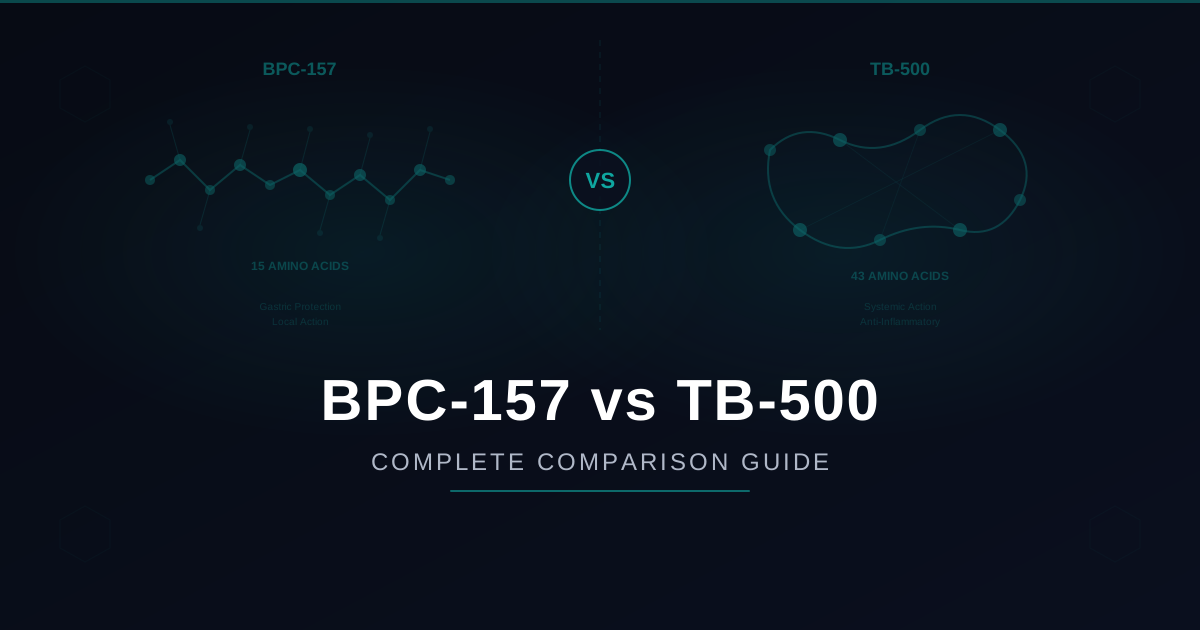
BPC-157 is a 15-amino acid peptide derived from human gastric juice. Its primary research value lies in three unique properties:
- Nitric oxide (NO) pathway modulation — influences both eNOS and iNOS, potentially mediating vascular and tissue repair effects
- Growth factor upregulation — published research shows increased expression of VEGF, EGF, and other factors involved in angiogenesis
- Oral bioactivity — uniquely among tissue repair peptides, BPC-157 maintains biological activity when administered orally in published studies, attributed to its gastric juice origin
- Cytoprotective "Robert effect" — demonstrates broad protective effects across gastrointestinal tissues
TB-500: The Thymosin Beta-4 Fragment
TB-500 is a synthetic fragment of Thymosin Beta-4, a 43-amino acid protein found in nearly all human and animal cells. Its mechanism is distinct from BPC-157:
- Actin sequestration — TB-500 binds to G-actin monomers, regulating cytoskeletal dynamics and promoting cell migration
- Cell migration promotion — facilitates movement of repair cells to injury sites through actin dynamics
- Angiogenesis — promotes new blood vessel formation via VEGF pathways
- Anti-inflammatory modulation — reduces pro-inflammatory cytokine expression
The Blend: Mechanistic Complementarity
The BPC-157+TB-500 blend rationale is based on complementary mechanisms rather than redundancy:
- BPC-157 modulates signaling pathways (NO, growth factors) → tells cells what to do
- TB-500 modulates cellular mechanics (actin, migration) → enables cells to get there
This dual-mechanism approach in a single vial simplifies multi-peptide research protocols while targeting both the signaling and mechanical aspects of tissue repair.
Choosing the Right Option
| Research Focus | Best Choice | Why |
|---|---|---|
| NO pathway studies | BPC-157 alone | Direct NO modulation without actin confounders |
| Oral administration | BPC-157 alone | Only tissue repair peptide with published oral bioactivity |
| Cell migration / actin dynamics | TB-500 alone | Primary actin sequestration mechanism |
| Cardiovascular tissue models | TB-500 alone | Thymosin Beta-4's role in cardiac research |
| Comprehensive repair models | BPC+TB-500 blend | Both signaling and mechanical pathways activated |
| Multi-peptide protocol simplification | BPC+TB-500 blend | Single reconstitution instead of two |
Available Products
BPC-157: 2mg · 5mg | TB-500: 2mg · 10mg | BPC+TB-500 Blend 10mg
For research purposes only. Not for human consumption.