⚠️ For Research Purposes Only — This article discusses LL-37 (cathelicidin) as a laboratory research compound. The content is intended for scientific and educational review only. The peptide is not for human consumption and not intended to diagnose, treat, cure, or prevent any disease. All studies referenced describe preclinical investigations in cell culture, tissue samples, or animal models.
Introduction
LL-37 is the only member of the human cathelicidin family of antimicrobial peptides (AMPs) identified to date, and it has become one of the most widely studied host defense peptides in the biomedical literature. Derived by proteolytic processing of the hCAP-18 precursor, LL-37 consists of 37 residues beginning with two leucines, hence the name. Since its original isolation, researchers have documented a remarkably pleiotropic functional profile that extends well beyond direct microbicidal activity and into chemotaxis, inflammation modulation, angiogenesis, wound repair signaling, and interactions with innate immune cells. According to PubMed, comprehensive reviews characterize LL-37 as a “factotum” peptide whose actions span antibacterial, antifungal, antiviral, chemotactic, and wound-associated biology (Vandamme et al. 2012, DOI).
This article surveys the current preclinical literature on LL-37 with an emphasis on molecular mechanism, in vitro and animal-model research findings, stability and handling parameters relevant to laboratory workflows, and the limitations investigators should consider when designing LL-37 studies. Every claim is tied to a peer-reviewed citation indexed in PubMed.
Molecular Structure and Biochemistry
LL-37 has the primary sequence LLGDFFRKSKEKIGKEFKRIVQRIKDFLRNLVPRTES, comprising 37 amino acids with a net cationic charge of +6 at physiological pH. The peptide is derived from the C-terminus of the 18 kDa human cationic antimicrobial protein (hCAP-18), which is the sole human cathelicidin. Processing by neutrophil proteinase 3 releases the mature LL-37 peptide in neutrophil granules, while other proteases (kallikreins in skin) generate alternative cathelicidin fragments with distinct bioactivities.
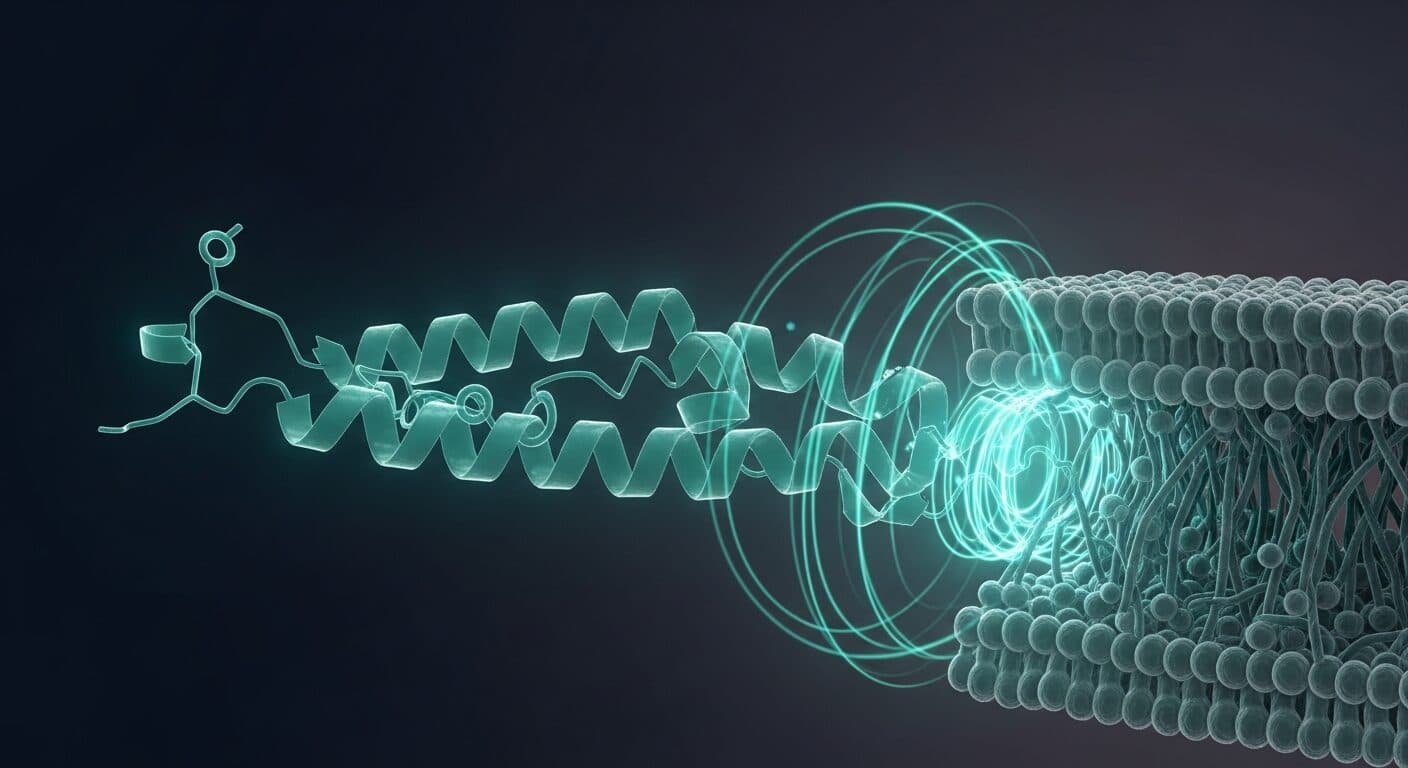
In aqueous solution at low peptide concentration, LL-37 is largely disordered. Upon interaction with anionic surfaces such as bacterial membranes, lipopolysaccharide (LPS), or SDS micelles, it adopts an amphipathic alpha-helical conformation that segregates hydrophobic and cationic residues. This amphipathicity is central to its membrane-active behavior. Biophysical studies demonstrate that LL-37 readily self-associates in physiological salt, forming oligomers that bind as supramolecular units to target surfaces. The oligomerization propensity is atypical among cathelicidins and appears to contribute to LL-37’s pleiotropic interactions with both microbial and mammalian membranes (Xhindoli et al. 2016, DOI).
Structure–activity studies have dissected which regions of the peptide drive particular functions. The central hydrophobic face is important for membrane disruption, while cationic clusters mediate LPS neutralization and interactions with formyl peptide receptor-like 1 (FPRL1/FPR2) on host cells. These insights have motivated the design of LL-37 analogs and truncated derivatives that retain selected properties.
Mechanism of Action in Research Models
Direct Membrane Perturbation
The canonical mechanism described for LL-37 against Gram-negative and Gram-positive bacteria in vitro is membrane perturbation. After initial electrostatic attraction to negatively charged microbial surfaces (lipoteichoic acid, LPS, phosphatidylglycerol), the peptide inserts into lipid bilayers and, at threshold concentrations, forms transient pores or induces carpet-like lytic disorganization. Biochemical characterization places LL-37 in the pore-forming cationic AMP class, though its exact geometry on bacterial membranes remains an active area of investigation (Xhindoli et al. 2016, DOI).
LPS Neutralization and Host-Directed Anti-Inflammatory Activity
A hallmark of LL-37 research is its ability to bind LPS with high affinity and inhibit downstream TLR4 signaling. In cell culture and rodent sepsis models, LL-37 reduces LPS-induced cytokine release from macrophages. In a LPS/ATP-stimulated macrophage pyroptosis model, LL-37 was shown to block inflammasome activation through a dual mechanism: sequestration of LPS and inhibition of the P2X7 purinergic receptor response to ATP (Hu et al. 2014, DOI). In a murine cecal ligation and puncture (CLP) sepsis model, administration of LL-37 improved survival by modulating macrophage pyroptosis, enhancing release of antimicrobial neutrophil extracellular traps (NETs), and promoting antimicrobial ectosome release (Nagaoka et al. 2020, DOI).
Receptor-Mediated Signaling via FPR2/FPRL1
LL-37 binds formyl peptide receptor-like 1 (FPRL1/FPR2) on neutrophils, monocytes, T cells, and endothelial cells. This G-protein coupled receptor engagement underlies many non-lytic host-directed effects, including chemotaxis of immune cells and downstream ERK/Akt signaling in endothelial lineages. In human dermal lymphatic microvascular endothelial cells, LL-37 induced migration and tube-like formation through FPRL1-dependent ERK and Akt phosphorylation, linking the peptide to experimental lymphangiogenesis (Yanagisawa et al. 2020, DOI).
Key Research Areas
1. Antimicrobial and Antibiofilm Research
LL-37 and its derivatives have been studied extensively against clinically and agriculturally relevant pathogens in vitro, including Gram-negative bacilli, Gram-positive cocci, mycobacteria, fungi, and enveloped viruses. Recent reviews catalog LL-37’s antifungal spectrum, covering Candida, Aspergillus, Fusarium, Malassezia, and dermatophytes, with mechanisms that include cell wall damage, membrane permeabilization, oxidative stress induction, and disruption of endoplasmic reticulum homeostasis in fungal cells (Memariani and Memariani 2023, DOI). A broader overview of LL-37 as a pore-forming, LPS-neutralizing, and pleiotropic peptide is available in the classical literature (Golec 2007, PMID 17655171).
Biofilm disruption is another active area. LL-37 can inhibit biofilm formation at sub-MIC concentrations by interfering with quorum sensing and attachment, making it an intriguing scaffold for research into antibiofilm surface coatings. Clinical observational work has also measured cathelicidin levels in infected patients: in one case-control study, LL-37 concentrations in plasma and urine were significantly higher in patients with urinary tract infection than in healthy controls, supporting the role of cathelicidin as a measurable innate immune response marker (Babikir et al. 2018, DOI).
2. Wound Healing and Tissue Repair Research
Preclinical wound models are among the most productive research settings for LL-37. The peptide promotes keratinocyte migration, angiogenesis, and re-epithelialization of cutaneous and airway epithelium in experimental systems. In a multifunctional hydrogel delivery platform, LL-37 was incorporated into a self-healing scaffold that accelerated diabetic wound closure in a rodent model through combined antibacterial, immunomodulatory, anti-inflammatory, neovascularization, and antioxidant effects (Hao et al. 2023, DOI). Reviews synthesizing the wound repair literature describe LL-37 as a driver of angiogenesis, lung epithelial proliferation, and accelerated closure of airway epithelial defects (Golec 2007, PMID 17655171).
3. Sepsis, Systemic Inflammation, and Organ Protection Research
Beyond localized infection, LL-37 has been investigated as a modulator of systemic inflammatory pathology in animal models. In a rat model of heat stroke, exogenous cathelicidin LL-37 attenuated intestinal barrier disruption, reduced microbial translocation, lowered systemic inflammatory markers, and improved survival. The protective phenotype correlated with preservation of goblet cell function, upregulation of mucin-2 and Nrf2, and reduced cyclooxygenase-2 expression (Shih et al. 2023, DOI). These data make LL-37 a useful research tool for investigating intestinal barrier biology and organ cross-talk during severe systemic stress.
4. Innate Immunity, Inflammasome, and Cell Death Research
Beyond classical antimicrobial function, LL-37 has become an attractive probe for dissecting the interface between innate immune sensing and programmed cell death in rodent and cell-culture models. LPS-driven macrophage pyroptosis is one of the clearest paradigms where LL-37 demonstrates mechanistic dualism: in J774 macrophages, LL-37 blocked inflammasome assembly, caspase-1 activation, IL-1β expression, and cell death by neutralizing surface LPS binding while simultaneously inhibiting P2X7-mediated ATP responses (Hu et al. 2014, DOI). Complementary in vivo cecal ligation and puncture (CLP) work demonstrated survival benefit through modulated NETosis and ectosome release rather than through pure antibacterial action (Nagaoka et al. 2020, DOI). For researchers studying sterile inflammation, DAMPs, and caspase cascades, LL-37 provides a pharmacological tool that can uncouple LPS-driven signaling from microbial killing.
5. Angiogenesis, Lymphangiogenesis, and Tissue Remodeling
LL-37 is increasingly used in vascular biology research because of its ability to drive endothelial migration, tube formation, and expression of angiogenic genes. In lymphatic endothelial culture models, LL-37 increased migration and tube-like formation through FPRL1-dependent ERK and Akt phosphorylation, providing a tractable in vitro system for interrogating peptide-driven lymphatic remodeling (Yanagisawa et al. 2020, DOI). Broader reviews place LL-37 squarely within the “host defense peptide” paradigm in which a single small peptide coordinates antimicrobial activity, chemotaxis, neovascularization, and epithelial repair signals (Vandamme et al. 2012, DOI; Xhindoli et al. 2016, DOI).
Stability, Storage, and Handling in the Laboratory
Handling LL-37 for reproducible in vitro and in vivo work requires attention to its amphipathic, membrane-active chemistry. Observed behaviors in published protocols include:
- Lyophilized powder: Typically stored at −20 °C or −80 °C in sealed, desiccated containers away from light. Cold-chain shipment is preferred to limit thermal stress on the peptide backbone.
- Reconstitution: LL-37 is soluble in sterile water, dilute acetic acid, or low-salt buffer. Because of its tendency to aggregate on plastics and glass, low-binding polypropylene tubes are common in biophysical assays. Bovine serum albumin carrier (0.1% BSA) is frequently added for dilute working solutions to minimize adsorptive losses.
- Working stocks: Once dissolved, working solutions are generally aliquoted to avoid repeated freeze-thaw cycles, which can promote oligomerization changes and loss of activity.
- Assay interference: Cationic peptides bind anionic plastics, serum albumin, heparin, and extracellular matrix components, which can alter apparent MICs in culture media. Defined, low-protein test media are typical for antimicrobial susceptibility screening.
- Hemolytic counter-screens: Because LL-37 is amphipathic and membrane-active, hemolysis assays on red blood cells are a standard counter-screen alongside antimicrobial dose-response experiments.
These points are generic laboratory practice drawn from published methodology sections in the citations above; investigators should validate conditions for each assay platform.
Formulation and Delivery Platforms in Preclinical Work
One of the practical challenges for LL-37 research is that the peptide is rapidly degraded by proteases and absorbed onto surfaces, which limits bioavailability in many experimental systems. Investigators have explored several delivery strategies in preclinical models, including hydrogel scaffolds, liposomes, nanoparticles, and polyelectrolyte coatings. A representative example is the self-healing multifunctional hydrogel system used for diabetic wound closure in rodents, which incorporated LL-37 into a dynamic cross-linked network with catechol-Fe coordinate bonds and Schiff base linkages, allowing sustained peptide release into the wound bed (Hao et al. 2023, DOI). These formulation strategies are important for comparative research because apparent potency and duration of action depend strongly on how the peptide is delivered, not just its primary sequence.
Research Considerations and Limitations
LL-37 is a versatile research tool, but interpretation of data requires caution:
- Dose-dependent dualism. At low concentrations, LL-37 functions primarily as an immunomodulator through receptor-mediated signaling; at higher concentrations, it becomes overtly membrane-active toward both microbial and mammalian cells. Studies routinely report sharply different phenotypes across narrow concentration windows.
- Medium and matrix effects. Serum, divalent cations, and glycosaminoglycans can sequester LL-37 and reduce its apparent potency. In vivo plasma stability is limited; protease susceptibility shapes pharmacokinetics in rodent work.
- Species differences. The murine cathelicidin CRAMP is structurally and functionally related but not identical. Direct extrapolation between CRAMP and LL-37 data should be done carefully, and comparative biochemistry helps bridge interpretations (Xhindoli et al. 2016, DOI).
- Peptide purity and endotoxin content. Because LL-37 neutralizes LPS, residual endotoxin in a peptide preparation can confound host-cell assays. Endotoxin testing is a standard QA step.
- Host-directed effects confound antimicrobial endpoints. In co-culture systems containing host cells and microbes, changes in microbial burden may reflect enhanced host phagocyte activity rather than direct killing, requiring careful controls.
As with all emerging research peptides, reproducibility depends on transparent reporting of peptide source, purity, solvent composition, and assay medium.
Comparative Biology: LL-37 vs. Other Cathelicidins
Unlike humans and many other mammals, rodents express a single cathelicidin that differs from LL-37 in sequence and in some biophysical properties. The murine ortholog, CRAMP (cathelicidin-related antimicrobial peptide), shares the overall cationic amphipathic architecture but differs in length, oligomerization behavior, and some receptor interactions. This means that results obtained in mouse genetic models (e.g., Camp knockout mice) do not always translate cleanly to observations on exogenously delivered human LL-37. Comparative biophysical reviews emphasize that while the general “pore-forming cationic AMP” framework applies to both, the specific kinetics and thresholds differ (Xhindoli et al. 2016, DOI). Researchers working across species should include direct comparative measurements rather than assuming LL-37 and CRAMP are interchangeable.
Analytical Methods Commonly Used in LL-37 Studies
Modern LL-37 research leverages a broad analytical toolkit. Mass spectrometry is standard for peptide identity verification and for monitoring proteolytic fragments in biological samples. Circular dichroism (CD) spectroscopy characterizes the disordered-to-helical transition upon interaction with anionic membranes and LPS micelles. Surface plasmon resonance (SPR) and isothermal titration calorimetry (ITC) quantify LL-37 binding to LPS, lipid bilayers, and receptor fragments. Fluorescence-based membrane permeabilization assays (SYTOX uptake, calcein leakage) measure bacterial and liposomal membrane disruption in real time. Time-lapse microscopy on biofilm-forming bacteria has been used to visualize LL-37-induced biofilm disruption dynamics. For host-cell studies, reporter gene assays for NF-κB and MAPK pathway activation, qPCR for cytokine induction, and flow cytometry for cell death readouts are common. The combination of these methods permits orthogonal mechanism dissection.
Historical Context and Discovery
LL-37 was first identified in the mid-1990s as a proteolytic product of the human cationic antimicrobial protein hCAP-18. The discovery emerged from parallel work on mammalian cathelicidins — a family defined by a conserved N-terminal cathelin domain fused to a variable C-terminal antimicrobial effector. Sequencing of the human CAMP gene revealed that, unlike many other mammals which encode multiple cathelicidins, humans possess only a single cathelicidin gene whose C-terminal product is LL-37. Early work focused on the peptide’s antibacterial activity, but within a few years researchers documented chemotactic, angiogenic, and wound-healing properties that expanded interest well beyond direct microbial killing. By the mid-2000s, LL-37 had become a prototype host defense peptide, and comprehensive reviews began to catalogue its dozens of reported biological activities (Vandamme et al. 2012, DOI; Golec 2007, PMID 17655171).
The expansion of LL-37 research tracked broader trends in the antimicrobial peptide field. As antibiotic resistance became a public health priority, host defense peptides attracted renewed attention as alternatives or adjuncts to classical small-molecule antibiotics. LL-37’s dual role as both an antimicrobial and an immunomodulator made it particularly attractive because these properties could in principle work synergistically in infection models.
Frequently Asked Research Questions
Q1: What is the primary sequence of LL-37?
LL-37 is a 37-residue cationic peptide with the sequence LLGDFFRKSKEKIGKEFKRIVQRIKDFLRNLVPRTES, derived by proteolytic cleavage of the hCAP-18 precursor (Vandamme et al. 2012, DOI).
Q2: Does LL-37 kill bacteria by pore formation or by another mechanism?
Both. Biophysical studies place LL-37 in the pore-forming AMP class, with oligomer-mediated interactions with anionic bilayers, but host-directed, receptor-mediated signaling is equally important in many experimental contexts (Xhindoli et al. 2016, DOI).
Q3: Which receptor mediates LL-37 host-cell signaling?
Formyl peptide receptor-like 1 (FPRL1, also called FPR2) is the most frequently implicated receptor for LL-37 actions on endothelial cells, neutrophils, monocytes, and T cells (Yanagisawa et al. 2020, DOI).
Q4: Is LL-37 relevant to fungal research?
Yes. LL-37 has documented antifungal activity across Candida, Aspergillus, Fusarium, Trichophyton, Malassezia, and other species in vitro, with mechanisms that include cell wall and membrane disruption, oxidative stress, and ER homeostasis disturbance (Memariani and Memariani 2023, DOI).
Q5: How should LL-37 be controlled for in immune cell assays?
Standard controls include scrambled sequence peptides, heat-inactivated LL-37, FPRL1 antagonists (to isolate receptor-mediated effects), and rigorous endotoxin testing, given LL-37’s LPS-neutralizing activity.
References
- Vandamme D, Landuyt B, Luyten W, Schoofs L. A comprehensive summary of LL-37, the factotum human cathelicidin peptide. Cellular Immunology. 2012;280(1):22-35. DOI (PMID: 23246832).
- Xhindoli D, Pacor S, Benincasa M, Scocchi M, Gennaro R, Tossi A. The human cathelicidin LL-37 — A pore-forming antibacterial peptide and host-cell modulator. Biochimica et Biophysica Acta. 2016;1858(3):546-566. DOI (PMID: 26556394).
- Nagaoka I, Tamura H, Reich J. Therapeutic Potential of Cathelicidin Peptide LL-37, an Antimicrobial Agent, in a Murine Sepsis Model. International Journal of Molecular Sciences. 2020;21(17):5973. DOI (PMID: 32825174).
- Hu Z, Murakami T, Suzuki K, Tamura H, Kuwahara-Arai K, Iba T, Nagaoka I. Antimicrobial cathelicidin peptide LL-37 inhibits the LPS/ATP-induced pyroptosis of macrophages by dual mechanism. PLoS ONE. 2014;9(1):e85765. DOI (PMID: 24454930).
- Yanagisawa T, Ishii M, Takahashi M, Fujishima K, Nishimura M. Human cathelicidin antimicrobial peptide LL-37 promotes lymphangiogenesis in lymphatic endothelial cells through the ERK and Akt signaling pathways. Molecular Biology Reports. 2020;47(9):6841-6854. DOI (PMID: 32886325).
- Shih CC, Liao WC, Ke HY, et al. Antimicrobial peptide cathelicidin LL-37 preserves intestinal barrier and organ function in rats with heat stroke. Biomedicine & Pharmacotherapy. 2023;161:114565. DOI (PMID: 36958193).
- Hao Z, Liu G, Ren L, et al. A Self-Healing Multifunctional Hydrogel System Accelerates Diabetic Wound Healing through Orchestrating Immunoinflammatory Microenvironment. ACS Applied Materials & Interfaces. 2023;15(16):19847-19862. DOI (PMID: 37042619).
- Memariani M, Memariani H. Antifungal properties of cathelicidin LL-37: current knowledge and future research directions. World Journal of Microbiology and Biotechnology. 2023;40(1):34. DOI (PMID: 38057654).
- Babikir IH, Abugroun EA, Bilal NE, Alghasham AA, Abdalla EE, Adam I. The impact of cathelicidin, the human antimicrobial peptide LL-37 in urinary tract infections. BMC Infectious Diseases. 2018;18(1):17. DOI (PMID: 29310594).
- Golec M. Cathelicidin LL-37: LPS-neutralizing, pleiotropic peptide. Annals of Agricultural and Environmental Medicine. 2007;14(1):1-4. PMID 17655171.
Closing Remarks for Researchers
LL-37 remains one of the most mechanistically rich and versatile research peptides in the host defense literature. Its combination of direct membrane-active antibacterial, antifungal, and antiviral activity with receptor-mediated immunomodulation, angiogenesis, lymphangiogenesis, wound healing, and inflammasome regulation makes it a rare tool for investigators who want to probe multiple arms of innate immunity simultaneously. The peptide has been studied in hundreds of in vitro and animal model systems, and the preclinical literature continues to expand with new reports on delivery platforms, structure-activity relationships, and mechanistic crosstalk. Researchers who take the time to characterize their peptide preparation carefully, control for matrix effects, and include appropriate positive and negative controls will find LL-37 a rewarding subject of investigation. As always, the compound is strictly a research material: not for human consumption, not for therapeutic use, and not suitable for any application outside a properly controlled laboratory setting.
References retrieved from PubMed. All DOI links point to primary sources.
Disclaimer: All products sold by CertaPeptides are intended for laboratory research use only. Not for human or veterinary use. Not for consumption. Not for human consumption. For laboratory research only.