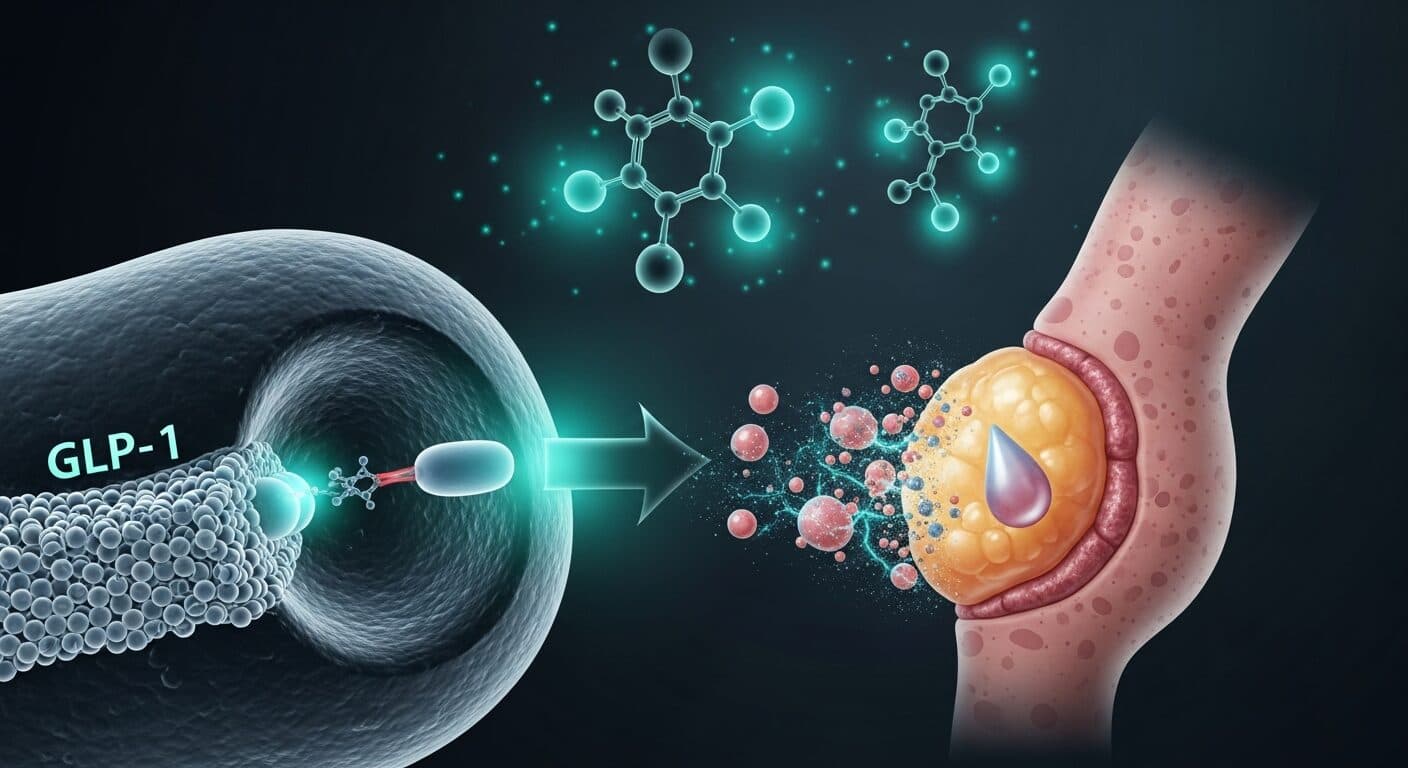
GLP-1 receptor agonists rewrote what metabolic research thought was achievable with peptide-based interventions. Then dual agonists did it again. Now we have a triple agonist in Phase 3, a mitochondrial-derived peptide drawing serious academic interest, and combination approaches showing additive effects that none of the individual compounds achieved alone. This article maps the current landscape — seven compounds, distinct mechanisms, what the published evidence actually shows for each, and what each one is actually useful for in a research context.
All compounds discussed are intended for research purposes only and are not approved for human therapeutic use outside of regulated clinical settings.
How peptides influence fat metabolism
Peptides targeting fat metabolism work through three distinct pathways, and this matters for protocol design — the compounds are not interchangeable, and combining them across pathway types is the direction most current combination research is heading.
GLP-1 and incretin signaling
Glucagon-like peptide-1 (GLP-1) is an incretin hormone secreted by intestinal L-cells in response to nutrient intake. GLP-1 receptor agonists reduce food intake through central appetite suppression, delay gastric emptying, and improve insulin sensitivity. Research has demonstrated that GLP-1 pathway activation leads to significant reductions in body weight and visceral adiposity in both preclinical models and large-scale clinical trials. The GLP-1 receptor is expressed in the hypothalamus, brainstem, and peripheral organs, making it a versatile target for metabolic research (Drucker, 2018).
Lipolysis and growth hormone pathways
Growth hormone (GH) and its downstream mediators stimulate lipolysis — the breakdown of stored triglycerides in adipocytes into free fatty acids and glycerol. Certain peptides act as GH secretagogues or GH fragments that selectively promote lipolytic activity without the full spectrum of GH effects. This pathway is particularly relevant for researchers studying localized fat reduction and the regulation of adipose tissue turnover.
Mitochondrial function and thermogenesis
A newer area of investigation involves peptides that enhance mitochondrial biogenesis and cellular energy expenditure. By upregulating oxidative metabolism in skeletal muscle and brown adipose tissue, these compounds increase total energy expenditure without necessarily suppressing appetite — a mechanistically distinct approach from incretin-based strategies.
Top peptides for fat loss research
1. Semaglutide — the GLP-1 receptor agonist reference compound
Mechanism: Selective GLP-1 receptor agonist with an extended half-life achieved through albumin binding and resistance to DPP-4 degradation.
Semaglutide remains the most extensively studied peptide in obesity and metabolic research. The landmark STEP (Semaglutide Treatment Effect in People with Obesity) trial program demonstrated that once-weekly subcutaneous semaglutide at 2.4 mg produced mean body weight reductions of approximately 14.9% versus 2.4% with placebo over 68 weeks (Wilding et al., 2021). These results established semaglutide as the benchmark against which newer compounds are measured.
Research suggests that semaglutide’s effects extend beyond appetite suppression. Preclinical studies indicate activity on hypothalamic neurons involved in energy homeostasis, reductions in hepatic lipid accumulation, and improvements in cardiovascular risk markers. The oral formulation has also been studied, though subcutaneous administration demonstrates superior bioavailability for research applications.
For researchers investigating GLP-1 biology, semaglutide is the cleanest reference compound. Read our full semaglutide research overview here. CertaPeptides offers research-grade semaglutide with third-party purity verification.
2. Tirzepatide — the dual GIP/GLP-1 receptor agonist
Mechanism: Dual agonist targeting both glucose-dependent insulinotropic polypeptide (GIP) and GLP-1 receptors simultaneously.
Tirzepatide introduced a paradigm shift by demonstrating that dual incretin receptor activation could surpass GLP-1 monotherapy. The SURMOUNT-1 trial reported mean weight reductions of up to 22.5% with tirzepatide 15 mg versus 2.4% with placebo over 72 weeks (Jastreboff et al., 2022). This represented the largest weight reduction observed in a non-surgical intervention study at the time of publication.
The addition of GIP receptor agonism appears to enhance fat oxidation and improve lipid metabolism beyond what GLP-1 activation alone can achieve. Research suggests that GIP receptor signaling in adipose tissue may promote lipid storage efficiency and improve adipocyte insulin sensitivity, creating a complementary metabolic effect. Preclinical models indicate tirzepatide also reduces hepatic steatosis and inflammation markers.
For comparative incretin pathway research, tirzepatide is the natural next step from semaglutide. Explore our detailed tirzepatide research article.
3. Retatrutide — the triple agonist
Mechanism: Triple agonist targeting GIP, GLP-1, and glucagon receptors simultaneously.
By adding glucagon receptor agonism to the GIP/GLP-1 framework, retatrutide introduces direct hepatic energy expenditure effects. Glucagon receptor activation stimulates hepatic glycogenolysis and gluconeogenesis, and research suggests it may also promote thermogenesis and increase resting energy expenditure.
Phase 2 clinical trial data published in 2023 showed that participants receiving retatrutide at the highest dose achieved mean weight reductions of approximately 24.2% at 48 weeks, with some individuals exceeding 30% body weight loss. The Phase 3 TRIUMPH-4 trial (2025 results) confirmed this at 23.7% at the same dose over 48 weeks. Phase 3 trials across multiple metabolic endpoints are ongoing. Read our complete retatrutide research analysis.
4. AOD-9604 — the growth hormone fragment
Mechanism: Modified fragment of human growth hormone (amino acids 177-191) that selectively stimulates lipolysis without the proliferative or diabetogenic effects of full-length GH.
AOD-9604 targets adipose tissue through a non-incretin mechanism. Research in animal models has demonstrated that AOD-9604 stimulates lipolysis and inhibits lipogenesis in adipose tissue, promoting net fat reduction. Unlike full-length growth hormone, AOD-9604 does not appear to affect IGF-1 levels or blood glucose homeostasis in preclinical studies, making it a more targeted tool for investigating isolated lipolytic pathways.
Clinical trial results have been mixed — with some studies showing modest effects compared to the incretin class — but AOD-9604 remains useful for researchers specifically investigating GH-mediated lipolysis independent of appetite suppression or incretin signaling. See our AOD-9604 research overview.
5. MOTS-c — the mitochondrial-derived peptide
Mechanism: Mitochondrial-derived peptide encoded within the 12S rRNA gene of mitochondrial DNA. Activates AMPK signaling and enhances mitochondrial function and glucose metabolism.
Discovered by Dr. Changhan David Lee’s laboratory at USC, MOTS-c functions as a mitochondrial signaling molecule that regulates metabolic homeostasis at the cellular level. Research has demonstrated that MOTS-c activates the AMPK pathway — a master regulator of cellular energy balance — leading to increased glucose uptake in skeletal muscle and enhanced fatty acid oxidation (Lee et al., 2015).
In preclinical models, MOTS-c administration has been associated with resistance to diet-induced obesity, improved insulin sensitivity, and enhanced exercise capacity. The mechanism is fundamentally different from incretin-based approaches: rather than suppressing appetite or slowing gastric emptying, MOTS-c appears to increase energy expenditure at the cellular level by improving mitochondrial efficiency. Explore our full MOTS-c research article.
6. CJC-1295 + ipamorelin — the GH secretagogue stack
Mechanism: CJC-1295 is a modified growth hormone-releasing hormone (GHRH) analog with extended half-life via Drug Affinity Complex (DAC) technology. Ipamorelin is a selective growth hormone secretagogue receptor (GHS-R) agonist. Combined, they stimulate pulsatile GH release from the anterior pituitary.
The combination amplifies endogenous GH secretion patterns rather than introducing exogenous GH directly. Elevated GH levels promote lipolysis, particularly in visceral adipose depots, and support lean mass preservation during energy deficit states.
Ipamorelin is considered particularly selective among GH secretagogues, with minimal effects on cortisol or prolactin compared to earlier-generation compounds like GHRP-6. This selectivity makes the combination valuable for researchers investigating GH-mediated fat metabolism without confounding hormonal variables. Effects develop more gradually than with incretin agonists, but the GH axis pathway is mechanistically distinct and worth studying separately.
7. Cagrilintide — the amylin analog
Mechanism: Long-acting amylin receptor agonist. Amylin is a pancreatic hormone co-secreted with insulin that promotes satiety, slows gastric emptying, and suppresses glucagon secretion.
Cagrilintide has emerged as a significant research compound, particularly when studied in combination with semaglutide (designated CagriSema). The amylin pathway is mechanistically complementary to GLP-1 signaling — both reduce food intake, but through distinct receptor populations and neural circuits. Early clinical data suggest that the CagriSema combination may produce weight reductions exceeding those observed with either compound alone.
Research into amylin biology has revealed that this pathway regulates meal size, nutrient sensing, and reward-related eating behavior through actions in the area postrema and nucleus of the solitary tract — a CNS profile that differs meaningfully from GLP-1’s hypothalamic targets.
GLP-1 vs non-GLP-1 approaches: comparative research framework
The two categories serve different research purposes, and most sophisticated metabolic research programs now work across both.
| Parameter | GLP-1 / incretin class | Non-GLP-1 approaches |
|---|---|---|
| Compounds | Semaglutide, Tirzepatide, Retatrutide, Cagrilintide | AOD-9604, MOTS-c, CJC-1295/Ipamorelin |
| Primary mechanism | Appetite suppression, gastric emptying delay | Lipolysis, GH release, mitochondrial activation |
| Evidence level | Large RCTs (n > 1,000) | Preclinical + small clinical studies |
| Magnitude of effect | 15–24% body weight reduction in trials | Variable; generally more modest |
| Research utility | Benchmark compounds, translational models | Pathway-specific mechanistic studies |
| Combination potential | Multi-agonist stacking (GIP + GLP-1 + glucagon) | Complementary to incretin approaches |
GLP-1-based compounds provide the strongest evidence for total body weight reduction. Non-GLP-1 peptides offer mechanistic specificity for isolating individual metabolic pathways. Many current research programs explore combinations across both categories. For a broader overview, see: Best Peptides for Weight Loss Research in 2026.
Choosing quality research peptides
The reliability of metabolic peptide research depends entirely on compound quality. Researchers evaluating peptide suppliers should verify the following criteria before incorporating any compound into experimental protocols:
- Third-party purity testing: Look for HPLC and mass spectrometry verification. Research-grade peptides should achieve a minimum purity of 98%, with premium suppliers consistently delivering 99%+
- Certificate of Analysis (COA): Every batch should include a COA documenting amino acid composition, molecular weight confirmation, purity percentage, and endotoxin levels
- Proper lyophilization: Peptides should be supplied in lyophilized (freeze-dried) form for stability during shipping and long-term storage
- EU regulatory compliance: For European researchers, sourcing from EU-based suppliers ensures compliance with local regulations governing research compound procurement
- Transparent sourcing: Reputable suppliers maintain full traceability from synthesis through quality control, with batch-specific documentation available on request
At CertaPeptides, every peptide is accompanied by a batch-specific Certificate of Analysis and undergoes independent third-party purity verification via Janoshik Analytical.
Frequently asked questions
What is the most studied peptide for fat loss research?
Semaglutide is currently the most extensively studied peptide in obesity and fat loss research, supported by the multi-trial STEP program involving thousands of participants. Tirzepatide and retatrutide are rapidly accumulating evidence as well, with tirzepatide demonstrating superior weight reduction in the SURMOUNT trial series. All research findings are from controlled clinical studies and should not be interpreted as guidance for individual use.
How do GLP-1 agonist peptides differ from growth hormone peptides in fat loss research?
GLP-1 agonists primarily reduce fat mass through appetite suppression and metabolic signaling via the incretin pathway. Growth hormone-related peptides like AOD-9604 and CJC-1295/Ipamorelin work through direct lipolysis stimulation and enhanced fat oxidation. These represent fundamentally different mechanisms, and researchers often study both categories to understand complementary pathways in metabolic regulation.
Are these peptides approved for weight loss?
Some GLP-1 receptor agonists (semaglutide, tirzepatide) have received regulatory approvals for specific indications through standard pharmaceutical channels. However, the research-grade peptides discussed in this article are supplied for research purposes only and are not intended for human therapeutic use. Researchers must comply with all applicable regulations in their jurisdiction.
What purity level should research peptides have?
For reliable and reproducible research results, peptides should be a minimum of 98% purity as verified by HPLC analysis. Higher purity (99%+) is recommended for sensitive assays. Always request the Certificate of Analysis and verify that the supplier provides independent third-party testing documentation.
Can these peptides be combined in research?
Combination research is an active and growing area. The CagriSema combination (cagrilintide + semaglutide) is currently in advanced clinical trials, and researchers are also investigating GLP-1 agonists alongside GH secretagogues or mitochondrial peptides. Combination protocols require careful experimental design and appropriate institutional oversight.
References
- Wilding JPH, Batterham RL, Calanna S, et al. Once-weekly semaglutide in adults with overweight or obesity. N Engl J Med. 2021;384(11):989-1002. PMID: 33567185
- Jastreboff AM, Aronne LJ, Ahmad NN, et al. Tirzepatide once weekly for the treatment of obesity. N Engl J Med. 2022;387(3):205-216. PMID: 35658024
- Drucker DJ. Mechanisms of action and therapeutic application of glucagon-like peptide-1. Cell Metab. 2018;27(4):740-756. PMID: 29617641
- Lee C, Zeng J, Drew BG, et al. The mitochondrial-derived peptide MOTS-c promotes metabolic homeostasis and reduces obesity and insulin resistance. Cell Metab. 2015;21(3):443-454. PMID: 25738459
For research purposes only. Not intended for human consumption or medical use.
Research disclaimer
This article is provided for educational and informational purposes within the research community. All peptides discussed are research compounds and may not be approved for human consumption or medical use in all jurisdictions. The information presented represents current scientific understanding based on available peer-reviewed research literature. This content is not intended to provide medical advice, diagnose conditions, treat diseases, or replace professional medical consultation. Researchers using these compounds must do so in compliance with all applicable laws, regulations, and institutional review protocols.