Съединение с изследователско качество. Само за лабораторна употреба. Не е предназначено за употреба при хора или животни, поглъщане или инжектиране. Не се правят и не се подразбират медицински твърдения.
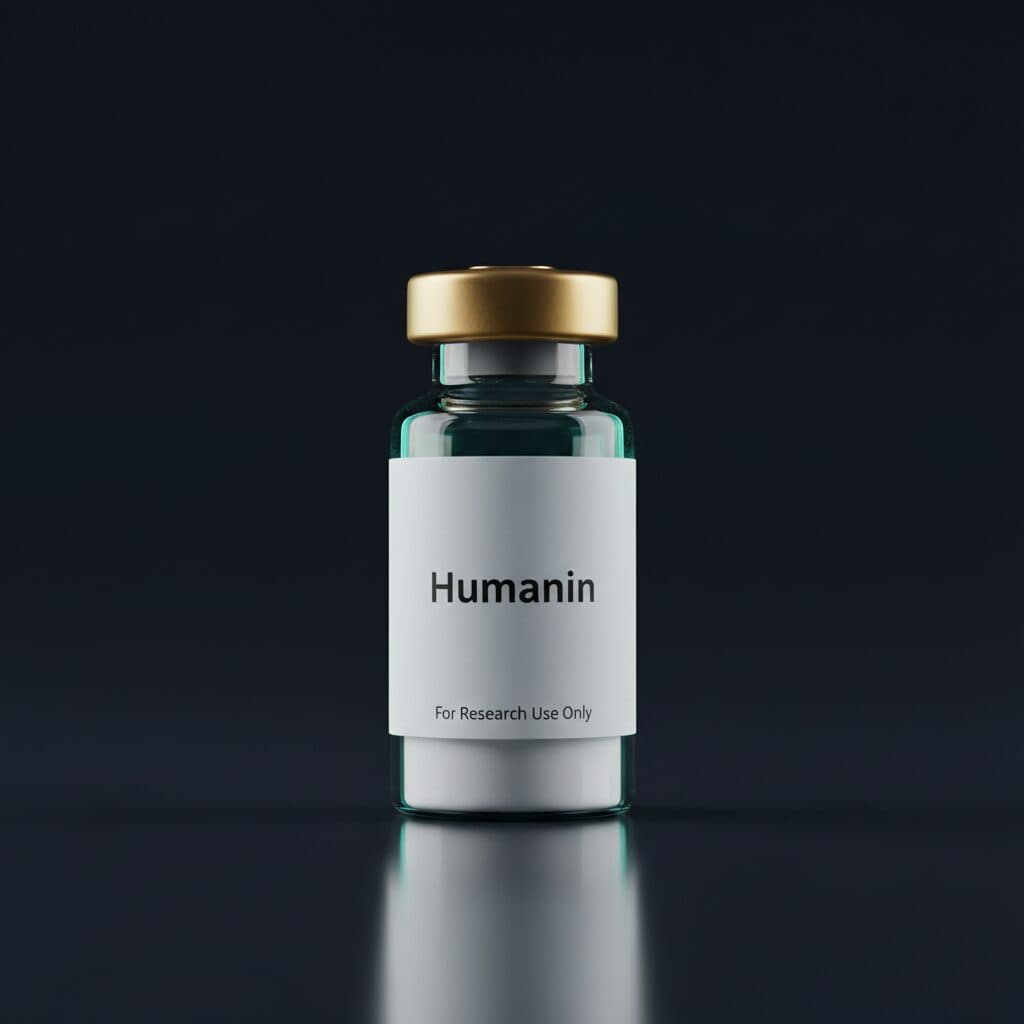
Humanin 10mg
Безплатна доставка при поръчки над €200
- Ако продукт не отговаря на спецификацията в публикувания си COA, свържете се с нас с номера на партидата: проверяваме спрямо доклада на партидата и заменяме всеки продукт, който не го покрива, без разходи за Вас.
- Свържете се с нас в рамките на 48 часа от доставката със снимки на външната кутия, вътрешната опаковка и засегнатите флакони с четливи етикети. Потвърдените транспортни повреди се заменят без разходи за Вас.
3–7 дни за повечето държави от ЕС · 10–14 дни за Северните и Балтийските държави
Стандартна доставка в ЕС от 4,99 € (RO) · основните държави от ЕС (GLS) 17,99 € · Северните и Балтийските държави 12,99 €–15,99 € · Изпращане в рамките на 1–2 работни дни · Безплатна доставка над 200,00 € · без митнически документи (ЕС) · чрез мрежата от куриери в ЕС
Остават 200,00 € до безплатна доставка над 200,00 €. Под тази сума стандартната доставка в ЕС е 17,99 € (GLS, повечето държави от ЕС).
Как работят Paysera и SEPA
- Платете: изпратете ръчен SEPA превод към IBAN, който Ви изпращаме по имейл, или одобрете SEPA превод в собствената си банка чрез хостваната страница на Paysera, когато при плащане тази опция се предлага за Вашия адрес.
- Потвърждаваме: Paysera ни уведомява незабавно или съпоставяме ръчния превод с поръчката, когато пристигне (обикновено 1 работен ден).
- Изпращаме: потвърдените поръчки обикновено се изпращат в рамките на 1-2 работни дни.
Плащания с карта в момента не се предлагат. В процеса на плащане няма процесор за карти.
Research-grade Humanin. Class-level specification ≥98%. Lyophilized powder in sealed glass vial. For laboratory research use only. Not for human consumption.
| Количество | Цена за брой | Общо | Спестявания |
|---|---|---|---|
| 1 unit | 80,49 € | 80,49 € | -- |
| 3+ | 76,47 € | 229,40 € | 5% отстъпка |
| 5+Най-популярно | 72,44 € | 362,21 € | 10% отстъпка |
| 10+ | 68,42 € | 684,17 € | 15% отстъпка |
Важна забележка
Този продукт е предназначен само за лабораторна и изследователска употреба. Не е за употреба от хора или ветеринарна употреба. С покупката потвърждавате, че този продукт ще се използва изключително за изследователски цели in vitro.
Поради законови и регулаторни изисквания този продукт не може да бъде изпратен до: Италия, Литва, Словения и Хърватия.
Изисква се реконституция
Този пептид се изпраща лиофилизиран (сух прах) и изисква бактериостатична вода за реконституиране преди употреба. BAC вода се продава отделно.
Кога този продукт може да не е подходящ за Вашето изследване
- ⚠Ако Вашето изследване изисква материал с GMP качество за клинични приложения — пептидите с изследователско качество не са предназначени за клинична употреба.
- ⚠Ако Вашата лаборатория няма подходящо студено съхранение (фризер -20°C) — стабилността на този пептид може да бъде компрометирана при по-високи температури.
- ⚠Ако протоколът на Вашето изследване изисква одобрени от FDA референтни стандарти — свържете се с USP или сертифициран доставчик на референтни материали.
За избрани партиди са публикувани лабораторни доклади. Проверете резултата и посочения метод във всеки доклад. Само за изследователски цели.
Докладът на Janoshik се публикува, когато е наличен
Изпращане в рамките на 1–2 работни дни, доставка от 4,99 € в Румъния, от 12,99 € в останалата част от Европа
Има вписана спецификация на ниво клас; независим доклад на Janoshik за избрани партиди
Относно Humanin 10mg
Humanin is a 21-amino acid peptide encoded not in the nuclear genome but in the mitochondrial 16S rRNA gene -- an unusual origin that has made it the founding member of a class of mitochondria-derived peptides (MDPs). It was originally identified in 2001 by researchers screening for factors that protect neurons from Alzheimer's disease-related cell death. The name reflects this discovery context: a peptide that made cells "more human" by rescuing them from neurodegeneration.
Humanin acts through multiple receptor pathways. It binds the formyl peptide receptor-like 1 (FPRL1/FPR2), the CNTF receptor alpha subunit, and has intracellular targets as well. In Alzheimer's disease cell models, it has been reported to protect neurons from amyloid-beta toxicity, ADDL (amyloid-derived diffusible ligand) toxicity, and oxidative stress. Beyond neuroprotection, preclinical studies report anti-apoptotic, insulin-signalling and anti-inflammatory effects in cell and animal models. Circulating humanin levels have been reported to decline with age, which has made it a subject of interest in mitochondrial aging research.
SHLP2 (small humanin-like peptide 2) and other humanin analogues are also being studied, but humanin itself remains the most characterized of the MDPs. It has been studied in rodent models for cognitive preservation, metabolic improvement in type 2 diabetes models, and cardiovascular protection.
Specifications
| Parameter | Value |
|---|---|
| Compound | Humanin (mitochondria-derived peptide, 21 amino acids) |
| Amount per Vial | 10mg |
| Purity | ≥98% (class-level specification) |
| Format | Lyophilized powder |
| Reconstitution | Sterile water or saline |
| Storage | -20°C; 2-8°C after reconstitution |
Storage
Store at -20°C before reconstitution. Refrigerate at 2-8°C after reconstitution and use within 28 days. Stable for 24+ months as lyophilized powder under proper conditions.
What makes humanin unusual compared to other peptides?
Most bioactive peptides are encoded in nuclear genes. Humanin is encoded within the mitochondrial genome -- specifically within the 16S ribosomal RNA gene -- which is an unusual location for a protein-coding sequence. This mitochondrial origin makes it the founding member of a class called mitochondria-derived peptides (MDPs). The mitochondrial genome is ancient and highly conserved, so mitochondria-derived signaling molecules have particular biological significance. Humanin's presence in this location suggests ancient origins for mitochondria-to-nucleus and mitochondria-to-extracellular signaling.
What were the original Alzheimer's disease findings for humanin?
Humanin was identified in 2001 by Nishimoto and colleagues through expression cloning from occipital cortex cDNA of an Alzheimer's patient. The screening assay looked for factors that could protect neurons from cell death induced by familial Alzheimer's mutations (V642I APP). Humanin potently rescued neurons from multiple Alzheimer's-related cytotoxic stimuli including amyloid-beta peptides, ADDL oligomers, and familial AD gene mutations. Subsequent work showed it works through FPRL1/FPR2 receptor signaling and intracellular IGFBP3 binding. These neuroprotective effects are among the most replicated findings in the humanin literature.
Why do humanin levels decline with aging?
Humanin is produced by mitochondria, and mitochondrial function and abundance decline with aging -- a process called mitochondrial aging or mitochondrial dysfunction in the context of aging biology. As mitochondrial function decreases, production of mitochondria-derived peptides including humanin appears to decrease as well. Several studies have measured circulating humanin in human populations and found inverse correlations with age and with aging-related diseases. Whether declining humanin contributes to aging pathology or is simply a consequence of aging mitochondria is an active research question.
Humanin is supplied for laboratory research use only. Not approved for human use. Handle in compliance with institutional biosafety guidelines.
Обобщение на спецификацията
Относно Humanin 10mg
Humanin is a 21-amino acid peptide encoded not in the nuclear genome but in the mitochondrial 16S rRNA gene -- an unusual origin that has made it the founding member of a class of mitochondria-derived peptides (MDPs). It was originally identified in 2001 by researchers screening for factors that protect neurons from Alzheimer's disease-related cell death. The name reflects this discovery context: a peptide that made cells "more human" by rescuing them from neurodegeneration.
Humanin acts through multiple receptor pathways. It binds the formyl peptide receptor-like 1 (FPRL1/FPR2), the CNTF receptor alpha subunit, and has intracellular targets as well. In Alzheimer's disease cell models, it has been reported to protect neurons from amyloid-beta toxicity, ADDL (amyloid-derived diffusible ligand) toxicity, and oxidative stress. Beyond neuroprotection, preclinical studies report anti-apoptotic, insulin-signalling and anti-inflammatory effects in cell and animal models. Circulating humanin levels have been reported to decline with age, which has made it a subject of interest in mitochondrial aging research.
SHLP2 (small humanin-like peptide 2) and other humanin analogues are also being studied, but humanin itself remains the most characterized of the MDPs. It has been studied in rodent models for cognitive preservation, metabolic improvement in type 2 diabetes models, and cardiovascular protection.
Specifications
| Parameter | Value |
|---|---|
| Compound | Humanin (mitochondria-derived peptide, 21 amino acids) |
| Amount per Vial | 10mg |
| Purity | ≥98% (class-level specification) |
| Format | Lyophilized powder |
| Reconstitution | Sterile water or saline |
| Storage | -20°C; 2-8°C after reconstitution |
Storage
Store at -20°C before reconstitution. Refrigerate at 2-8°C after reconstitution and use within 28 days. Stable for 24+ months as lyophilized powder under proper conditions.
What makes humanin unusual compared to other peptides?
Most bioactive peptides are encoded in nuclear genes. Humanin is encoded within the mitochondrial genome -- specifically within the 16S ribosomal RNA gene -- which is an unusual location for a protein-coding sequence. This mitochondrial origin makes it the founding member of a class called mitochondria-derived peptides (MDPs). The mitochondrial genome is ancient and highly conserved, so mitochondria-derived signaling molecules have particular biological significance. Humanin's presence in this location suggests ancient origins for mitochondria-to-nucleus and mitochondria-to-extracellular signaling.
What were the original Alzheimer's disease findings for humanin?
Humanin was identified in 2001 by Nishimoto and colleagues through expression cloning from occipital cortex cDNA of an Alzheimer's patient. The screening assay looked for factors that could protect neurons from cell death induced by familial Alzheimer's mutations (V642I APP). Humanin potently rescued neurons from multiple Alzheimer's-related cytotoxic stimuli including amyloid-beta peptides, ADDL oligomers, and familial AD gene mutations. Subsequent work showed it works through FPRL1/FPR2 receptor signaling and intracellular IGFBP3 binding. These neuroprotective effects are among the most replicated findings in the humanin literature.
Why do humanin levels decline with aging?
Humanin is produced by mitochondria, and mitochondrial function and abundance decline with aging -- a process called mitochondrial aging or mitochondrial dysfunction in the context of aging biology. As mitochondrial function decreases, production of mitochondria-derived peptides including humanin appears to decrease as well. Several studies have measured circulating humanin in human populations and found inverse correlations with age and with aging-related diseases. Whether declining humanin contributes to aging pathology or is simply a consequence of aging mitochondria is an active research question.
Humanin is supplied for laboratory research use only. Not approved for human use. Handle in compliance with institutional biosafety guidelines.
Доверие на изследователите
Защо изследователите избират CertaPeptides
Кой всъщност тества това?
Избрани партиди се проверяват независимо от Janoshik Analytical (Чехия) и се публикуват в публичния портал на Janoshik. Други партиди се изпращат със спецификацията на партидата на доставчика. Вижте /coa за публикуваната секция.
Виж COA документите →Какво става, ако получа грешна партида?
Всеки етикет на флакон носи код. Потърсете го на нашата страница за проверка: тя показва какво публикува CertaPeptides за този код, а при изтеглена партида и това, че партидата е изтеглена, и защо. Ако Вашата е изтеглена или ако търсенето по кода от етикета Ви не даде резултат, изпратете ни този код по имейл.
Виж COA документите →Откъде се изпраща?
Румъния (ЕС). Ние сме CERTALAB SRL, CUI 54169956, регистрирани по ДДС. Sameday за Румъния, GLS за повечето дестинации в ЕС, TCE Worldwide за останалите трансгранични пазари в ЕС и извън ЕС (Обединеното кралство, Швейцария). Доставка 1–15 работни дни в зависимост от дестинацията — точният срок се показва при плащане.
Детайли за доставката →Какво става, ако има проблем?
Имате право на отказ в рамките на 14 дни съгласно OUG 34/2014 (румънското/европейското потребителско право), с възможност за ескалация към ANPC и за алтернативно решаване на спорове (SAL). Свържете се с нас на support@certapeptides.com.
Политика за връщане →Информация за продукта
Този продукт е предназначен само за научни изследвания и развойна дейност. Той е химично вещество, което не трябва да се използва като лекарство, медикамент, активно вещество или съставка в който и да е продукт, предназначен за консумация от хора или животни. Изследователите трябва да работят с това съединение в съответствие с институционалните си указания за биобезопасност. Използвайте само в подходящо оборудвани лабораторни условия с подходящи лични предпазни средства.