Spojina raziskovalne kakovosti. Samo za laboratorijsko uporabo. Ni namenjeno uporabi pri ljudeh ali živalih, zaužitju ali injiciranju. Zdravstvene trditve niso podane niti nakazane.
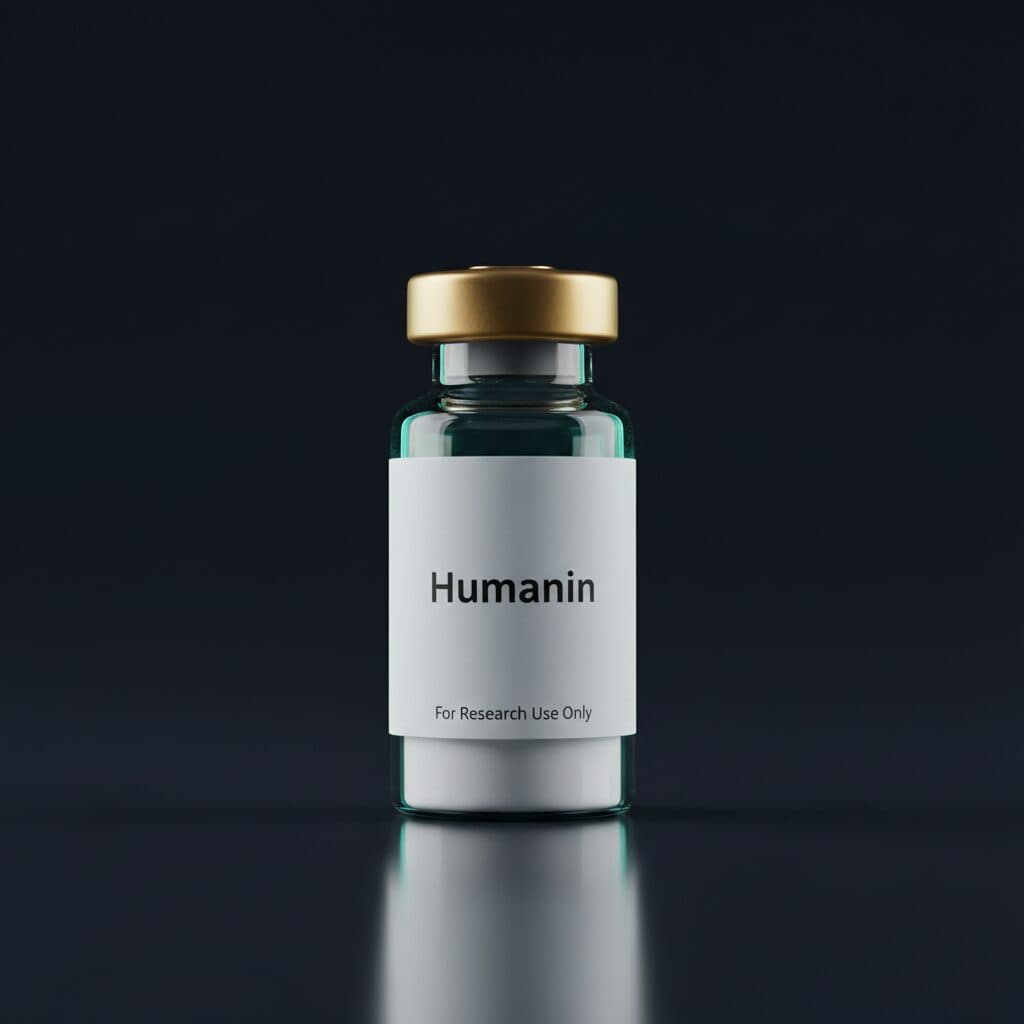
Humanin 10mg
Brezplačna dostava za naročila nad 200 €
- Če izdelek ne ustreza specifikaciji na svojem objavljenem certifikatu COA, nas kontaktirajte s številko svoje serije: preverimo ga glede na poročilo te serije in brezplačno zamenjamo vsak izdelek, ki mu ne ustreza.
- V 48 urah od dostave nas kontaktirajte s fotografijami zunanje škatle, notranje embalaže in vseh prizadetih vial s čitljivimi nalepkami. Potrjeno poškodbo med prevozom brezplačno zamenjamo.
3–7 dni v večino držav EU · 10–14 dni v nordijske in baltske države
Standardna dostava v EU od 4,99 € (RO) · osrednja EU (GLS) 17,99 € · nordijske in baltske države 12,99 €–15,99 € · Odprema v 1–2 delovnih dneh · Brezplačna dostava nad 200,00 € · brez carinske dokumentacije (EU) · prek omrežja prevoznikov v EU
Do brezplačne dostave nad 200,00 € vam manjka še 200,00 €. Pod tem zneskom standardna dostava v EU stane 17,99 € (GLS, večina EU).
Kako delujeta Paysera in SEPA
- Plačajte: opravite ročno nakazilo SEPA na IBAN, ki vam ga pošljemo po e-pošti, ali, kadar je za vaš naslov na voljo ob zaključku nakupa, odobrite nakazilo SEPA v svoji banki prek gostujoče strani Paysera.
- Potrdimo: Paysera nas takoj obvesti ali pa ročno nakazilo povežemo z naročilom, ko prispe (običajno 1 delovni dan).
- Odpremimo: potrjena naročila običajno pošljemo v 1-2 delovnih dneh.
Plačila s kartico trenutno niso na voljo. Ta blagajna ne uporablja nobenega ponudnika za obdelavo plačil s kartico.
Research-grade Humanin. Class-level specification ≥98%. Lyophilized powder in sealed glass vial. For laboratory research use only. Not for human consumption.
| Količina | Cena na kos | Skupaj | Prihranek |
|---|---|---|---|
| 1 unit | 80,49 € | 80,49 € | -- |
| 3+ | 76,47 € | 229,40 € | 5 % popusta |
| 5+Najbolj priljubljeno | 72,44 € | 362,21 € | 10 % popusta |
| 10+ | 68,42 € | 684,17 € | 15 % popusta |
Pomembno obvestilo
Ta izdelek je namenjen samo za laboratorijsko in raziskovalno uporabo. Ni za uporabo pri ljudeh ali v veterini. Z nakupom potrjujete, da bo ta izdelek uporabljen izključno za in-vitro raziskovalne namene.
Zaradi pravnih in regulativnih zahtev tega izdelka ni mogoče poslati v: Hrvaška, Italija, Litva in Slovenija.
Potrebna rekonstitucija
Ta peptid se odpremi liofiliziran (suh prašek) in ga je treba pred uporabo rekonstituirati z bakteriostatsko vodo. Bakteriostatska voda se prodaja ločeno.
Kdaj ta izdelek morda ni primeren za vašo raziskavo
- ⚠Če vaša raziskava zahteva material kakovosti GMP za klinično uporabo — peptidi raziskovalne kakovosti niso namenjeni klinični uporabi.
- ⚠Če vaš laboratorij nima ustreznega hladnega shranjevanja (zamrzovalnik -20 °C) — stabilnost tega peptida je lahko pri višjih temperaturah ogrožena.
- ⚠Če vaš raziskovalni protokol zahteva referenčne standarde, ki jih je odobrila FDA — obrnite se na USP ali ponudnika certificiranega referenčnega materiala.
Za izbrane serije so objavljena laboratorijska poročila. V vsakem poročilu preverite rezultat in navedeno metodo. Samo za raziskovalne namene.
Poročilo Janoshik objavljeno, ko je na voljo
Odprema v 1–2 delovnih dneh, dostava od 4,99 € v Romuniji, od 12,99 € drugod po Evropi
Evidentirana specifikacija na ravni razreda; neodvisno poročilo Janoshik za izbrane serije
O izdelku Humanin 10mg
Humanin is a 21-amino acid peptide encoded not in the nuclear genome but in the mitochondrial 16S rRNA gene -- an unusual origin that has made it the founding member of a class of mitochondria-derived peptides (MDPs). It was originally identified in 2001 by researchers screening for factors that protect neurons from Alzheimer's disease-related cell death. The name reflects this discovery context: a peptide that made cells "more human" by rescuing them from neurodegeneration.
Humanin acts through multiple receptor pathways. It binds the formyl peptide receptor-like 1 (FPRL1/FPR2), the CNTF receptor alpha subunit, and has intracellular targets as well. In Alzheimer's disease cell models, it has been reported to protect neurons from amyloid-beta toxicity, ADDL (amyloid-derived diffusible ligand) toxicity, and oxidative stress. Beyond neuroprotection, preclinical studies report anti-apoptotic, insulin-signalling and anti-inflammatory effects in cell and animal models. Circulating humanin levels have been reported to decline with age, which has made it a subject of interest in mitochondrial aging research.
SHLP2 (small humanin-like peptide 2) and other humanin analogues are also being studied, but humanin itself remains the most characterized of the MDPs. It has been studied in rodent models for cognitive preservation, metabolic improvement in type 2 diabetes models, and cardiovascular protection.
Specifications
| Parameter | Value |
|---|---|
| Compound | Humanin (mitochondria-derived peptide, 21 amino acids) |
| Amount per Vial | 10mg |
| Purity | ≥98% (class-level specification) |
| Format | Lyophilized powder |
| Reconstitution | Sterile water or saline |
| Storage | -20°C; 2-8°C after reconstitution |
Storage
Store at -20°C before reconstitution. Refrigerate at 2-8°C after reconstitution and use within 28 days. Stable for 24+ months as lyophilized powder under proper conditions.
What makes humanin unusual compared to other peptides?
Most bioactive peptides are encoded in nuclear genes. Humanin is encoded within the mitochondrial genome -- specifically within the 16S ribosomal RNA gene -- which is an unusual location for a protein-coding sequence. This mitochondrial origin makes it the founding member of a class called mitochondria-derived peptides (MDPs). The mitochondrial genome is ancient and highly conserved, so mitochondria-derived signaling molecules have particular biological significance. Humanin's presence in this location suggests ancient origins for mitochondria-to-nucleus and mitochondria-to-extracellular signaling.
What were the original Alzheimer's disease findings for humanin?
Humanin was identified in 2001 by Nishimoto and colleagues through expression cloning from occipital cortex cDNA of an Alzheimer's patient. The screening assay looked for factors that could protect neurons from cell death induced by familial Alzheimer's mutations (V642I APP). Humanin potently rescued neurons from multiple Alzheimer's-related cytotoxic stimuli including amyloid-beta peptides, ADDL oligomers, and familial AD gene mutations. Subsequent work showed it works through FPRL1/FPR2 receptor signaling and intracellular IGFBP3 binding. These neuroprotective effects are among the most replicated findings in the humanin literature.
Why do humanin levels decline with aging?
Humanin is produced by mitochondria, and mitochondrial function and abundance decline with aging -- a process called mitochondrial aging or mitochondrial dysfunction in the context of aging biology. As mitochondrial function decreases, production of mitochondria-derived peptides including humanin appears to decrease as well. Several studies have measured circulating humanin in human populations and found inverse correlations with age and with aging-related diseases. Whether declining humanin contributes to aging pathology or is simply a consequence of aging mitochondria is an active research question.
Humanin is supplied for laboratory research use only. Not approved for human use. Handle in compliance with institutional biosafety guidelines.
Povzetek specifikacije
O izdelku Humanin 10mg
Humanin is a 21-amino acid peptide encoded not in the nuclear genome but in the mitochondrial 16S rRNA gene -- an unusual origin that has made it the founding member of a class of mitochondria-derived peptides (MDPs). It was originally identified in 2001 by researchers screening for factors that protect neurons from Alzheimer's disease-related cell death. The name reflects this discovery context: a peptide that made cells "more human" by rescuing them from neurodegeneration.
Humanin acts through multiple receptor pathways. It binds the formyl peptide receptor-like 1 (FPRL1/FPR2), the CNTF receptor alpha subunit, and has intracellular targets as well. In Alzheimer's disease cell models, it has been reported to protect neurons from amyloid-beta toxicity, ADDL (amyloid-derived diffusible ligand) toxicity, and oxidative stress. Beyond neuroprotection, preclinical studies report anti-apoptotic, insulin-signalling and anti-inflammatory effects in cell and animal models. Circulating humanin levels have been reported to decline with age, which has made it a subject of interest in mitochondrial aging research.
SHLP2 (small humanin-like peptide 2) and other humanin analogues are also being studied, but humanin itself remains the most characterized of the MDPs. It has been studied in rodent models for cognitive preservation, metabolic improvement in type 2 diabetes models, and cardiovascular protection.
Specifications
| Parameter | Value |
|---|---|
| Compound | Humanin (mitochondria-derived peptide, 21 amino acids) |
| Amount per Vial | 10mg |
| Purity | ≥98% (class-level specification) |
| Format | Lyophilized powder |
| Reconstitution | Sterile water or saline |
| Storage | -20°C; 2-8°C after reconstitution |
Storage
Store at -20°C before reconstitution. Refrigerate at 2-8°C after reconstitution and use within 28 days. Stable for 24+ months as lyophilized powder under proper conditions.
What makes humanin unusual compared to other peptides?
Most bioactive peptides are encoded in nuclear genes. Humanin is encoded within the mitochondrial genome -- specifically within the 16S ribosomal RNA gene -- which is an unusual location for a protein-coding sequence. This mitochondrial origin makes it the founding member of a class called mitochondria-derived peptides (MDPs). The mitochondrial genome is ancient and highly conserved, so mitochondria-derived signaling molecules have particular biological significance. Humanin's presence in this location suggests ancient origins for mitochondria-to-nucleus and mitochondria-to-extracellular signaling.
What were the original Alzheimer's disease findings for humanin?
Humanin was identified in 2001 by Nishimoto and colleagues through expression cloning from occipital cortex cDNA of an Alzheimer's patient. The screening assay looked for factors that could protect neurons from cell death induced by familial Alzheimer's mutations (V642I APP). Humanin potently rescued neurons from multiple Alzheimer's-related cytotoxic stimuli including amyloid-beta peptides, ADDL oligomers, and familial AD gene mutations. Subsequent work showed it works through FPRL1/FPR2 receptor signaling and intracellular IGFBP3 binding. These neuroprotective effects are among the most replicated findings in the humanin literature.
Why do humanin levels decline with aging?
Humanin is produced by mitochondria, and mitochondrial function and abundance decline with aging -- a process called mitochondrial aging or mitochondrial dysfunction in the context of aging biology. As mitochondrial function decreases, production of mitochondria-derived peptides including humanin appears to decrease as well. Several studies have measured circulating humanin in human populations and found inverse correlations with age and with aging-related diseases. Whether declining humanin contributes to aging pathology or is simply a consequence of aging mitochondria is an active research question.
Humanin is supplied for laboratory research use only. Not approved for human use. Handle in compliance with institutional biosafety guidelines.
Zaupanje raziskovalcev
Zakaj raziskovalci izberejo CertaPeptides
Kdo to dejansko testira?
Izbrane lote neodvisno preverja Janoshik Analytical (Češka) in jih objavi na javnem portalu Janoshik. Drugi loti se odpremijo s specifikacijo dobaviteljeve serije. Objavljeno steno si oglejte na /coa.
Ogled COA →Kaj pa, če dobim napačno serijo?
Vsaka etiketa na viali nosi kodo. Poiščite jo na naši strani za preverjanje: ta prikaže, kar CertaPeptides objavlja za to kodo, pri umaknjeni seriji pa tudi, da je bila umaknjena, in zakaj. Če je vaša serija umaknjena ali če iskanje kode z vaše etikete ne najde ničesar, nam to kodo pošljite po e-pošti.
Ogled COA →Od kod se odpremlja?
Iz Romunije (EU). Smo CERTALAB SRL, CUI 54169956, registrirani za DDV. Sameday za Romunijo, GLS za večino destinacij v EU, TCE Worldwide za preostale čezmejne trge v EU in zunaj EU (Združeno kraljestvo, Švica). Dostava 1–15 delovnih dni glede na destinacijo — natančno okno je prikazano ob zaključku naročila.
Podrobnosti o dostavi →Kaj pa, če pride do težave?
Imate 14-dnevno pravico do odstopa po OUG 34/2014 (romunsko/EU potrošniško pravo), z možnostjo eskalacije na ANPC in izvensodnega reševanja sporov (SAL). Kontaktirajte nas na support@certapeptides.com.
Politika vračil →Podatki o izdelku
Ta izdelek je namenjen izključno znanstvenoraziskovalnim in razvojnim namenom. Gre za kemično snov, ki se ne sme uporabljati kot zdravilo, učinkovina ali sestavina v katerem koli izdelku, namenjenem prehrani ljudi ali živali. Raziskovalci morajo s to spojino ravnati skladno s svojimi institucionalnimi smernicami za biološko varnost. Uporabljajte jo le v ustrezno opremljenih laboratorijskih okoljih z ustrezno osebno zaščitno opremo.