Verbinding van onderzoekskwaliteit. Uitsluitend voor laboratoriumgebruik. Niet bedoeld voor gebruik bij mensen of dieren, inname of injectie. Er worden geen medische claims gemaakt of geïmpliceerd.
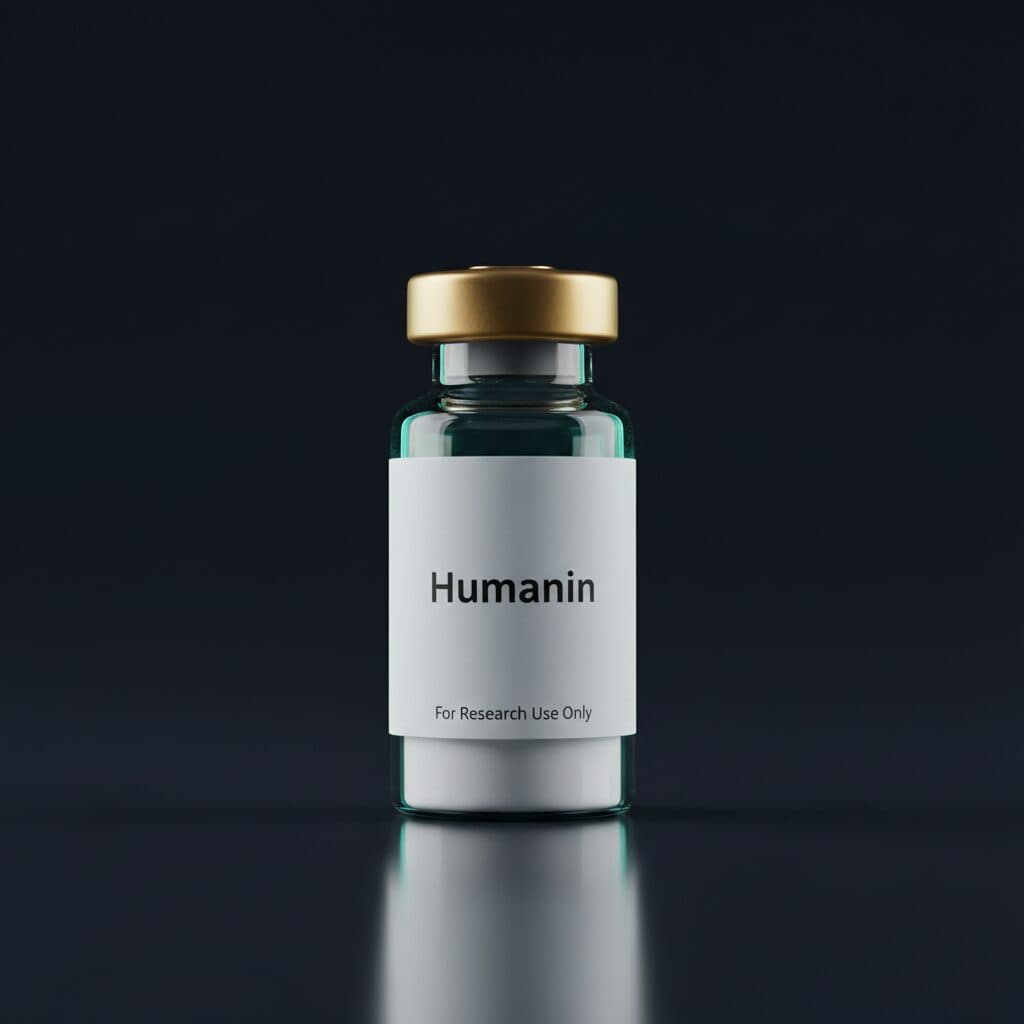
Humanin 10mg
Gratis verzending bij bestellingen boven €200
- Als een product niet overeenkomt met de specificatie op het gepubliceerde COA, neem dan contact met ons op met uw batchnummer: wij onderzoeken dit aan de hand van het rapport van de partij en vervangen kosteloos elk product dat niet aan de specificatie voldoet.
- Neem binnen 48 uur na levering contact met ons op met foto's van de buitenste doos, de binnenverpakking en eventuele aangetaste flacons met leesbare etiketten. Bevestigde transportschade wordt kosteloos vervangen.
3–7 dagen naar de meeste EU-landen · 10–14 dagen naar de Noordse landen en de Baltische staten
Standaardverzending in de EU vanaf € 4,99 (RO) · kernlanden van de EU (GLS) € 17,99 · Noordse landen en Baltische staten € 12,99–€ 15,99 · Verzending binnen 1–2 werkdagen · Gratis verzending vanaf € 200,00 · geen douanepapieren (EU) · via het netwerk van vervoerders in de EU
Nog € 200,00 tot gratis verzending vanaf € 200,00. Daaronder kost standaardverzending in de EU € 17,99 (GLS, de meeste EU-landen).
Zo werken Paysera en SEPA
- Betalen: doe een handmatige SEPA-overschrijving naar de IBAN die wij u e-mailen, of, als deze optie bij het afrekenen voor uw adres wordt aangeboden, keur via de gehoste pagina van Paysera een SEPA-overschrijving goed in uw eigen bank.
- Wij bevestigen: Paysera stelt ons direct op de hoogte, of wij koppelen een handmatige overschrijving aan uw bestelling zodra die binnenkomt (meestal 1 werkdag).
- Wij verzenden: bevestigde bestellingen worden doorgaans binnen 1-2 werkdagen verzonden.
Kaartbetalingen worden momenteel niet aangeboden. Bij het afrekenen is geen verwerker voor kaartbetalingen gekoppeld.
Research-grade Humanin. Class-level specification ≥98%. Lyophilized powder in sealed glass vial. For laboratory research use only. Not for human consumption.
| Aantal | Stukprijs | Totaal | Besparing |
|---|---|---|---|
| 1 unit | € 80,49 | € 80,49 | -- |
| 3+ | € 76,47 | € 229,40 | 5% korting |
| 5+Meest gekozen | € 72,44 | € 362,21 | 10% korting |
| 10+ | € 68,42 | € 684,17 | 15% korting |
Belangrijke mededeling
Dit product is uitsluitend bestemd voor laboratorium- en onderzoeksgebruik. Niet voor gebruik bij mensen of dieren. Door dit product te kopen, bevestigt u dat het uitsluitend zal worden gebruikt voor in-vitro onderzoeksdoeleinden.
Vanwege wettelijke en regelgevende vereisten kan dit product niet worden verzonden naar: Italië, Kroatië, Litouwen en Slovenië.
Reconstitutie vereist
Dit peptide wordt gelyofiliseerd verzonden (droog poeder) en vereist bacteriostatisch water om te reconstitueren vóór gebruik. BAC-water wordt apart verkocht.
Wanneer dit product mogelijk niet geschikt is voor uw onderzoek
- ⚠Als uw onderzoek materiaal van GMP-kwaliteit vereist voor klinische toepassingen — peptiden van onderzoekskwaliteit zijn niet bedoeld voor klinisch gebruik.
- ⚠Als uw lab geen adequate koude opslag heeft (-20°C-vriezer) — de stabiliteit van dit peptide kan bij hogere temperaturen worden aangetast.
- ⚠Als uw onderzoeksprotocol door de FDA goedgekeurde referentiestandaarden vereist — neem contact op met USP of een leverancier van gecertificeerd referentiemateriaal.
Voor geselecteerde partijen zijn laboratoriumrapporten gepubliceerd. Raadpleeg elk rapport voor het resultaat en de vermelde methode. Uitsluitend voor onderzoeksdoeleinden.
Janoshik-rapport gepubliceerd zodra beschikbaar
Verzending binnen 1–2 werkdagen, levering vanaf € 4,99 in Roemenië, vanaf € 12,99 in de rest van Europa
Vastgelegde specificatie op klasseniveau; onafhankelijk Janoshik-rapport over geselecteerde partijen
Over Humanin 10mg
Humanin is a 21-amino acid peptide encoded not in the nuclear genome but in the mitochondrial 16S rRNA gene -- an unusual origin that has made it the founding member of a class of mitochondria-derived peptides (MDPs). It was originally identified in 2001 by researchers screening for factors that protect neurons from Alzheimer's disease-related cell death. The name reflects this discovery context: a peptide that made cells "more human" by rescuing them from neurodegeneration.
Humanin acts through multiple receptor pathways. It binds the formyl peptide receptor-like 1 (FPRL1/FPR2), the CNTF receptor alpha subunit, and has intracellular targets as well. In Alzheimer's disease cell models, it has been reported to protect neurons from amyloid-beta toxicity, ADDL (amyloid-derived diffusible ligand) toxicity, and oxidative stress. Beyond neuroprotection, preclinical studies report anti-apoptotic, insulin-signalling and anti-inflammatory effects in cell and animal models. Circulating humanin levels have been reported to decline with age, which has made it a subject of interest in mitochondrial aging research.
SHLP2 (small humanin-like peptide 2) and other humanin analogues are also being studied, but humanin itself remains the most characterized of the MDPs. It has been studied in rodent models for cognitive preservation, metabolic improvement in type 2 diabetes models, and cardiovascular protection.
Specifications
| Parameter | Value |
|---|---|
| Compound | Humanin (mitochondria-derived peptide, 21 amino acids) |
| Amount per Vial | 10mg |
| Purity | ≥98% (class-level specification) |
| Format | Lyophilized powder |
| Reconstitution | Sterile water or saline |
| Storage | -20°C; 2-8°C after reconstitution |
Storage
Store at -20°C before reconstitution. Refrigerate at 2-8°C after reconstitution and use within 28 days. Stable for 24+ months as lyophilized powder under proper conditions.
What makes humanin unusual compared to other peptides?
Most bioactive peptides are encoded in nuclear genes. Humanin is encoded within the mitochondrial genome -- specifically within the 16S ribosomal RNA gene -- which is an unusual location for a protein-coding sequence. This mitochondrial origin makes it the founding member of a class called mitochondria-derived peptides (MDPs). The mitochondrial genome is ancient and highly conserved, so mitochondria-derived signaling molecules have particular biological significance. Humanin's presence in this location suggests ancient origins for mitochondria-to-nucleus and mitochondria-to-extracellular signaling.
What were the original Alzheimer's disease findings for humanin?
Humanin was identified in 2001 by Nishimoto and colleagues through expression cloning from occipital cortex cDNA of an Alzheimer's patient. The screening assay looked for factors that could protect neurons from cell death induced by familial Alzheimer's mutations (V642I APP). Humanin potently rescued neurons from multiple Alzheimer's-related cytotoxic stimuli including amyloid-beta peptides, ADDL oligomers, and familial AD gene mutations. Subsequent work showed it works through FPRL1/FPR2 receptor signaling and intracellular IGFBP3 binding. These neuroprotective effects are among the most replicated findings in the humanin literature.
Why do humanin levels decline with aging?
Humanin is produced by mitochondria, and mitochondrial function and abundance decline with aging -- a process called mitochondrial aging or mitochondrial dysfunction in the context of aging biology. As mitochondrial function decreases, production of mitochondria-derived peptides including humanin appears to decrease as well. Several studies have measured circulating humanin in human populations and found inverse correlations with age and with aging-related diseases. Whether declining humanin contributes to aging pathology or is simply a consequence of aging mitochondria is an active research question.
Humanin is supplied for laboratory research use only. Not approved for human use. Handle in compliance with institutional biosafety guidelines.
Specificatieoverzicht
Over Humanin 10mg
Humanin is a 21-amino acid peptide encoded not in the nuclear genome but in the mitochondrial 16S rRNA gene -- an unusual origin that has made it the founding member of a class of mitochondria-derived peptides (MDPs). It was originally identified in 2001 by researchers screening for factors that protect neurons from Alzheimer's disease-related cell death. The name reflects this discovery context: a peptide that made cells "more human" by rescuing them from neurodegeneration.
Humanin acts through multiple receptor pathways. It binds the formyl peptide receptor-like 1 (FPRL1/FPR2), the CNTF receptor alpha subunit, and has intracellular targets as well. In Alzheimer's disease cell models, it has been reported to protect neurons from amyloid-beta toxicity, ADDL (amyloid-derived diffusible ligand) toxicity, and oxidative stress. Beyond neuroprotection, preclinical studies report anti-apoptotic, insulin-signalling and anti-inflammatory effects in cell and animal models. Circulating humanin levels have been reported to decline with age, which has made it a subject of interest in mitochondrial aging research.
SHLP2 (small humanin-like peptide 2) and other humanin analogues are also being studied, but humanin itself remains the most characterized of the MDPs. It has been studied in rodent models for cognitive preservation, metabolic improvement in type 2 diabetes models, and cardiovascular protection.
Specifications
| Parameter | Value |
|---|---|
| Compound | Humanin (mitochondria-derived peptide, 21 amino acids) |
| Amount per Vial | 10mg |
| Purity | ≥98% (class-level specification) |
| Format | Lyophilized powder |
| Reconstitution | Sterile water or saline |
| Storage | -20°C; 2-8°C after reconstitution |
Storage
Store at -20°C before reconstitution. Refrigerate at 2-8°C after reconstitution and use within 28 days. Stable for 24+ months as lyophilized powder under proper conditions.
What makes humanin unusual compared to other peptides?
Most bioactive peptides are encoded in nuclear genes. Humanin is encoded within the mitochondrial genome -- specifically within the 16S ribosomal RNA gene -- which is an unusual location for a protein-coding sequence. This mitochondrial origin makes it the founding member of a class called mitochondria-derived peptides (MDPs). The mitochondrial genome is ancient and highly conserved, so mitochondria-derived signaling molecules have particular biological significance. Humanin's presence in this location suggests ancient origins for mitochondria-to-nucleus and mitochondria-to-extracellular signaling.
What were the original Alzheimer's disease findings for humanin?
Humanin was identified in 2001 by Nishimoto and colleagues through expression cloning from occipital cortex cDNA of an Alzheimer's patient. The screening assay looked for factors that could protect neurons from cell death induced by familial Alzheimer's mutations (V642I APP). Humanin potently rescued neurons from multiple Alzheimer's-related cytotoxic stimuli including amyloid-beta peptides, ADDL oligomers, and familial AD gene mutations. Subsequent work showed it works through FPRL1/FPR2 receptor signaling and intracellular IGFBP3 binding. These neuroprotective effects are among the most replicated findings in the humanin literature.
Why do humanin levels decline with aging?
Humanin is produced by mitochondria, and mitochondrial function and abundance decline with aging -- a process called mitochondrial aging or mitochondrial dysfunction in the context of aging biology. As mitochondrial function decreases, production of mitochondria-derived peptides including humanin appears to decrease as well. Several studies have measured circulating humanin in human populations and found inverse correlations with age and with aging-related diseases. Whether declining humanin contributes to aging pathology or is simply a consequence of aging mitochondria is an active research question.
Humanin is supplied for laboratory research use only. Not approved for human use. Handle in compliance with institutional biosafety guidelines.
Vertrouwen van onderzoekers
Waarom onderzoekers voor CertaPeptides kiezen
Wie test dit eigenlijk?
Geselecteerde partijen worden onafhankelijk geverifieerd door Janoshik Analytical (Tsjechië) en gepubliceerd op het openbare Janoshik-portaal. Andere partijen worden geleverd met de batchspecificatie van de leverancier. Zie /coa voor de gepubliceerde muur.
COA's bekijken →Wat als ik de verkeerde batch krijg?
Elk flaconlabel draagt een code. Zoek die op via onze verificatiepagina: die toont wat CertaPeptides voor die code publiceert en, bij een teruggetrokken partij, dat de partij is teruggetrokken en waarom. Is uw partij teruggetrokken, of levert de code op uw label niets op, mail ons dan die code.
COA's bekijken →Vanwaar wordt het verzonden?
Roemenië (EU). Wij zijn CERTALAB SRL, CUI 54169956, btw-geregistreerd. Sameday voor Roemenië, GLS voor de meeste EU-bestemmingen, TCE Worldwide voor de overige grensoverschrijdende EU- en niet-EU-markten (VK, Zwitserland). Bezorging 1–15 werkdagen afhankelijk van de bestemming — exacte termijn getoond bij het afrekenen.
Verzendgegevens →Wat als er een probleem is?
U heeft een herroepingsrecht van 14 dagen op grond van OUG 34/2014 (Roemeens/EU-consumentenrecht), met mogelijkheid tot escalatie via ANPC en tot alternatieve geschillenbeslechting (SAL). Neem contact met ons op via support@certapeptides.com.
Retourbeleid →Productinformatie
Dit product is uitsluitend bedoeld voor wetenschappelijk onderzoek en ontwikkeling. Het is een chemische stof die niet mag worden gebruikt als geneesmiddel, medicijn, werkzame stof of ingrediënt in enig product bedoeld voor menselijke of dierlijke consumptie. Onderzoekers dienen deze verbinding te hanteren in overeenstemming met hun institutionele bioveiligheidsrichtlijnen. Gebruik deze uitsluitend in goed uitgeruste laboratoriumomgevingen met geschikte persoonlijke beschermingsmiddelen.