Verbinding van onderzoekskwaliteit. Uitsluitend voor laboratoriumgebruik. Niet bedoeld voor gebruik bij mensen of dieren, inname of injectie. Er worden geen medische claims gemaakt of geïmpliceerd.
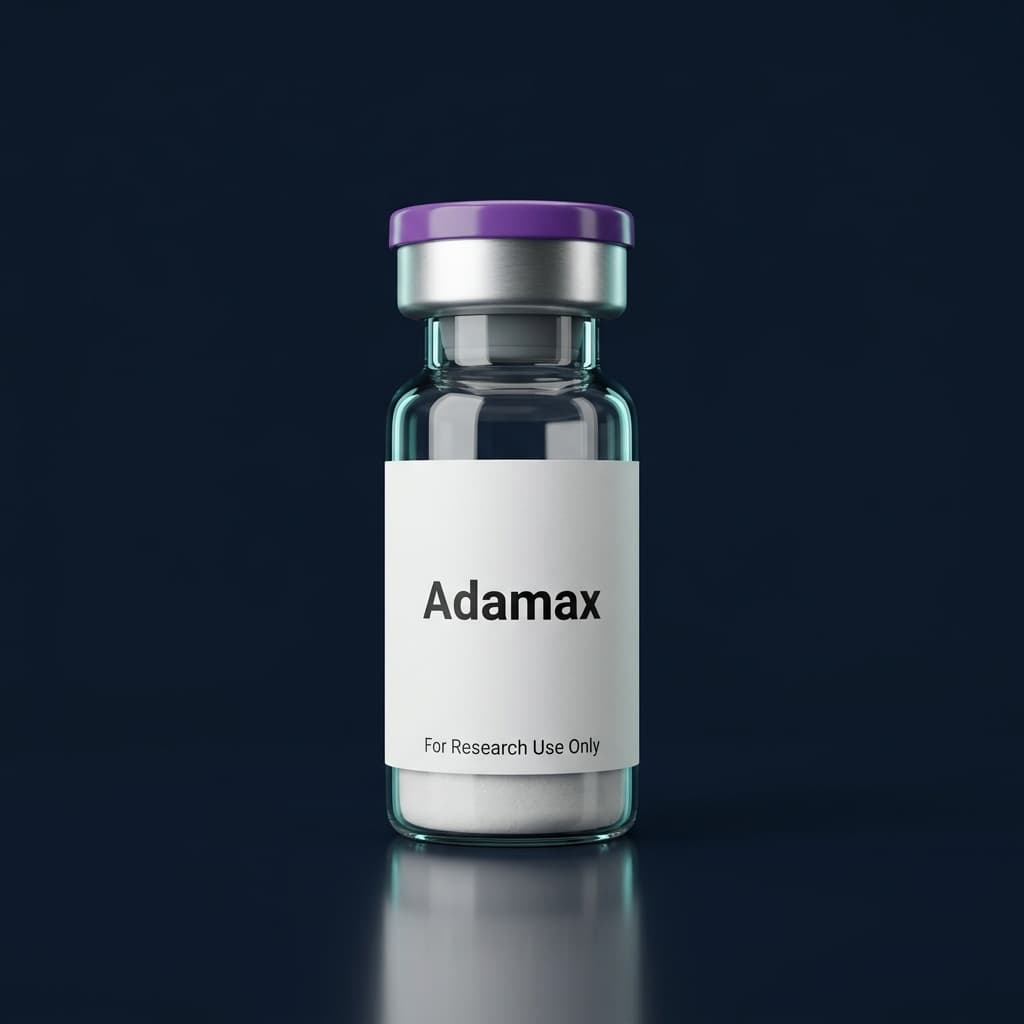
Adamax
Het lab identificeerde dit als de 984 Da-vorm van Adamax, zonder adamantaangroep. Onze partij van 10 mg is deze vorm.
Gratis verzending bij bestellingen boven €200
- Als een product niet overeenkomt met de specificatie op het gepubliceerde COA, neem dan contact met ons op met uw batchnummer: wij onderzoeken dit aan de hand van het rapport van de partij en vervangen kosteloos elk product dat niet aan de specificatie voldoet.
- Neem binnen 48 uur na levering contact met ons op met foto's van de buitenste doos, de binnenverpakking en eventuele aangetaste flacons met leesbare etiketten. Bevestigde transportschade wordt kosteloos vervangen.
Het lab identificeerde dit als de 984 Da-vorm van Adamax, zonder adamantaangroep. Onze partij van 10 mg is deze vorm.
3–7 dagen naar de meeste EU-landen · 10–14 dagen naar de Noordse landen en de Baltische staten
Standaardverzending in de EU vanaf € 4,99 (RO) · kernlanden van de EU (GLS) € 17,99 · Noordse landen en Baltische staten € 12,99–€ 15,99 · Verzending binnen 1–2 werkdagen · Gratis verzending vanaf € 200,00 · geen douanepapieren (EU) · via het netwerk van vervoerders in de EU
Nog € 200,00 tot gratis verzending vanaf € 200,00. Daaronder kost standaardverzending in de EU € 17,99 (GLS, de meeste EU-landen).
Zo werken Paysera en SEPA
- Betalen: doe een handmatige SEPA-overschrijving naar de IBAN die wij u e-mailen, of, als deze optie bij het afrekenen voor uw adres wordt aangeboden, keur via de gehoste pagina van Paysera een SEPA-overschrijving goed in uw eigen bank.
- Wij bevestigen: Paysera stelt ons direct op de hoogte, of wij koppelen een handmatige overschrijving aan uw bestelling zodra die binnenkomt (meestal 1 werkdag).
- Wij verzenden: bevestigde bestellingen worden doorgaans binnen 1-2 werkdagen verzonden.
Kaartbetalingen worden momenteel niet aangeboden. Bij het afrekenen is geen verwerker voor kaartbetalingen gekoppeld.
Research-grade Adamax, 984 Da form without the adamantane group. Class-level specification ≥97%; selected lots independently tested. Lyophilized powder in sealed glass vial. For research purposes only. Not for human consumption.
| Aantal | Stukprijs | Totaal | Besparing |
|---|---|---|---|
| 1 stuk | € 49,99 | € 49,99 | -- |
| 3+ | € 47,49 | € 142,47 | 5% korting |
| 5+Meest gekozen | € 44,99 | € 224,95 | 10% korting |
| 10+ | € 42,49 | € 424,92 | 15% korting |
Belangrijke mededeling
Dit product is uitsluitend bestemd voor onderzoeksdoeleinden. Niet voor gebruik bij mensen of dieren. Door dit product te kopen, bevestigt u dat het uitsluitend zal worden gebruikt voor in-vitro onderzoeksdoeleinden.
Vanwege wettelijke en regelgevende vereisten kan dit product niet worden verzonden naar: Italië.
Reconstitutie vereist
Dit peptide wordt gelyofiliseerd verzonden (droog poeder) en vereist bacteriostatisch water om te reconstitueren vóór gebruik. BAC-water wordt apart verkocht.
Wanneer dit product mogelijk niet geschikt is voor uw onderzoek
- ⚠Als uw onderzoek materiaal van GMP-kwaliteit vereist voor klinische toepassingen — peptiden van onderzoekskwaliteit zijn niet bedoeld voor klinisch gebruik.
- ⚠Als uw lab geen adequate koude opslag heeft (-20°C-vriezer) — de stabiliteit van dit peptide kan bij hogere temperaturen worden aangetast.
- ⚠Als uw onderzoeksprotocol door de FDA goedgekeurde referentiestandaarden vereist — neem contact op met USP of een leverancier van gecertificeerd referentiemateriaal.
Voor geselecteerde partijen zijn laboratoriumrapporten gepubliceerd. Raadpleeg elk rapport voor het resultaat en de vermelde methode. Uitsluitend voor onderzoeksdoeleinden.
Bekijk rapport #241505 op janoshik.com →
Verzending binnen 1–2 werkdagen, levering vanaf € 4,99 in Roemenië, vanaf € 12,99 in de rest van Europa
Vastgelegde specificatie op klasseniveau; onafhankelijk Janoshik-rapport over geselecteerde partijen
Over Adamax
Adamax is a synthetic research peptide in the Semax family. Semax is a heptapeptide built from the ACTH(4-7) fragment extended with Pro-Gly-Pro, and Adamax is offered in more than one form under the same name: one carries an adamantane group, one does not.
This product is the 984 Da form, without the adamantane group. Janoshik identified the 10mg lot CP-2609-ADM10 as this form in report #241505.
Research use is in laboratory studies of Semax-family peptides, including comparisons between modified and unmodified analogues and studies of peptide stability.
Specifications
| Parameter | Value |
|---|---|
| Compound | Adamax, 984 Da form (no adamantane group) |
| Amount per Vial | 10mg |
| Purity | ≥97% (class-level specification) |
| Format | Lyophilized powder |
| Storage | -20°C; 2-8°C after reconstitution |
Storage
Store at -20°C before reconstitution. Refrigerate at 2-8°C after reconstitution.
Adamax is supplied for laboratory research use only. Not approved for human use. Handle in compliance with institutional biosafety guidelines.
Specificatieoverzicht
Over Adamax
Adamax is a synthetic research peptide in the Semax family. Semax is a heptapeptide built from the ACTH(4-7) fragment extended with Pro-Gly-Pro, and Adamax is offered in more than one form under the same name: one carries an adamantane group, one does not.
This product is the 984 Da form, without the adamantane group. Janoshik identified the 10mg lot CP-2609-ADM10 as this form in report #241505.
Research use is in laboratory studies of Semax-family peptides, including comparisons between modified and unmodified analogues and studies of peptide stability.
Specifications
| Parameter | Value |
|---|---|
| Compound | Adamax, 984 Da form (no adamantane group) |
| Amount per Vial | 10mg |
| Purity | ≥97% (class-level specification) |
| Format | Lyophilized powder |
| Storage | -20°C; 2-8°C after reconstitution |
Storage
Store at -20°C before reconstitution. Refrigerate at 2-8°C after reconstitution.
Adamax is supplied for laboratory research use only. Not approved for human use. Handle in compliance with institutional biosafety guidelines.
Vertrouwen van onderzoekers
Waarom onderzoekers voor CertaPeptides kiezen
Wie test dit eigenlijk?
Geselecteerde partijen worden onafhankelijk geverifieerd door Janoshik Analytical (Tsjechië) en gepubliceerd op het openbare Janoshik-portaal. Andere partijen worden geleverd met de batchspecificatie van de leverancier. Zie /coa voor de gepubliceerde muur.
COA's bekijken →Wat als ik de verkeerde batch krijg?
Elk flaconlabel draagt een code. Zoek die op via onze verificatiepagina: die toont wat CertaPeptides voor die code publiceert en, bij een teruggetrokken partij, dat de partij is teruggetrokken en waarom. Is uw partij teruggetrokken, of levert de code op uw label niets op, mail ons dan die code.
COA's bekijken →Vanwaar wordt het verzonden?
Roemenië (EU). Wij zijn CERTALAB SRL, CUI 54169956, btw-geregistreerd. Sameday voor Roemenië, GLS voor de meeste EU-bestemmingen, TCE Worldwide voor de overige grensoverschrijdende EU- en niet-EU-markten (VK, Zwitserland). Bezorging 1–15 werkdagen afhankelijk van de bestemming — exacte termijn getoond bij het afrekenen.
Verzendgegevens →Wat als er een probleem is?
U heeft een herroepingsrecht van 14 dagen op grond van OUG 34/2014 (Roemeens/EU-consumentenrecht), met mogelijkheid tot escalatie via ANPC en tot alternatieve geschillenbeslechting (SAL). Neem contact met ons op via support@certapeptides.com.
Retourbeleid →Productinformatie
Dit product is uitsluitend bedoeld voor wetenschappelijk onderzoek en ontwikkeling. Het is een chemische stof die niet mag worden gebruikt als geneesmiddel, medicijn, werkzame stof of ingrediënt in enig product bedoeld voor menselijke of dierlijke consumptie. Onderzoekers dienen deze verbinding te hanteren in overeenstemming met hun institutionele bioveiligheidsrichtlijnen. Gebruik deze uitsluitend in goed uitgeruste laboratoriumomgevingen met geschikte persoonlijke beschermingsmiddelen.