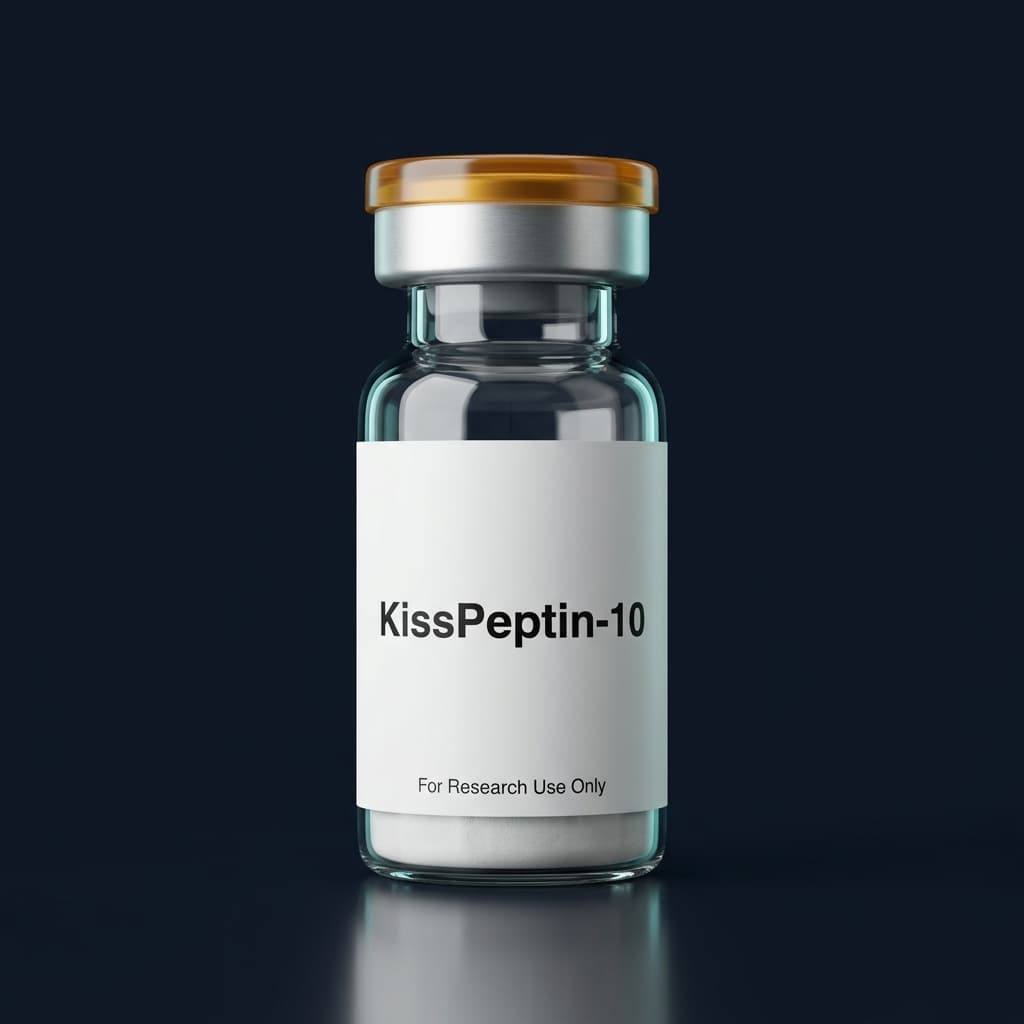
Kutatási minőségű vegyület. Kizárólag laboratóriumi felhasználásra. Nem emberi vagy állati felhasználásra, lenyelésre vagy injektálásra szánva. Nem teszünk és nem sugallunk semmilyen orvosi állítást.
KissPeptin-10
Ingyenes szállítás 200 € feletti rendelésekre
- Ha egy termék nem felel meg a közzétett COA-ján szereplő specifikációnak, vegye fel velünk a kapcsolatot a tételszámával: a tétel jelentése alapján kivizsgáljuk, és díjmentesen kicseréljük az annak meg nem felelő terméket.
- A kézbesítéstől számított 48 órán belül vegye fel velünk a kapcsolatot a külső doboz, a belső csomagolás és az érintett injekciós üvegek olvasható címkékkel készült fényképeivel. A megerősített szállítási sérülést díjmentesen pótoljuk.
3–7 nap a legtöbb EU-országba · 10–14 nap az északi és a balti államokba
Normál szállítás az EU-ban 4,99 EUR-tól (RO) · fő EU-országok (GLS) 17,99 EUR · északi és balti államok 12,99 EUR–15,99 EUR · Feladás 1–2 munkanapon belül · Ingyenes szállítás 200,00 EUR felett · nincs vámkezelési papírmunka (EU) · az uniós futárszolgálati hálózat útján
Még 200,00 EUR az ingyenes szállításig (200,00 EUR felett). Ez alatt a normál EU-s szállítás díja 17,99 EUR (GLS, a legtöbb EU-ország).
Hogyan működik a Paysera és a SEPA
- Fizetés: küldjön kézi SEPA átutalást az általunk e-mailben megküldött IBAN-számra, vagy, ha a pénztár az Ön címéhez felkínálja, hagyjon jóvá egy SEPA átutalást a saját bankjában a Paysera tárhelyén futó oldalon keresztül.
- Visszaigazolás: a Paysera azonnal értesít minket, a kézi átutalást pedig a beérkezésekor párosítjuk a rendeléssel (általában 1 munkanap).
- Feladás: a visszaigazolt rendeléseket általában 1-2 munkanapon belül feladjuk.
Kártyás fizetést jelenleg nem kínálunk. A pénztárunkban nincs kártyás fizetésfeldolgozó.
Research-grade KissPeptin-10. ≥98% supplier batch specification; selected lots independently tested (99.4% avg across published reports). Lyophilized powder in sealed glass vial. For laboratory research use only. Not for human consumption.
| Mennyiség | Egységár | Végösszeg | Megtakarítás |
|---|---|---|---|
| 1 unit | 35,99 EUR | 35,99 EUR | -- |
| 3+ | 34,19 EUR | 102,57 EUR | 5% kedvezmény |
| 5+Legnépszerűbb | 32,39 EUR | 161,96 EUR | 10% kedvezmény |
| 10+ | 30,59 EUR | 305,92 EUR | 15% kedvezmény |
Fontos figyelmeztetés
Ez a termék kizárólag laboratóriumi és kutatási felhasználásra szolgál. Nem emberi vagy állatorvosi felhasználásra. A vásárlással Ön megerősíti, hogy ezt a terméket kizárólag in-vitro kutatási célokra használja fel.
Jogi és szabályozási követelmények miatt ez a termék nem szállítható ide: Belgium, Dánia, Horvátország, Lengyelország, Litvánia, Olaszország, Portugália, Svédország és Szlovénia.
Feloldás szükséges
Ez a peptid liofilizált (száraz por) formában kerül kiszállításra, és felhasználás előtt bakteriosztatikus vízzel kell feloldani. A BAC-víz külön vásárolható meg.
Amikor ez a termék esetleg nem felel meg a kutatásának
- ⚠Ha a kutatása GMP-minőségű anyagot igényel klinikai alkalmazásokhoz – a kutatási minőségű peptidek nem klinikai felhasználásra szolgálnak.
- ⚠Ha a laborja nem rendelkezik megfelelő hűtött tárolással (-20°C-os fagyasztó) – ennek a peptidnek a stabilitása magasabb hőmérsékleten sérülhet.
- ⚠Ha a vizsgálati protokollja FDA-jóváhagyással rendelkező referenciastandardokat igényel – forduljon az USP-hez vagy egy hitelesített referenciaanyag-szolgáltatóhoz.
Kiválasztott tételekhez közzétett laboratóriumi jelentések érhetők el. Minden jelentésben ellenőrizze az eredményt és a megadott módszert. Kizárólag kutatási célokra.
A(z) #233649 jelentés megtekintése a janoshik.com oldalon →
Feladás 1–2 munkanapon belül, szállítás Romániában 4,99 EUR-tól, Európa többi részén 12,99 EUR-tól
Nyilvántartott osztályszintű specifikáció; független Janoshik-jelentés kiválasztott tételeken
A(z) KissPeptin-10 bemutatása
Kisspeptin-10 is the minimum active fragment of the kisspeptin family -- a 10-amino acid C-terminal peptide derived from the KISS1 gene product. It binds the kisspeptin receptor (GPR54/KISS1R) and is the most potent naturally occurring kisspeptin isoform at this receptor. Kisspeptins are the most important upstream activators of GnRH neurons, making them the master regulators of reproductive function and central integrators of metabolic state with fertility.
The discovery of kisspeptin's role in GnRH regulation in 2003-2004 was a significant advance in reproductive endocrinology. Prior to this, the signal that drove GnRH neurons was not clearly identified. Kisspeptin neurons in the arcuate nucleus and the anteroventral periventricular nucleus receive metabolic and hormonal inputs -- leptin, sex steroids, thyroid hormones, metabolic state -- and translate these into GnRH drive. This makes kisspeptin the integration point between metabolic and reproductive signalling studied in models: how energy balance is coupled to GnRH drive, and how puberty timing relates to body weight in research models.
Research applications include stimulation testing of the HPG axis (kisspeptin-10 stimulation paradigm to assess GnRH neuron function), study of GnRH-axis signalling in hypothalamic hypogonadism models, and research into the neuroendocrine control of puberty and reproduction.
Specifications
| Parameter | Value |
|---|---|
| Compound | Kisspeptin-10 (KISS1 decapeptide, C-terminal fragment) |
| Purity | ≥98% (supplier batch spec; 99.4% avg across independently tested lots) |
| Format | Lyophilized powder |
| Reconstitution | Sterile water or saline |
| Storage | -20°C; 2-8°C after reconstitution |
Storage
Store at -20°C before reconstitution. Refrigerate at 2-8°C after reconstitution and use within 14 days. Protect from repeated freeze-thaw cycles.
How does kisspeptin control GnRH release?
Kisspeptin neurons in the hypothalamus (particularly in the arcuate nucleus for pulsatile GnRH regulation, and the anteroventral periventricular nucleus for the preovulatory LH surge) project directly to GnRH neurons, which express KISS1R. In research models, when kisspeptin binds KISS1R on GnRH neurons it is studied for its role in potently stimulating GnRH release. The arcuate kisspeptin neurons, which also co-express neurokinin B and dynorphin (KNDy neurons), are studied as the GnRH pulse generator -- the coordinated activity associated with pulsatile GnRH secretion that underlies LH and FSH secretion in model systems.
Why is kisspeptin important for understanding metabolic-reproductive connections?
Kisspeptin neurons receive input from leptin receptors, and leptin (the adipocyte hormone that signals nutritional adequacy) is required for normal kisspeptin neuron activity. In leptin-deficient or leptin-resistant states modelled in research, kisspeptin signaling is impaired and GnRH drive is reduced. This is studied to understand why severe nutritional restriction and extreme exercise suppress reproductive signalling in models -- the body uses kisspeptin as a gate through which metabolic status must pass before reproductive function proceeds. Kisspeptin research is central to understanding how energy balance and reproduction are coupled.
What is the kisspeptin stimulation paradigm?
The kisspeptin stimulation paradigm administers kisspeptin-10 (or kisspeptin-54) and measures LH, FSH, and testosterone/estradiol response. Unlike the standard GnRH stimulation paradigm which probes pituitary function, the kisspeptin paradigm examines the GnRH neuron and pituitary together -- it tests whether GnRH neurons can respond to kisspeptin and whether the pituitary can respond to the resulting GnRH release. This allows distinction between GnRH neuron dysfunction (no response to kisspeptin) and pituitary dysfunction (response to GnRH direct stimulation but not to kisspeptin). Research groups in the UK have published kisspeptin stimulation protocols.
Kisspeptin-10 is supplied for laboratory research use only. Not for human use. Handle in compliance with institutional biosafety guidelines.
Specifikáció összefoglalása
A(z) KissPeptin-10 bemutatása
Kisspeptin-10 is the minimum active fragment of the kisspeptin family -- a 10-amino acid C-terminal peptide derived from the KISS1 gene product. It binds the kisspeptin receptor (GPR54/KISS1R) and is the most potent naturally occurring kisspeptin isoform at this receptor. Kisspeptins are the most important upstream activators of GnRH neurons, making them the master regulators of reproductive function and central integrators of metabolic state with fertility.
The discovery of kisspeptin's role in GnRH regulation in 2003-2004 was a significant advance in reproductive endocrinology. Prior to this, the signal that drove GnRH neurons was not clearly identified. Kisspeptin neurons in the arcuate nucleus and the anteroventral periventricular nucleus receive metabolic and hormonal inputs -- leptin, sex steroids, thyroid hormones, metabolic state -- and translate these into GnRH drive. This makes kisspeptin the integration point between metabolic and reproductive signalling studied in models: how energy balance is coupled to GnRH drive, and how puberty timing relates to body weight in research models.
Research applications include stimulation testing of the HPG axis (kisspeptin-10 stimulation paradigm to assess GnRH neuron function), study of GnRH-axis signalling in hypothalamic hypogonadism models, and research into the neuroendocrine control of puberty and reproduction.
Specifications
| Parameter | Value |
|---|---|
| Compound | Kisspeptin-10 (KISS1 decapeptide, C-terminal fragment) |
| Purity | ≥98% (supplier batch spec; 99.4% avg across independently tested lots) |
| Format | Lyophilized powder |
| Reconstitution | Sterile water or saline |
| Storage | -20°C; 2-8°C after reconstitution |
Storage
Store at -20°C before reconstitution. Refrigerate at 2-8°C after reconstitution and use within 14 days. Protect from repeated freeze-thaw cycles.
How does kisspeptin control GnRH release?
Kisspeptin neurons in the hypothalamus (particularly in the arcuate nucleus for pulsatile GnRH regulation, and the anteroventral periventricular nucleus for the preovulatory LH surge) project directly to GnRH neurons, which express KISS1R. In research models, when kisspeptin binds KISS1R on GnRH neurons it is studied for its role in potently stimulating GnRH release. The arcuate kisspeptin neurons, which also co-express neurokinin B and dynorphin (KNDy neurons), are studied as the GnRH pulse generator -- the coordinated activity associated with pulsatile GnRH secretion that underlies LH and FSH secretion in model systems.
Why is kisspeptin important for understanding metabolic-reproductive connections?
Kisspeptin neurons receive input from leptin receptors, and leptin (the adipocyte hormone that signals nutritional adequacy) is required for normal kisspeptin neuron activity. In leptin-deficient or leptin-resistant states modelled in research, kisspeptin signaling is impaired and GnRH drive is reduced. This is studied to understand why severe nutritional restriction and extreme exercise suppress reproductive signalling in models -- the body uses kisspeptin as a gate through which metabolic status must pass before reproductive function proceeds. Kisspeptin research is central to understanding how energy balance and reproduction are coupled.
What is the kisspeptin stimulation paradigm?
The kisspeptin stimulation paradigm administers kisspeptin-10 (or kisspeptin-54) and measures LH, FSH, and testosterone/estradiol response. Unlike the standard GnRH stimulation paradigm which probes pituitary function, the kisspeptin paradigm examines the GnRH neuron and pituitary together -- it tests whether GnRH neurons can respond to kisspeptin and whether the pituitary can respond to the resulting GnRH release. This allows distinction between GnRH neuron dysfunction (no response to kisspeptin) and pituitary dysfunction (response to GnRH direct stimulation but not to kisspeptin). Research groups in the UK have published kisspeptin stimulation protocols.
Kisspeptin-10 is supplied for laboratory research use only. Not for human use. Handle in compliance with institutional biosafety guidelines.
Kutatói bizalom
Miért választják a kutatók a CertaPeptides-t
Ki teszteli ezt valójában?
A kiválasztott tételeket a Janoshik Analytical (Csehország) függetlenül ellenőrzi, és a Janoshik nyilvános portálján közzéteszi. A többi tétel a beszállító tételspecifikációjával kerül kiszállításra. A közzétett falat lásd a /coa oldalon.
COA-k megtekintése →Mi van, ha rossz tételt kapok?
Minden fiola címkéjén szerepel egy kód. Keresse meg az igazolási oldalunkon: az oldal megmutatja, mit tesz közzé az adott kódhoz a CertaPeptides, visszavont tétel esetén pedig azt is, hogy a tételt visszavontuk, és miért. Ha az Ön tételét visszavontuk, vagy ha a címkéjén szereplő kódra a keresés nem ad találatot, küldje el nekünk e-mailben ezt a kódot.
COA-k megtekintése →Honnan szállítják?
Románia (EU). A CERTALAB SRL vagyunk, CUI 54169956, áfaregisztrált. Sameday Románia esetében, GLS a legtöbb EU-s célországba, TCE Worldwide a többi határon átnyúló EU-s és EU-n kívüli piacra (Egyesült Királyság, Svájc). Kézbesítés 1–15 munkanapon belül a célállomástól függően — a pontos időablak a pénztárnál jelenik meg.
Szállítási részletek →Mi van, ha probléma adódik?
Önt 14 napos elállási jog illeti meg az OUG 34/2014 (román/EU fogyasztóvédelmi jog) alapján, az ANPC-hez fordulás és az alternatív vitarendezés (SAL) lehetőségével. Vegye fel velünk a kapcsolatot a support@certapeptides.com címen.
Visszaküldési szabályzat →Termékinformáció
Ez a termék kizárólag tudományos kutatási és fejlesztési célokra szolgál. Ez egy vegyi anyag, amely nem használható gyógyszerként, orvosságként, hatóanyagként vagy összetevőként semmilyen emberi vagy állati fogyasztásra szánt termékben. A kutatóknak ezt a vegyületet az intézményi biológiai biztonsági irányelveiknek megfelelően kell kezelniük. Csak megfelelően felszerelt laboratóriumi környezetben, megfelelő egyéni védőfelszereléssel használja.