Kutatási minőségű vegyület. Kizárólag laboratóriumi felhasználásra. Nem emberi vagy állati felhasználásra, lenyelésre vagy injektálásra szánva. Nem teszünk és nem sugallunk semmilyen orvosi állítást.
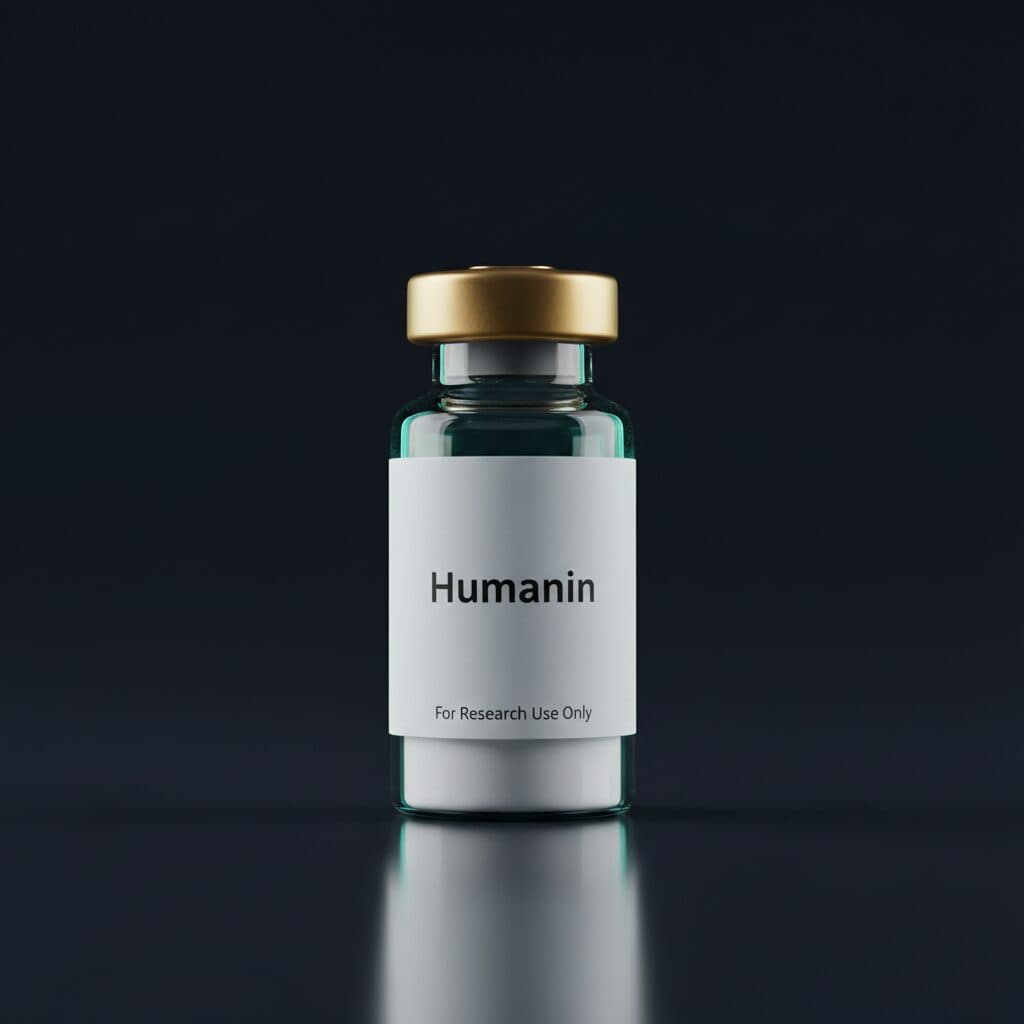
Humanin 10mg
Ingyenes szállítás 200 € feletti rendelésekre
- Ha egy termék nem felel meg a közzétett COA-ján szereplő specifikációnak, vegye fel velünk a kapcsolatot a tételszámával: a tétel jelentése alapján kivizsgáljuk, és díjmentesen kicseréljük az annak meg nem felelő terméket.
- A kézbesítéstől számított 48 órán belül vegye fel velünk a kapcsolatot a külső doboz, a belső csomagolás és az érintett injekciós üvegek olvasható címkékkel készült fényképeivel. A megerősített szállítási sérülést díjmentesen pótoljuk.
3–7 nap a legtöbb EU-országba · 10–14 nap az északi és a balti államokba
Normál szállítás az EU-ban 4,99 EUR-tól (RO) · fő EU-országok (GLS) 17,99 EUR · északi és balti államok 12,99 EUR–15,99 EUR · Feladás 1–2 munkanapon belül · Ingyenes szállítás 200,00 EUR felett · nincs vámkezelési papírmunka (EU) · az uniós futárszolgálati hálózat útján
Még 200,00 EUR az ingyenes szállításig (200,00 EUR felett). Ez alatt a normál EU-s szállítás díja 17,99 EUR (GLS, a legtöbb EU-ország).
Hogyan működik a Paysera és a SEPA
- Fizetés: küldjön kézi SEPA átutalást az általunk e-mailben megküldött IBAN-számra, vagy, ha a pénztár az Ön címéhez felkínálja, hagyjon jóvá egy SEPA átutalást a saját bankjában a Paysera tárhelyén futó oldalon keresztül.
- Visszaigazolás: a Paysera azonnal értesít minket, a kézi átutalást pedig a beérkezésekor párosítjuk a rendeléssel (általában 1 munkanap).
- Feladás: a visszaigazolt rendeléseket általában 1-2 munkanapon belül feladjuk.
Kártyás fizetést jelenleg nem kínálunk. A pénztárunkban nincs kártyás fizetésfeldolgozó.
Research-grade Humanin. Class-level specification ≥98%. Lyophilized powder in sealed glass vial. For laboratory research use only. Not for human consumption.
| Mennyiség | Egységár | Végösszeg | Megtakarítás |
|---|---|---|---|
| 1 unit | 80,49 EUR | 80,49 EUR | -- |
| 3+ | 76,47 EUR | 229,40 EUR | 5% kedvezmény |
| 5+Legnépszerűbb | 72,44 EUR | 362,21 EUR | 10% kedvezmény |
| 10+ | 68,42 EUR | 684,17 EUR | 15% kedvezmény |
Fontos figyelmeztetés
Ez a termék kizárólag laboratóriumi és kutatási felhasználásra szolgál. Nem emberi vagy állatorvosi felhasználásra. A vásárlással Ön megerősíti, hogy ezt a terméket kizárólag in-vitro kutatási célokra használja fel.
Jogi és szabályozási követelmények miatt ez a termék nem szállítható ide: Horvátország, Litvánia, Olaszország és Szlovénia.
Feloldás szükséges
Ez a peptid liofilizált (száraz por) formában kerül kiszállításra, és felhasználás előtt bakteriosztatikus vízzel kell feloldani. A BAC-víz külön vásárolható meg.
Amikor ez a termék esetleg nem felel meg a kutatásának
- ⚠Ha a kutatása GMP-minőségű anyagot igényel klinikai alkalmazásokhoz – a kutatási minőségű peptidek nem klinikai felhasználásra szolgálnak.
- ⚠Ha a laborja nem rendelkezik megfelelő hűtött tárolással (-20°C-os fagyasztó) – ennek a peptidnek a stabilitása magasabb hőmérsékleten sérülhet.
- ⚠Ha a vizsgálati protokollja FDA-jóváhagyással rendelkező referenciastandardokat igényel – forduljon az USP-hez vagy egy hitelesített referenciaanyag-szolgáltatóhoz.
Kiválasztott tételekhez közzétett laboratóriumi jelentések érhetők el. Minden jelentésben ellenőrizze az eredményt és a megadott módszert. Kizárólag kutatási célokra.
A Janoshik-jelentés közzétételre kerül, amint elérhető
Feladás 1–2 munkanapon belül, szállítás Romániában 4,99 EUR-tól, Európa többi részén 12,99 EUR-tól
Nyilvántartott osztályszintű specifikáció; független Janoshik-jelentés kiválasztott tételeken
A(z) Humanin 10mg bemutatása
Humanin is a 21-amino acid peptide encoded not in the nuclear genome but in the mitochondrial 16S rRNA gene -- an unusual origin that has made it the founding member of a class of mitochondria-derived peptides (MDPs). It was originally identified in 2001 by researchers screening for factors that protect neurons from Alzheimer's disease-related cell death. The name reflects this discovery context: a peptide that made cells "more human" by rescuing them from neurodegeneration.
Humanin acts through multiple receptor pathways. It binds the formyl peptide receptor-like 1 (FPRL1/FPR2), the CNTF receptor alpha subunit, and has intracellular targets as well. In Alzheimer's disease cell models, it has been reported to protect neurons from amyloid-beta toxicity, ADDL (amyloid-derived diffusible ligand) toxicity, and oxidative stress. Beyond neuroprotection, preclinical studies report anti-apoptotic, insulin-signalling and anti-inflammatory effects in cell and animal models. Circulating humanin levels have been reported to decline with age, which has made it a subject of interest in mitochondrial aging research.
SHLP2 (small humanin-like peptide 2) and other humanin analogues are also being studied, but humanin itself remains the most characterized of the MDPs. It has been studied in rodent models for cognitive preservation, metabolic improvement in type 2 diabetes models, and cardiovascular protection.
Specifications
| Parameter | Value |
|---|---|
| Compound | Humanin (mitochondria-derived peptide, 21 amino acids) |
| Amount per Vial | 10mg |
| Purity | ≥98% (class-level specification) |
| Format | Lyophilized powder |
| Reconstitution | Sterile water or saline |
| Storage | -20°C; 2-8°C after reconstitution |
Storage
Store at -20°C before reconstitution. Refrigerate at 2-8°C after reconstitution and use within 28 days. Stable for 24+ months as lyophilized powder under proper conditions.
What makes humanin unusual compared to other peptides?
Most bioactive peptides are encoded in nuclear genes. Humanin is encoded within the mitochondrial genome -- specifically within the 16S ribosomal RNA gene -- which is an unusual location for a protein-coding sequence. This mitochondrial origin makes it the founding member of a class called mitochondria-derived peptides (MDPs). The mitochondrial genome is ancient and highly conserved, so mitochondria-derived signaling molecules have particular biological significance. Humanin's presence in this location suggests ancient origins for mitochondria-to-nucleus and mitochondria-to-extracellular signaling.
What were the original Alzheimer's disease findings for humanin?
Humanin was identified in 2001 by Nishimoto and colleagues through expression cloning from occipital cortex cDNA of an Alzheimer's patient. The screening assay looked for factors that could protect neurons from cell death induced by familial Alzheimer's mutations (V642I APP). Humanin potently rescued neurons from multiple Alzheimer's-related cytotoxic stimuli including amyloid-beta peptides, ADDL oligomers, and familial AD gene mutations. Subsequent work showed it works through FPRL1/FPR2 receptor signaling and intracellular IGFBP3 binding. These neuroprotective effects are among the most replicated findings in the humanin literature.
Why do humanin levels decline with aging?
Humanin is produced by mitochondria, and mitochondrial function and abundance decline with aging -- a process called mitochondrial aging or mitochondrial dysfunction in the context of aging biology. As mitochondrial function decreases, production of mitochondria-derived peptides including humanin appears to decrease as well. Several studies have measured circulating humanin in human populations and found inverse correlations with age and with aging-related diseases. Whether declining humanin contributes to aging pathology or is simply a consequence of aging mitochondria is an active research question.
Humanin is supplied for laboratory research use only. Not approved for human use. Handle in compliance with institutional biosafety guidelines.
Specifikáció összefoglalása
A(z) Humanin 10mg bemutatása
Humanin is a 21-amino acid peptide encoded not in the nuclear genome but in the mitochondrial 16S rRNA gene -- an unusual origin that has made it the founding member of a class of mitochondria-derived peptides (MDPs). It was originally identified in 2001 by researchers screening for factors that protect neurons from Alzheimer's disease-related cell death. The name reflects this discovery context: a peptide that made cells "more human" by rescuing them from neurodegeneration.
Humanin acts through multiple receptor pathways. It binds the formyl peptide receptor-like 1 (FPRL1/FPR2), the CNTF receptor alpha subunit, and has intracellular targets as well. In Alzheimer's disease cell models, it has been reported to protect neurons from amyloid-beta toxicity, ADDL (amyloid-derived diffusible ligand) toxicity, and oxidative stress. Beyond neuroprotection, preclinical studies report anti-apoptotic, insulin-signalling and anti-inflammatory effects in cell and animal models. Circulating humanin levels have been reported to decline with age, which has made it a subject of interest in mitochondrial aging research.
SHLP2 (small humanin-like peptide 2) and other humanin analogues are also being studied, but humanin itself remains the most characterized of the MDPs. It has been studied in rodent models for cognitive preservation, metabolic improvement in type 2 diabetes models, and cardiovascular protection.
Specifications
| Parameter | Value |
|---|---|
| Compound | Humanin (mitochondria-derived peptide, 21 amino acids) |
| Amount per Vial | 10mg |
| Purity | ≥98% (class-level specification) |
| Format | Lyophilized powder |
| Reconstitution | Sterile water or saline |
| Storage | -20°C; 2-8°C after reconstitution |
Storage
Store at -20°C before reconstitution. Refrigerate at 2-8°C after reconstitution and use within 28 days. Stable for 24+ months as lyophilized powder under proper conditions.
What makes humanin unusual compared to other peptides?
Most bioactive peptides are encoded in nuclear genes. Humanin is encoded within the mitochondrial genome -- specifically within the 16S ribosomal RNA gene -- which is an unusual location for a protein-coding sequence. This mitochondrial origin makes it the founding member of a class called mitochondria-derived peptides (MDPs). The mitochondrial genome is ancient and highly conserved, so mitochondria-derived signaling molecules have particular biological significance. Humanin's presence in this location suggests ancient origins for mitochondria-to-nucleus and mitochondria-to-extracellular signaling.
What were the original Alzheimer's disease findings for humanin?
Humanin was identified in 2001 by Nishimoto and colleagues through expression cloning from occipital cortex cDNA of an Alzheimer's patient. The screening assay looked for factors that could protect neurons from cell death induced by familial Alzheimer's mutations (V642I APP). Humanin potently rescued neurons from multiple Alzheimer's-related cytotoxic stimuli including amyloid-beta peptides, ADDL oligomers, and familial AD gene mutations. Subsequent work showed it works through FPRL1/FPR2 receptor signaling and intracellular IGFBP3 binding. These neuroprotective effects are among the most replicated findings in the humanin literature.
Why do humanin levels decline with aging?
Humanin is produced by mitochondria, and mitochondrial function and abundance decline with aging -- a process called mitochondrial aging or mitochondrial dysfunction in the context of aging biology. As mitochondrial function decreases, production of mitochondria-derived peptides including humanin appears to decrease as well. Several studies have measured circulating humanin in human populations and found inverse correlations with age and with aging-related diseases. Whether declining humanin contributes to aging pathology or is simply a consequence of aging mitochondria is an active research question.
Humanin is supplied for laboratory research use only. Not approved for human use. Handle in compliance with institutional biosafety guidelines.
Kutatói bizalom
Miért választják a kutatók a CertaPeptides-t
Ki teszteli ezt valójában?
A kiválasztott tételeket a Janoshik Analytical (Csehország) függetlenül ellenőrzi, és a Janoshik nyilvános portálján közzéteszi. A többi tétel a beszállító tételspecifikációjával kerül kiszállításra. A közzétett falat lásd a /coa oldalon.
COA-k megtekintése →Mi van, ha rossz tételt kapok?
Minden fiola címkéjén szerepel egy kód. Keresse meg az igazolási oldalunkon: az oldal megmutatja, mit tesz közzé az adott kódhoz a CertaPeptides, visszavont tétel esetén pedig azt is, hogy a tételt visszavontuk, és miért. Ha az Ön tételét visszavontuk, vagy ha a címkéjén szereplő kódra a keresés nem ad találatot, küldje el nekünk e-mailben ezt a kódot.
COA-k megtekintése →Honnan szállítják?
Románia (EU). A CERTALAB SRL vagyunk, CUI 54169956, áfaregisztrált. Sameday Románia esetében, GLS a legtöbb EU-s célországba, TCE Worldwide a többi határon átnyúló EU-s és EU-n kívüli piacra (Egyesült Királyság, Svájc). Kézbesítés 1–15 munkanapon belül a célállomástól függően — a pontos időablak a pénztárnál jelenik meg.
Szállítási részletek →Mi van, ha probléma adódik?
Önt 14 napos elállási jog illeti meg az OUG 34/2014 (román/EU fogyasztóvédelmi jog) alapján, az ANPC-hez fordulás és az alternatív vitarendezés (SAL) lehetőségével. Vegye fel velünk a kapcsolatot a support@certapeptides.com címen.
Visszaküldési szabályzat →Termékinformáció
Ez a termék kizárólag tudományos kutatási és fejlesztési célokra szolgál. Ez egy vegyi anyag, amely nem használható gyógyszerként, orvosságként, hatóanyagként vagy összetevőként semmilyen emberi vagy állati fogyasztásra szánt termékben. A kutatóknak ezt a vegyületet az intézményi biológiai biztonsági irányelveiknek megfelelően kell kezelniük. Csak megfelelően felszerelt laboratóriumi környezetben, megfelelő egyéni védőfelszereléssel használja.